On this page
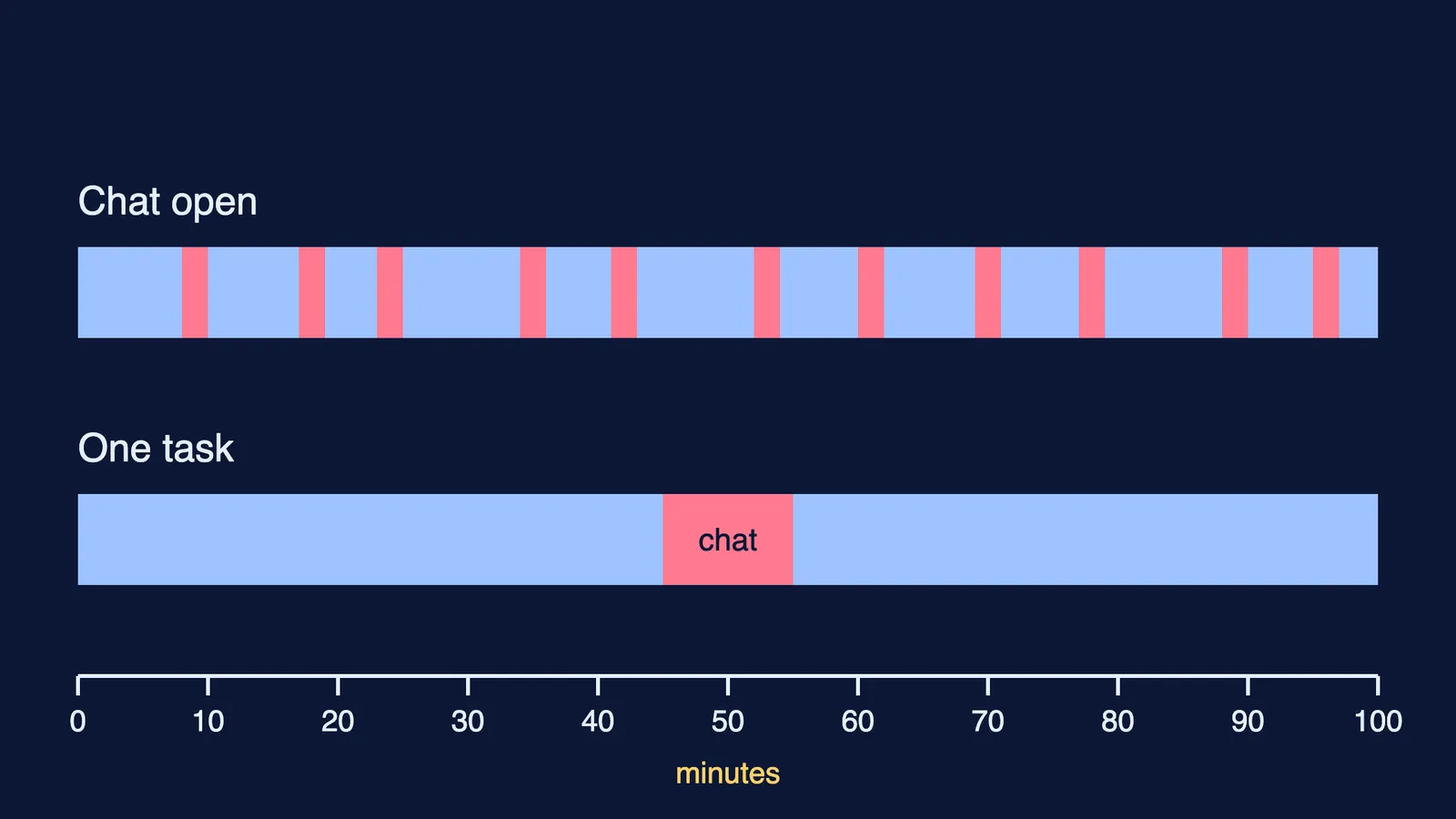
You have a chapter open, a WhatsApp chat in another tab and a lecture video in a third. It feels like doing three things at once. Experiments on attention say you are doing one thing at a time, and paying a small fee every time you change.
Can you really multitask while studying?
For work that needs thinking, mostly no. What feels like multitasking is quick switching between tasks, and psychologists call the price of each change the switch cost.
The switch cost is the extra time and extra errors that follow a change of task: in lab studies, responses are substantially slower and usually more error-prone immediately after a switch, according to Monsell’s review in Trends in Cognitive Sciences (Monsell, 2003). A chance to prepare shrinks the cost but does not remove it.
The cost also grows with difficulty. In four experiments by Joshua Rubinstein, David Meyer and Jeffrey Evans, the time lost to switching increased as the rules of the task became more complex (Rubinstein, Meyer and Evans, 2001). Their tasks were shape sorting and arithmetic, not physics, but a rotational-motion numerical or an organic reaction mechanism sits at the complex end, so expect a ping to cost more there.
What happens when you study with chat or a video open?
The most useful experiment for students comes from Pashler and colleagues (Pashler, Kang and Ip, 2013). Students read or listened to short historical narratives while also having five to eight very short conversations, like instant messages.
When students read at their own pace, chatting made reading take slightly longer (a marginal effect), especially when messages arrived at random times, but memory for the stories was not significantly affected.
When the audio could be paused during each conversation, the results were similar.
When the audio kept playing, the interruptions reduced comprehension.
That suggests a rule of thumb for the two setups students use most. With a textbook and chat open, you mostly pay in time: the chapter takes longer than it should, and the evening disappears. With a lecture video running while you reply, you pay in understanding, because the explanation does not wait for you.
The cost can also spread to the people around you. In a simulated lecture, students who multitasked on a laptop scored lower on a test, and so did students who could see a multitasking classmate’s screen (Sana, Weston and Cepeda, 2013).
Do heavy multitaskers get better at it?
There is no sign that habit turns it into a skill. In a Stanford study, people who habitually used many media at once were more easily distracted by irrelevant information, and did worse on a task-switching test than light media multitaskers (Ophir, Nass and Wagner, 2009).
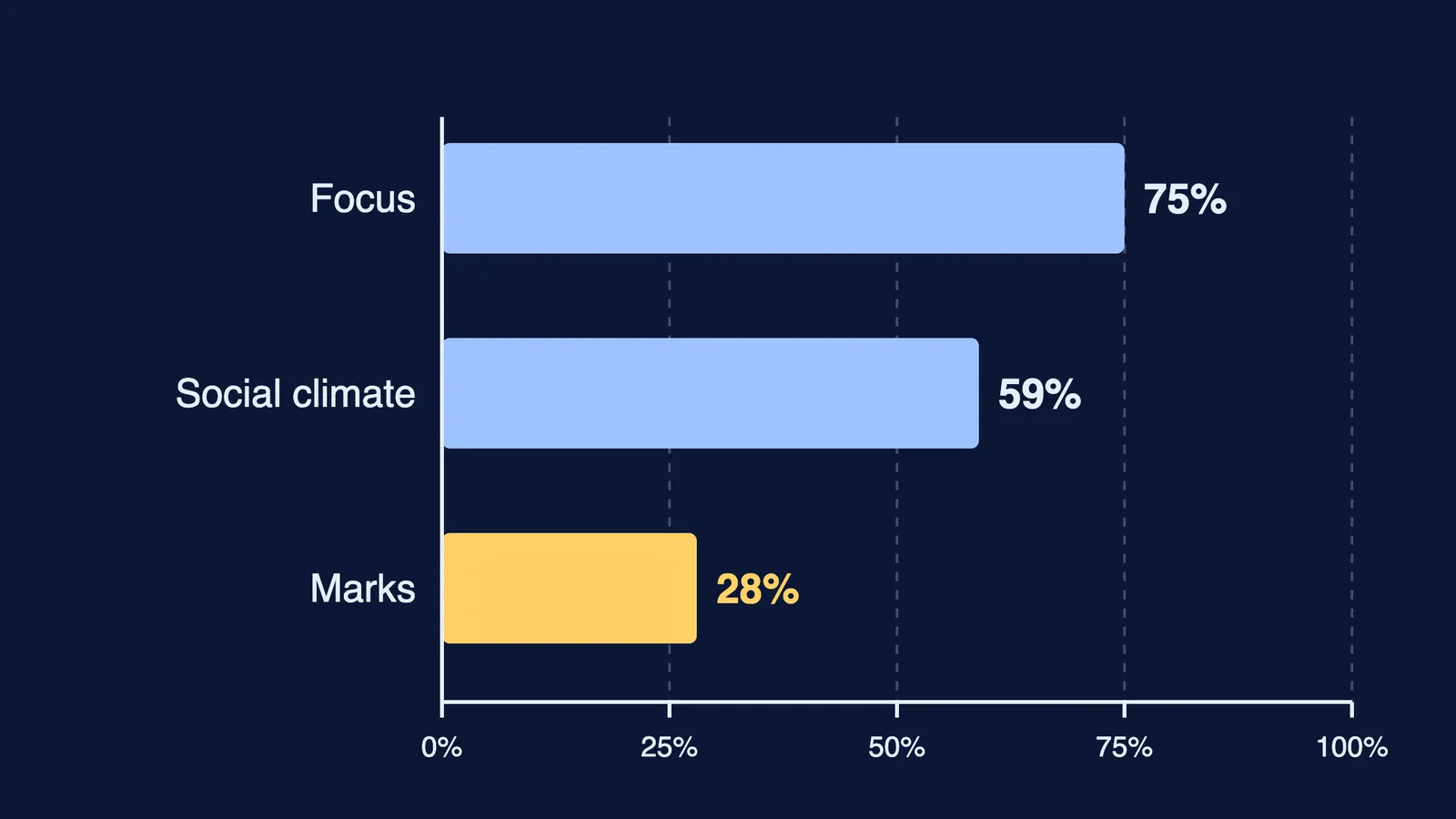
A review in Pediatrics reports that American young people spend an average of 7.5 hours a day with media, and about 29% of that time juggling more than one stream (Uncapher and colleagues, 2017). The same review says multitasking with media during learning, in class or at home, can hurt academic outcomes, while cautioning that cause and effect is not yet settled. The short-term cost of switching is well established; the long-term picture is still open.
A single-task routine for tonight
This evening plan of just under two hours keeps chat and videos, just not at the same moment as thinking.
Before you start (5 minutes): write one task on paper, specific enough to finish, such as ‘Exercise 3.2, questions 1 to 10, kinematics’, not ‘physics’. Close every tab you don’t need. Put the phone out of reach; our write-up of the phone-in-another-room experiment explains why distance helps.
Tell people once. Send: ‘Studying till 8:30, will reply after that.’
Block one (45 minutes): one book or one tab. When the urge to check something comes, write it on a ‘later’ list and carry on.
Break (10 minutes): this is chat time. Reply to everything, stretch, drink water.
Block two (45 minutes): same rules. If you are watching a lecture and must answer someone, pause the video first, so you pay in time rather than in understanding.
Close (5 minutes): write three things you learned from memory, then check them against your notes.
If 45 minutes feels long, start shorter; our guide to Pomodoro-style study blocks shows how to build up. Switching off phone notifications while you study removes most interruptions before they start.
If you sit down and cannot decide what to write in step 1, Fermi’s AI tutor can work out what you already know and build a plan for the session, so block one starts with a clear next step. For a block of numericals, the Fermi Problem Library has worked problems with a step-by-step solver that explains the reasoning rather than printing an answer.
If a message truly cannot wait, handle it, then write one line saying where you stopped (‘question 6, finding acceleration’) before you go back.
Pick tonight’s one task now, and write it down before you open anything else.