

On this page
A technical team is a group of students who build something real and enter it in a competition: a robot, an off-road buggy, a race car, or code that has to work under a deadline. For a first-year BTech student, joining one is often the first time classroom physics and maths have to work outside an exam. The catch is time. Here is what each kind of team does, what it costs you each week, and how to get in.
What do robotics, racing and coding teams actually do?
Robotics teams build machines that complete a set task against the clock. One national contest in India is DD-Robocon, which IIT Delhi and Prasar Bharati hosted from 13 July 2024 for more than 750 students from over 45 colleges, institutions and universities, according to All India Radio News. The winning team goes on to represent India at the international Asia-Pacific Broadcasting Union (ABU) Robocon.
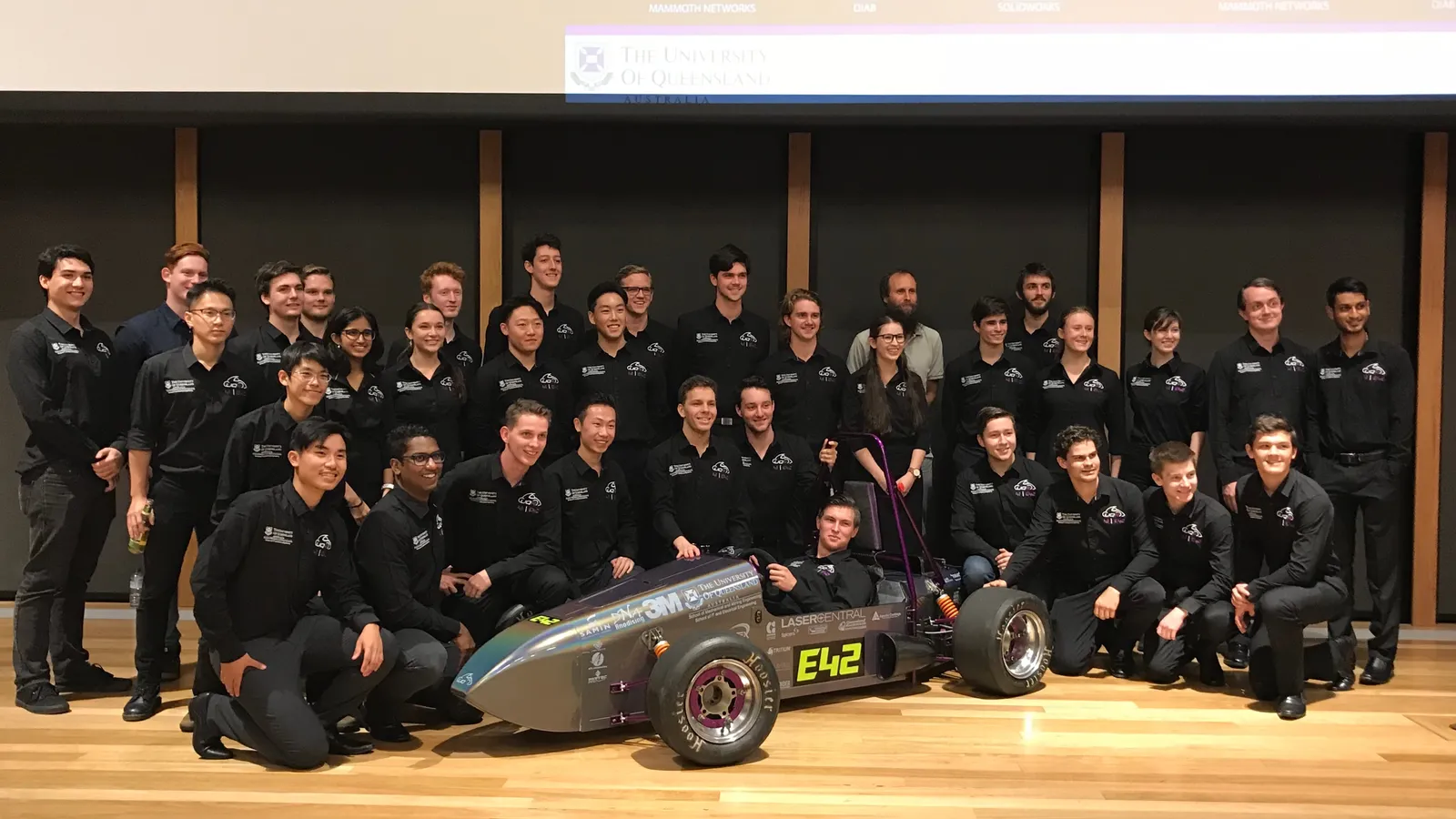
Racing teams design and build a full vehicle. At the 19th BAJA SAEINDIA, held from 7 to 11 January 2026, 90 electric and 21 hydrogen-hybrid student teams brought their vehicles to NATRAX in Pithampur, where events included a four-hour endurance race, as Entrepreneur India reported. Teams there were also judged on design, cost analysis and manufacturing, not just on driving. Formula Bharat, the Indian Formula Student event, says it has more than 3,000 participants from over 80 institutes.
Coding teams cover competitive programming, app and web projects, and hackathons. If you're aiming for a national event, our guide to taking part in the Smart India Hackathon explains how college selection works.
What you get from any of them is evidence that you can solve problems with other people. In the US employer survey NACE Job Outlook 2025, nearly 90% of the 237 responding employers said they look for evidence of problem-solving on a student's resume, and nearly 80% look for teamwork skills.
How much time does a technical team take?
More than the poster says, especially in the weeks before a competition. Research suggests the amount of time is what matters. In Zacherman and Foubert (2014), the link between weekly hours in co-curricular activities and grades was curved: a little involvement went with better grades, but a lot could hurt them. Another study of engineering and computer science students at four institutions, Wilson and colleagues (2014), found no direct link between co-curricular activities and academic engagement; the link depended on the kind of activity (academic or not) and on how confident students felt about their coursework.
The studies don't give you an exact number of hours. So set your own limit and protect it. Here is a sample plan for a first-year student:
Weekdays: two evenings on the team, about two hours each, after that day's revision is done.
Weekend: one half-day session, about four hours.
Total: about eight hours a week, still leaving room for classes, labs, revision and sleep.
In the four weeks before mid-semester or end-semester exams, drop to the weekend session only, and tell your team lead early.
If you're working out where the hours come from, this daily routine for engineering college students shows how a full day can fit together.
How do you get into a technical team in first year?
Recruitment differs from college to college, but it often includes an orientation talk, a short task and an interview. Watch notice boards in your first few weeks.
Go to two or three team orientations before choosing one. Ask what a first-year member actually does each week.
Do the induction task properly, even if it's small. A neat, working solution beats a half-finished ambitious one.
Revise the basics the task depends on: torque and gearing for robotics, free-body diagrams for vehicles, loops and arrays for coding. If an idea is shaky, the Fermi Concept Library has a lesson for each concept in physics, mathematics and computing.
In the interview, be honest about what you know and what you can commit.
A simple thing to say in the interview: "I haven't built a robot before, but I finished the induction task and learned how to size a motor for it. I can give two evenings and one weekend session each week, and I'd like to start on the electronics side."
What if you don't get selected?
Not getting in the first time is not final. Build one small project of your own, such as a line-following robot or a small app, and apply again in the next recruitment round. If you're torn between a technical team and something else, our guide to getting into a college sports team uses the same idea of balancing it with study.
Before you sign up, check three things: your first-semester timetable has room for it, you can name the week you'll cut back for exams, and you joined because the work interests you, not because everyone in your hostel did. Pick one team this semester, put your hours on the calendar, and review them after your first mid-sems.


