

On this page
A homework diary only works if it holds every task, gets checked and gets closed every night. Most fail at the first step: "Maths: do sums" is not something you can start or finish. Here is a five-minute routine, and what research says about each part.
How do you write homework in a diary properly?
Write the task the moment the teacher sets it, before the bell, as one line with four parts:
Subject and exact task: "Chemistry: NCERT Ch 3, in-text Q1 to Q6", not "Chem HW".
Due date: the day it must be handed in, written as a date, not "next week".
Start day: the day you will begin, well before the due date for anything bigger than one evening's work.
A box to tick.
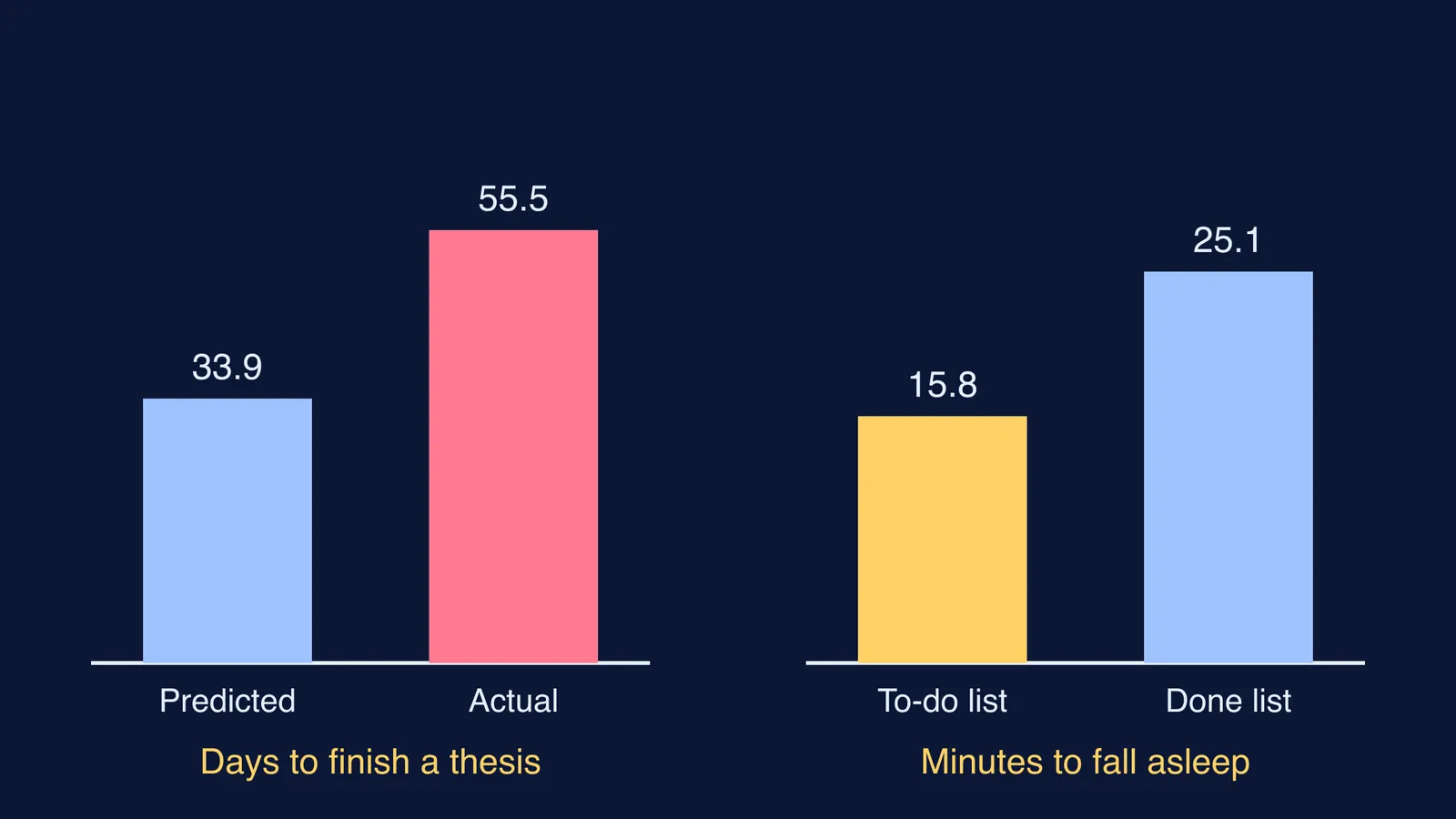
The start day matters because people are poor judges of how long their own work will take. In a study of psychology students writing an honours thesis, those who finished had predicted they would need 33.9 days on average and actually took 55.5 days; fewer than one in three finished by their own best estimate (Buehler, Griffin and Ross, 1994). Psychologists call this the planning fallacy. For a project or lab record, write the start day today and plan for it to take longer than it feels it should.
What should you write when a task is finished?
Tick the box only when the work is in your bag, not when it is "nearly done". If something is left, draw an arrow and rewrite it on the next page with a time and place: "Hindi essay, second half: 6.30 pm, after tea, at the desk."
That if-then style has a name. An implementation intention is a plan in the form "if situation Y occurs, then I will do X" (Gollwitzer and Sheeran, 2006). Their meta-analysis of 94 independent tests found that forming one had a medium-to-large effect on reaching goals (d = 0.65).
A specific plan also seems to quiet the nagging. In experiments by E. J. Masicampo and Roy Baumeister, unfinished goals caused intrusive thoughts and poorer performance on unrelated tasks, and letting people make specific plans for those goals removed these effects (Masicampo and Baumeister, 2011).
Why check the homework diary before bed?
In a sleep-lab study at Baylor University, 57 young adults spent five minutes before bed writing either a to-do list for the next few days or a list of tasks they had already done (Scullin and colleagues, 2018). The to-do group fell asleep in about 16 minutes on average, against about 25 minutes for the completed-list group. The more specific the to-do list, the faster people fell asleep.
These were adults aged 18 to 30, not school students, and one lab night is not proof for every bedroom. But the check costs five minutes:
Tick off everything handed in today.
Read tomorrow's page and pack your bag against it: books, lab file, signed slips.
Write anything still on your mind as a dated line, so it sits on paper instead of in your head.
India's free Tele MANAS helpline is run by the Ministry of Health and Family Welfare (official site).
What does a good diary week look like?
Here is one week for a Class 10 student. On Monday, three things are set:
Maths: Ex 4.3, Q1 to Q8. Due Tuesday. Start Monday.
Physics: lab record for the Ohm's law experiment. Due Friday. Start Tuesday.
English: letter to the editor. Due Thursday. Start Wednesday.
On Monday night maths is ticked and the lab record has a line on Tuesday's page. On Tuesday the lab record runs long, so the leftover gets an arrow and a new line on Wednesday: "Lab record, graph and result: 5 pm, before English." By Thursday night the lab file is ticked and packed.
If Q6 stops you, write the question number in the diary and take it to your teacher. You can also work through a similar question in the Fermi Problem Library, where a step-by-step solver explains the reasoning rather than printing an answer. If a whole chapter feels shaky, Fermi's AI tutor can work out what you already know and build a plan for the session.
If school and coaching give you more than one evening can hold, use this triage plan for school and coaching homework. For projects that run over weeks, a weekly layout for a paper planner works alongside the diary.
How can parents help with the homework diary?
Look at the diary with your child, not instead of them. A script that takes under a minute: "Show me tomorrow's page. Anything not ticked? When will you do it?" Then stop. If the school asks for a signature, sign after this check, not in place of it.
If the diary keeps coming home empty, read why a child does not write homework in the school diary for the usual reasons and what to try.
Tonight, open tomorrow's page, tick what is done and write one dated line for anything left.


