

On this page
If you like rocks, maps and big machines, two branches will keep turning up on your JoSAA list: something geological and something mining. They sound alike, and they share the same ground, but they answer different questions. The geology side asks what is down there, and how will it behave? The mining side asks how do we get it out safely, and at what cost?
What is the difference between geological and mining engineering?
The US Bureau of Labor Statistics puts both in one occupation and says mining and geological engineers use geological and engineering principles to design ways to safely and efficiently extract minerals and other resources. It then splits the work. Geological engineers carry out subsurface surveys to find out what a site is like and plan how resources can be extracted. Mining engineers design and develop the mines and decide the best way to extract the material, and some specialise in one mineral, such as coal or gold.
The curricula show the same split. ABET, the US body that accredits engineering degrees, sets separate programme criteria for geological and for mining engineering:
Geological engineering must cover geologic processes, mineral and rock identification, solving geological problems in three and four dimensions, geomechanics, elements of geophysics, and field methods.
Mining engineering must cover surface and underground mining methods, mine planning and design, ground control, rock mechanics, health and safety, materials handling and mine ventilation, with lab work in rock mechanics and ventilation.
Both start from the same base: differential equations, calculus-based physics and chemistry. Mining adds probability and statistics, and lists topics such as resource and reserve estimation and mine valuation among its optional extras.
What does each engineer do at a real mine?
Follow one copper deposit from first hint to first truckload.
Exploration. Geological engineers map the rocks, read geophysical surveys and log drill cores to find where the ore body sits and how its rock is fractured.
Site judgement. They work out how stable the ground is and what groundwater will do. The same skills carry over to slopes, tunnels and dam sites, which is why this branch overlaps with geotechnical engineering, the study of soil, foundations and slopes.
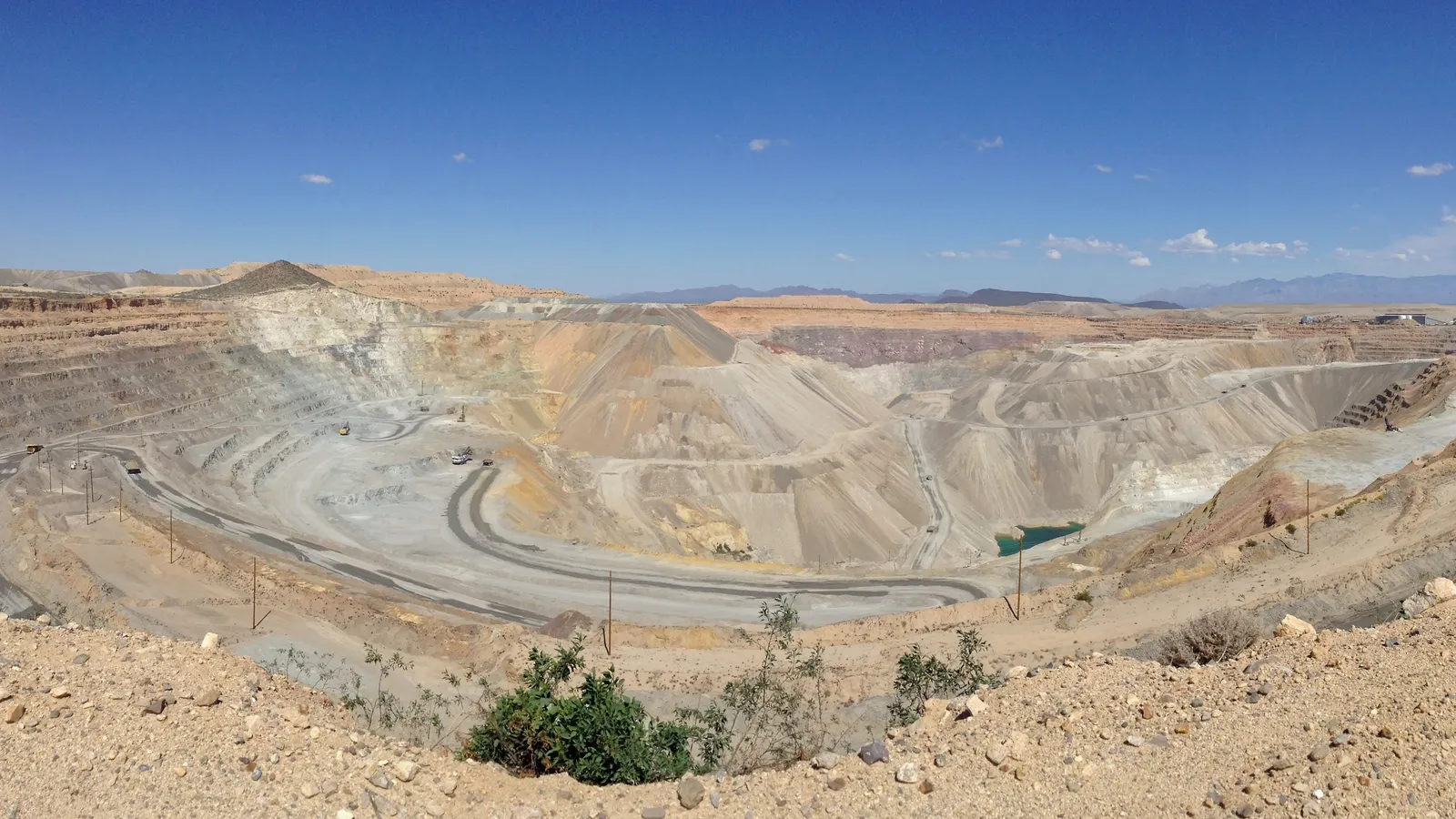
Mine design. Mining engineers take that model and choose an open pit or an underground mine, set the bench heights or tunnel layout, and plan blasting and haulage.
Operations. Mining engineers run production, ventilation and safety day to day. The BLS notes that the work can be at remote sites or near cities, outdoors in all weather while on site, in protective gear such as hard hats and steel-toed boots.
Which one can you study in India?
In India the two fields grew up side by side. The Indian School of Mines, now IIT (ISM) Dhanbad, was formally opened on 9 December 1926 to train people for mining, with Mining and Applied Geology as its first disciplines.
In India the geology-side degree often goes by another name. IIT Roorkee's Department of Earth Sciences lists an Integrated M.Tech in Geological Technology. Elsewhere it may be applied geology, or engineering geology inside civil. Check the current JoSAA programme list for exact names, seats and durations, because these change every year.
One difference matters a lot. Mining in India is regulated under the Mines Act, 1952, which the Directorate General of Mines Safety administers under the Ministry of Labour and Employment. DGMS has held statutory examinations for First Class and Second Class Mines Manager competency certificates. A mining graduate who wants to manage a mine plans for these certificates and the mine experience they require. They matter far less if you aim for a geology-side career. If you want to know where a mining degree leads after that, read our guide to mining engineering career scope in India.
How do you choose between them?
Work through this checklist with a parent before choice filling:
Where do you want to work? Mining means long stretches at the mine site. Geological work mixes field seasons with lab and office time.
What kind of maths do you enjoy? 3D and 4D visualisation and mapping point to geology. Statistics, fluid mechanics and thermodynamics for planning and ventilation point to mining.
Do you want a licence-driven career? Mine management in India runs through DGMS certificates. Ask yourself if that path appeals.
How wide do you want your options? Geology skills also lead to groundwater, slopes and oil; see petroleum engineering careers.
Have you read the syllabus? Count the courses on ventilation, ground control and mine design against those on mineralogy, geophysics and field mapping.
Both degrees lean on statics and strength of materials, and mining adds fluid mechanics. If a topic like friction on a slope or fluid pressure keeps tripping you up, the Fermi Concept Library gives each physics and mathematics concept its own lesson, so you can close the gap one idea at a time.
Your next step: pull up the syllabus of one geology-side and one mining programme on your list tonight and run the course count.


