

On this page
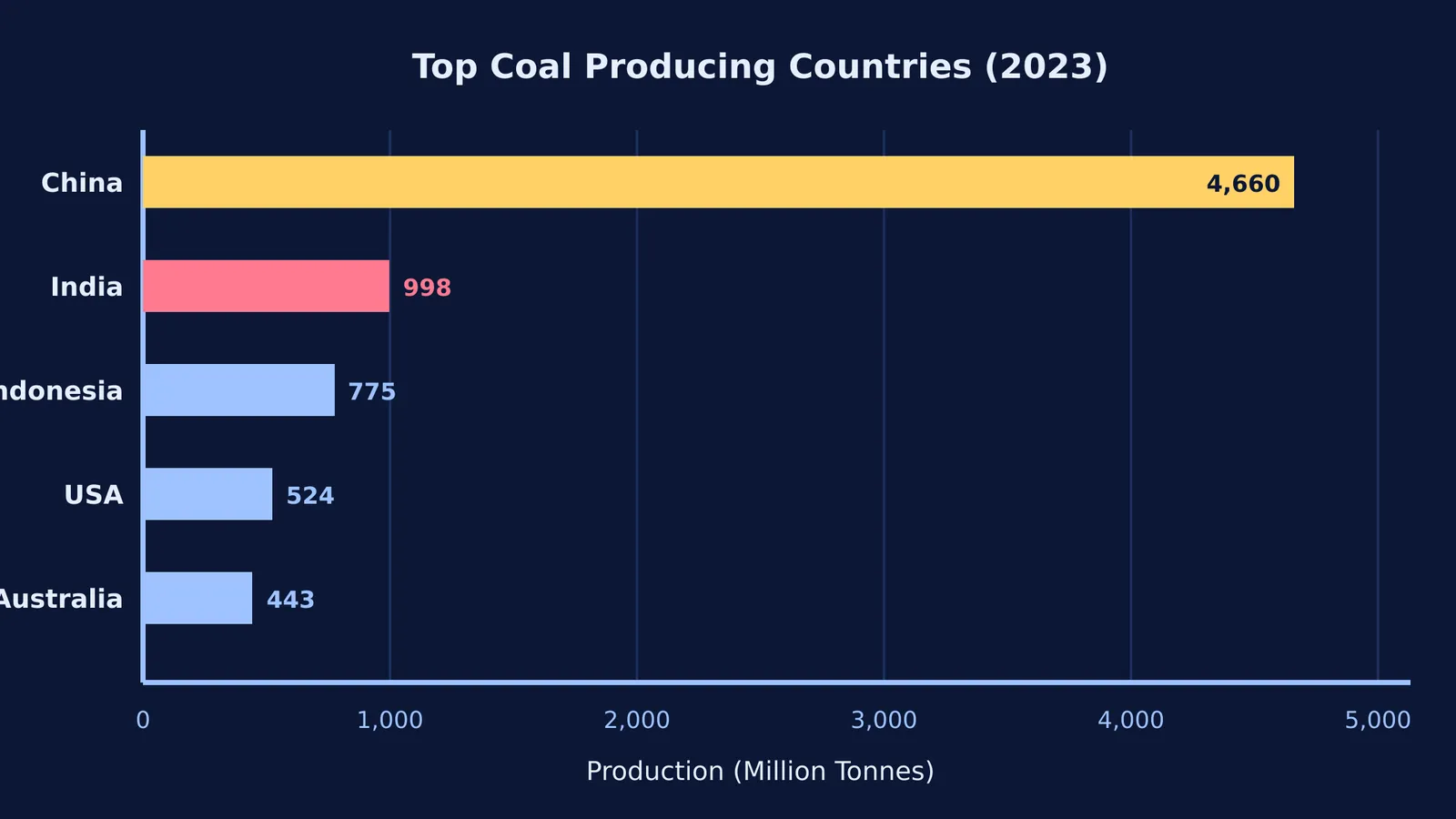
India's vast mineral wealth drives its national infrastructure and power generation. In the 2023–24 financial year, India produced 997.83 million tonnes of coal, maintaining its position as the world's second-largest coal producer. But extracting those resources safely and efficiently requires highly specialized technical knowledge. If you are considering a degree in this core field, here is what the mining engineering career scope in India actually looks like on the ground.
What does mining engineering involve?
Mining engineering is fundamentally about the science and technology of safely removing minerals from the Earth. It brings together advanced elements of civil engineering, rock mechanics, and thermodynamics.
As a student and later as a site engineer, you calculate the precise explosive loads required for safe drilling and blasting. You also design complex ventilation networks that pump breathable air thousands of metres below ground. Whether you are studying the fluid mechanics of mine ventilation, the basics of the extraction of metals, or even the theoretical physics of a tunnel across the Earth, the work relies heavily on core physics. If you find the structural mechanics difficult to picture, the Fermi Simulation Lab has interactive simulations for the ideas that are easier to see than to read.
What is the reality of site work?
Working as a mining engineer is rarely a comfortable desk job. Most active mines are located in resource-rich states like Jharkhand, Odisha, and Chhattisgarh.
Township living: You will likely live in a company-provided mining township, which is often located far from major metropolitan cities.
Harsh conditions: The daily work environment routinely exposes you to high levels of dust, heavy machinery noise, and extreme weather.
Shift duties: Because mineral extraction runs around the clock, site engineers work in rotating shifts, including mandatory night operations.
Historically, this was a heavily male-dominated field. However, in 2019, the government amended the rules to allow women to work in underground coal mines and take on night shifts (Ministry of Labour and Employment), opening up site management roles to a much wider and more diverse talent pool.
Where are the public and private sector opportunities?
The demand for qualified mining engineers continues to outpace the supply from the few technical institutes that offer the specific degree.
The public sector (PSUs):
Government-owned entities form the traditional backbone of the industry. Coal India Limited (CIL) alone accounts for roughly 80% of the country's coal output. Companies like NMDC, SAIL and Hindustan Copper offer high job security, clear structured promotion pathways, and comprehensive lifetime benefits for their employees.
The private sector:
With the recent opening of commercial coal mining auctions, private conglomerates are expanding rapidly. Firms such as Tata Steel, Vedanta, and JSW Steel are heavily recruiting mining engineers to manage their expanding operations. While starting salaries may differ from PSUs, private firms often offer faster career growth for top performers. They also lead the shift toward "smart mining" by integrating automation, Internet of Things (IoT) sensors, and drone surveys into their daily extraction operations.
What are the safety roles?
Mining remains an inherently hazardous profession. Provisional data from the Ministry of Coal recorded 49 fatalities in Indian coal mines in 2024. This sobering statistic highlights why safety is not just an operational priority; it is a strict statutory requirement enforced under the Mines Act, 1952, for every site across the country.
Mining engineers frequently take on highly specialized roles such as Mining Safety Officer or Ventilation Officer. In these roles, you hold the legal authority to halt all site operations immediately if you detect roof instability or toxic gas accumulation. To advance into senior mine management, you must clear stringent competency exams conducted by the Directorate General of Mines Safety (DGMS) to earn your Second Class and First Class Manager’s Certificates.
Is this the right career for you?
Before committing to a mining engineering degree, consider this practical framework:
Are you comfortable with remote living? You will spend your early career away from the comforts of urban centres.
Can you handle the physical demands? Site work involves long demanding hours in challenging and often unpredictable terrains.
Are your physics fundamentals strong? You will rely on principles of mechanics and thermodynamics every day. When a problem has you stuck, the Fermi Problem Library provides a step-by-step solver that explains the reasoning rather than just printing an answer.
Are you ready for continuous testing? Your professional career progression directly depends on passing statutory DGMS exams long after your formal graduation.


