

On this page
Before a large mine, highway, power plant or township in India can start construction, it usually needs prior environmental clearance under the EIA Notification 2006. An environmental consultant collects the evidence for that decision: what the site is like today, what the project will change, and how to reduce the damage.
What does an environmental consultant assess for a project?
The application form in the EIA Notification 2006 reads like a checklist of everything a project can disturb: land use and vegetation, water drawn from rivers or groundwater, air emissions, noise, solid and hazardous waste, the risk of spills or fires, and effects on nearby people, wetlands, forests and protected areas. Building projects with 20,000 square metres or more of built-up area need clearance too.
QCI's training platform says EIA work needs experts in 12 subject areas, called Functional Area Experts (QCI Gunvatta Pathshala). A consultant usually goes deep in one area, such as water, air, ecology, geology or the social side, and learns enough of the rest to work in a team.
The finished EIA report has a fixed structure, which includes:
the baseline: study area, study period, method, data and maps
expected impacts, how significant each is, and how to reduce them
a monitoring programme: what to measure, where and how often
an Environment Management Plan (EMP)
the names and brief resumes of the consultants engaged
How does the environmental clearance process work?
The notification sets out four stages:
Screening, only for Category B projects, decides whether a full EIA is needed.
Scoping fixes the terms of reference the EIA must answer.
Public consultation: the State Pollution Control Board holds a public hearing near the site within 45 days of the request, giving the public at least 30 days' notice.
Appraisal: an expert committee scrutinises the final EIA and hearing record and recommends clearance with conditions, or rejection, within 60 days.
The summary EIA for local people is at most ten A4 pages, in English and the local language. After clearance, the project files compliance reports every six months.
What degrees lead to environmental consulting?
The US Bureau of Labor Statistics says environmental scientists and specialists typically need a bachelor's degree in environmental science or a related field. In India, the EIA Notification defines a "professional" on its appraisal committees as someone with five years of university training ending in an MA or MSc, or four years of BE or BTech training with practical work.
Common routes, each pointing at a different area:
BSc and MSc in environmental science: see environmental science career options in India
BTech in civil or environmental engineering, for water, waste and pollution control: see what the environmental engineering branch teaches
chemistry, for water and air quality analysis
botany, zoology or forestry, for ecology surveys
geology or geography, for groundwater, soil and land use, often with mapping: see careers in GIS and remote sensing
Water-quality work leans on Class 11 and 12 chemistry, ecology on biology, and air modelling on maths. If pH, equilibrium or food chains still feel shaky, the Fermi Concept Library has every concept in physics, chemistry, biology, mathematics and computing, each with its own lesson.
What do the fieldwork and reports involve?
Here is a worked example: a housing complex with 50,000 square metres of built-up area at a city's edge. Under the notification it is a Category B building project, so there is no public hearing, and the committee appraises it on Form 1, Form 1A and a conceptual plan rather than a full EIA. Form 1A still asks hard questions, and each becomes a task:
water balance and effect on the groundwater table: gather borewell data, draw up the water budget
natural drainage on a contour map: walk the site, map where rainwater flows
trees to be cut and effects on birds and animals: count trees, survey species
air quality, with dispersion-model predictions including extra traffic: monitor the air, run a model
noise from diesel generator sets: measure today's levels, predict tomorrow's
an EMP covering mitigation, monitoring and emergencies: write it up
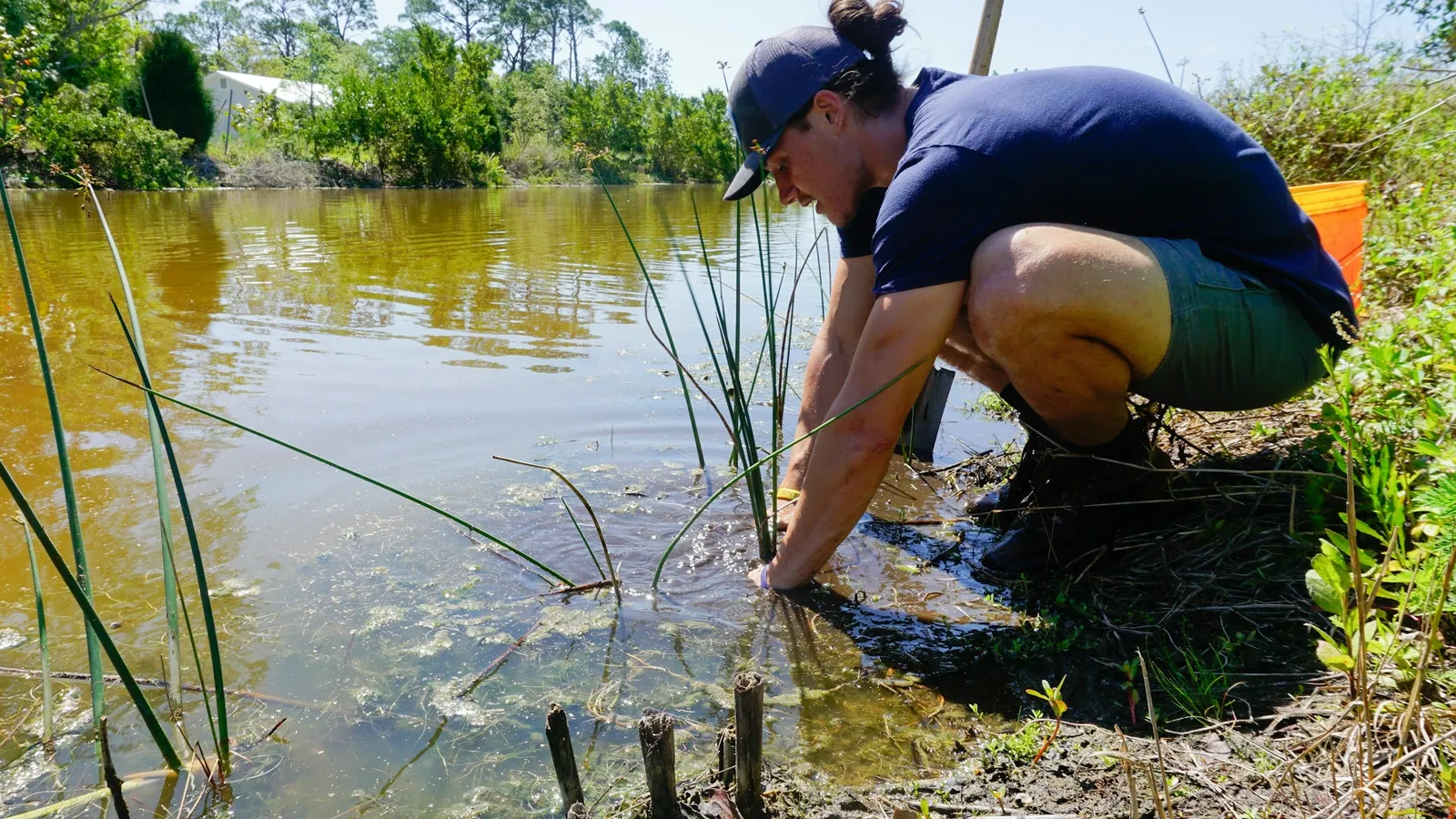
The BLS notes that fieldwork can be physically demanding and happen in all types of weather, and that preparing reports is a standard duty. Expect muddy boots and long documents.
A five-step plan from Class 11
Keep chemistry, and biology or maths, strong.
Pick a degree that points at one area you enjoy: water, air, ecology, geology or people.
Learn GIS, spreadsheets and plain report writing in college.
Read a few summary EIAs each year and write a one-page summary of each.
Seek internships with QCI-NABET accredited consultants or environmental monitoring labs.
Start with one summary EIA this week: it is the quickest way to see whether this work suits you.


