

On this page
If you like both the soldering iron and the keyboard, embedded systems is the part of engineering where you never have to choose. Here is what embedded engineers build, how the work splits between electronics and code, and how to start this month with one small board.
What does an embedded engineer actually build?
An embedded system is a computer system designed to perform specific tasks and enclosed in the device it operates, according to the EBSCO Research Starters entry on embedded systems. The same entry lists ATMs, digital cameras, printers, programmable thermostats and antilock braking systems in cars as examples. None of them looks like a computer, yet each has a chip running code that someone wrote and tested.
In practice, an embedded engineer might:
choose a microcontroller and the sensors around it
read a datasheet to learn how a chip expects to be spoken to
write firmware, often in C or C++, that turns sensor readings into decisions
debug with a multimeter or oscilloscope when the code looks right but the circuit does not behave
How much of the job is electronics and how much is programming?
Think of every embedded device as one loop: sense, decide, act. The sensing and acting are electronics (voltages, currents, resistors, transistors). The deciding is software. Many roles lean one way, hardware design or firmware, but both sides must read each other's work.
One constraint that sets embedded apart from app development is size. The Arduino UNO R3, a common school board, runs an ATmega328P processor at up to 16 MHz with 32 kB of flash memory and 2 kB of SRAM, according to the official Arduino UNO R3 datasheet. A single photo on your phone is far bigger than that, so every variable counts.
The Raspberry Pi Pico gives you more room: its RP2040 chip has two Arm Cortex-M0+ cores, 264 kB of on-chip SRAM, and can be programmed in C or MicroPython, per the Raspberry Pi Pico product page, which lists it from $4.
Is embedded systems a good career for electronics students in India?
The Chips to Start-up (C2S) programme was launched by MeitY in 2022 with an outlay of ₹250 crore over five years, according to a PIB backgrounder dated 18 January 2026. It targets 85,000 industry-ready professionals, including 7,000 M.Tech graduates specialising in VLSI or embedded systems. The same document reports that 56 student-designed chips have been fabricated, packaged and delivered.
That does not guarantee anyone a job, and salaries vary widely by company and city. What it does tell you is that the government treats chip design as a national priority. If you are choosing a branch, our comparison of ECE and EEE for students choosing an engineering branch and our guide to building a career in VLSI chip design cover the neighbouring paths.
How can you start with a small board?
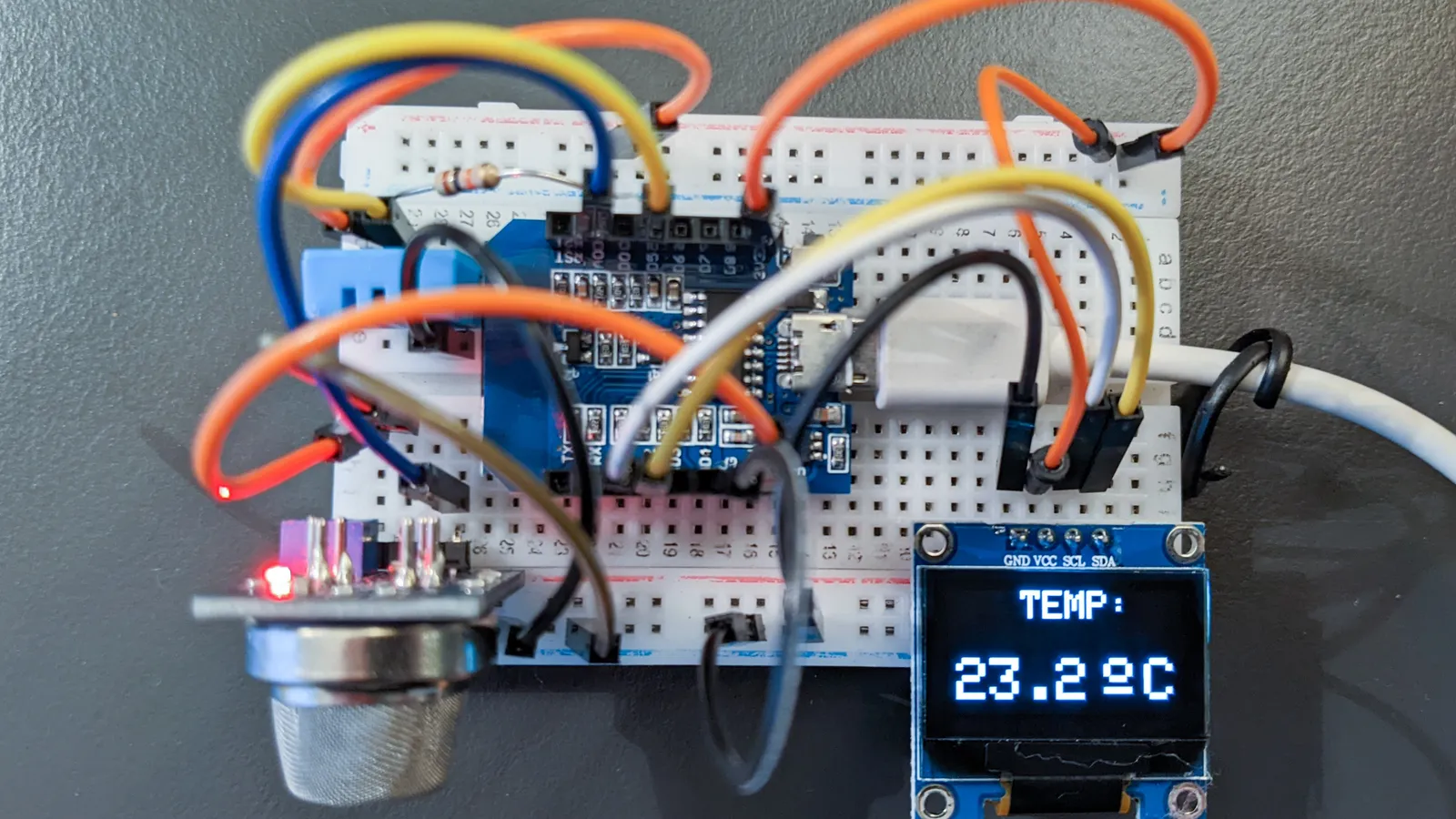
This four-week plan, at three or four hours a week, ends in one working device: a temperature monitor that switches on a small fan.
Week 1, blink. Make an LED blink, then change the timing. Work out the resistor yourself: with a 5 V pin and a red LED that drops about 2 V (check your LED's datasheet), a 220 ohm resistor gives (5 - 2) / 220 = 0.0136 A, about 14 mA.
Week 2, sense. Connect a temperature sensor and print readings to your laptop every second, then warm it with your hand.
Week 3, decide and act. Drive the fan through a transistor, never straight from the pin. Switch it on at 30 °C and off only below 28 °C. That 2-degree gap, called hysteresis, stops the fan clicking on and off when the reading wobbles around 30.
Week 4, write it up. Draw the circuit, share the code, and note one thing that broke and how you fixed it. This page is something you can show in a college interview.
If Ohm's law or transistors feel shaky, the Fermi Concept Library has a lesson for every concept in physics, mathematics and computing, and the Fermi Simulation Lab has interactive simulations for ideas that are easier to see than to read.
For more starter builds, see our list of Arduino projects for school students. Once you finish Class 12, the NPTEL course Introduction to Embedded System Design, from Netaji Subhas University of Technology and IIT Jammu, is a structured next step.
How do you know if this path suits you?
You are probably a good fit if you enjoyed finding out why the circuit failed, read the sensor's datasheet without being told to, and wanted a second feature as soon as the first worked. If you mostly enjoyed the code, look at software roles; if you mostly enjoyed the wiring, look at hardware design.
Pick one board this week, make the LED blink, and build from there.


