On this page
Your first stipend, internship payment or salary arrives with a quiet new record: your credit history. Banks read it as a score before they approve a credit card, a two-wheeler loan or, years later, a home loan. Here is what goes into that score, how an education loan fits in, and a plan for your first year of earning.
What is a credit score?
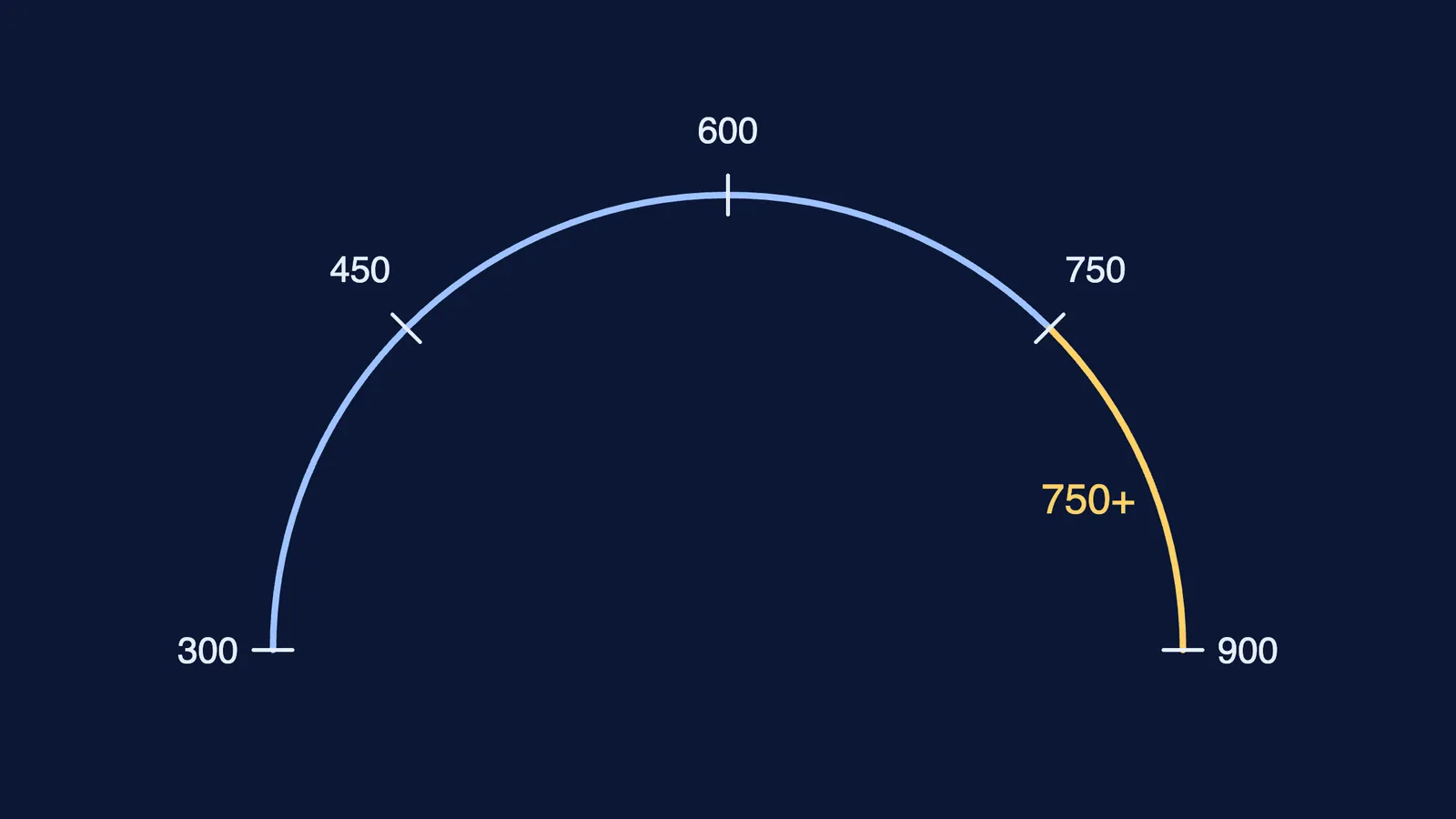
A credit score is a three-digit number that sums up your borrowing record, and in India it ranges from 300 to 900, as Experian India's managing director explained in 2022. The higher the score, the more likely lenders are to approve you. The same Experian article says a score of 750 or above is usually considered good, and that a good score can mean lower interest rates and quicker approval.
The score comes from credit bureaus, which the RBI calls credit information companies. Four are registered: TransUnion CIBIL, Experian, Equifax and CRIF, as listed in the RBI's Credit Information Companies Directions, 2025. Each keeps its own records on you, so your score can differ from one bureau to the next.
Lenders now update the bureaus every fortnight rather than every month, under an RBI circular in force since 1 January 2025. A missed payment, or a cleared one, can show up on your report sooner than it used to.
What goes into your credit score?
Experian India lists the main factors behind its score:
Payment history: paying every EMI and card bill on time helps; missing a payment lowers your score.
Credit utilisation: the share of your total credit limit you are using. A low ratio suggests you handle credit responsibly; a high one brings your score down.
Age of credit: a longer credit history reflects responsible behaviour.
Types of accounts: a mix of secured loans and unsecured credit such as cards can help.
Here is utilisation as a worked example. Say your first credit card has a limit of ₹20,000. Spend ₹15,000 on it in a month and you are using 75% of your limit, even if you pay the whole bill on time. Spend ₹4,000 and you are at 20%. The habit of paying in full is the same; the picture the bureau sees is very different.
Utilisation and interest are percentages and growth at heart. If those feel shaky, the Fermi Concept Library has its own lesson for every concept in mathematics, so you can check the maths before you sign anything.
Does an education loan affect your credit score?
Yes, if the loan is in your name. An education loan is credit like any other, and your bank reports its repayment record to the bureaus. For many students it is the first account on their file, so repaying it on time is how their history begins.
Many education loans start with a moratorium, a gap before repayments begin. Our guide to what an education loan moratorium is and what it costs explains how interest builds during it. If a parent is a co-borrower, agree in advance whose account it is paid from, so nobody assumes the other has it covered.
If you do not have a PAN yet, most banking paperwork starts there; here is how to apply for a PAN card as a student, step by step.
How do you check your credit score for free?
Every bureau must give you one free full credit report, including your credit score, once in each calendar year, under the RBI's Credit Information Companies Directions. Each bureau must put the link to it on its homepage. With four bureaus, you can space out four free reports across a year.
The same directions require bureaus to send you an SMS or email alert when a lender accesses your report, wherever they have your number or email. An alert for a loan you never applied for is your cue to contact the bureau and the lender.
If you spot a mistake, complain to the lender or the bureau. Under those directions, you are entitled to compensation of ₹100 per calendar day if your complaint is not resolved within 30 calendar days of filing it.
A first-year plan for building your score
Before your first salary, get a PAN and a savings account in your own name.
Find out your education loan's first EMI date and amount, and set up an auto-debit for it.
If you take a credit card, put one regular bill on it and auto-pay the full amount due each month.
Keep what you use well below your limit, every month, not just on average.
Apply for new credit only when you need it; Experian's article above advises applying to a few lenders rather than loan shopping.
Once a year, download your free report from at least one bureau and check that every account on it is yours.
Parents, your child's first salary is a good moment to talk this through together; our guide to what to say about money and tax after a first salary has a place to start.
Pick the one step on this list you have not done yet, and do it this week.