On this page
If you like psychology but also enjoy coding, or biology but keep wondering how a brain could work like a computer, you have probably found cognitive science already without knowing its name.
What is a cognitive science degree?
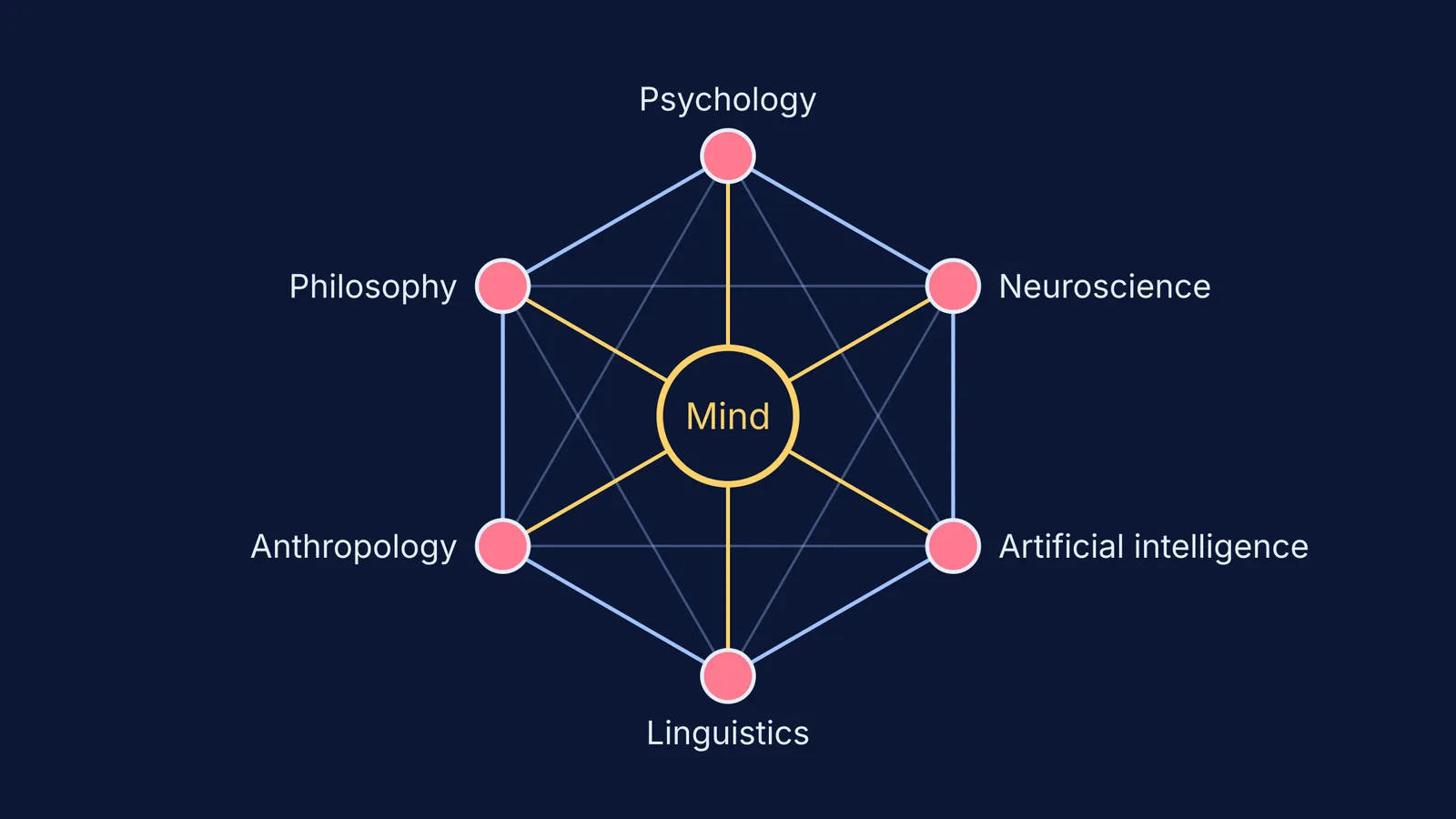
The Stanford Encyclopedia of Philosophy defines cognitive science as "the interdisciplinary study of mind and intelligence, embracing philosophy, psychology, artificial intelligence, neuroscience, linguistics, and anthropology."
The same entry gives the field's central idea: thinking can best be understood as representations in the mind plus computational procedures that work on them. That is why computing sits at its centre.
IIT Kanpur's department puts it more simply: cognitive science is "the study of the mind - how it comes to be, what it is, and what it does."
The field is not new. The psychologist George Miller published a history of how it began, "The cognitive revolution: a historical perspective", in Trends in Cognitive Sciences in 2003. UC San Diego says its Department of Cognitive Science was "the first of its kind in the world".
How does it mix psychology, computing and neuroscience?
Take one question and look at it three ways: how do you recognise a friend's face in a crowded railway station?
Psychology: you design an experiment. Show people faces for a fraction of a second and measure how fast and how accurately they name them.
Computing: you write a program that recognises faces, then check whether it makes the same mistakes people do. If it does, it may be working the way the mind works.
Neuroscience: you record brain activity, for example with EEG, while people look at faces, and find which areas respond.
Real syllabi follow this pattern. IIT Delhi's MSc in cognitive science has core courses such as Language in the Mind, Cognitive Neuroscience, Computation and Cognition, Philosophy of Mind and Cognition, and Research Methods in Cognitive Science, plus a programming course and open electives from departments such as mathematics and computer science.
Where can you study cognitive science in India?
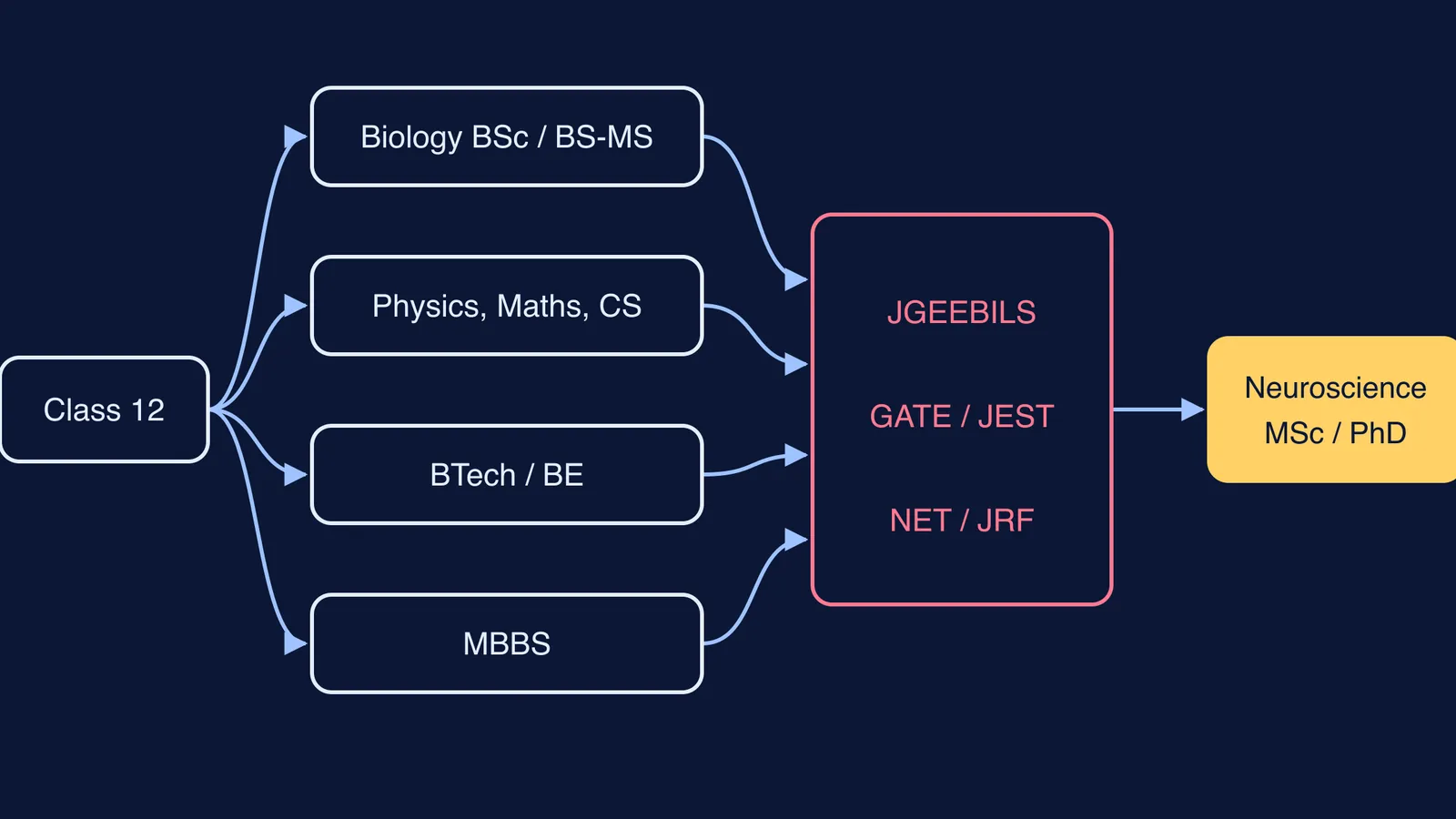
The Indian programmes below are mostly postgraduate, so you usually take a bachelor's degree first.
IIT Kanpur announced its new Department of Cognitive Science on 11 December 2020. It offers PhD, MTech and MS programmes, a dual degree and an undergraduate minor, so IIT Kanpur undergraduates can add the subject alongside their main programme.
IIT Delhi runs a two-year, four-semester MSc of 75 credits. It asks for a bachelor's degree with at least 55% aggregate (a 5% relaxation for SC, ST and PD candidates), and admission is through GATE in any discipline, with a few exemptions.
Abroad, UC San Diego's BS in cognitive science offers specialisations such as Machine Learning and Neural Computation, Design and Interaction, and Neuroscience.
So your bachelor's choice is about which lens you want to be strongest in. If you are weighing computing routes, compare BSc Computer Science and BTech CSE. Eligibility rules change, so confirm on the official admissions page before you apply.
What jobs does a cognitive science degree lead to?
UC San Diego's department says its graduates' most frequent job placements are in the computer industry: cognitive engineering (human factors), human-computer interface design, artificial intelligence, neural network applications, software design and development, and Internet startups. It notes growing demand in neuroscience, biotech and pharmaceuticals, and says a large percentage of its majors go on to graduate school in cognitive science, computer science or neuroscience, or to medical school.
In plain terms, there are two groups:
Research: a PhD, then a university or industry lab studying language, memory, decisions or perception. See how to start a computer science research career in college for first steps.
Technology: building AI systems, testing how people use apps, or designing interfaces that fit how attention and memory work.
How can you test whether cognitive science suits you?
Spend one weekend on each lens and notice which you would happily repeat.
Week 1, history: read how Edward Tolman's maze rats showed that learning forms mental maps. Note the experiment you would run next.
Week 2, psychology: time five family members reading colour words printed in the wrong colours, then in matching colours. Compare the average times and explain the gap.
Week 3, computing: write a short program that shows a random word and records how long someone takes to type it.
Week 4, neuroscience: read how neurons pass signals, and sketch what a brain recording of your Week 2 task might show.
Then decide. Loved Week 3? Lean towards computer science. Week 2? Psychology. Week 4? Biology or neuroscience. All four? Cognitive science is probably your field.
If a week stalls because you are missing a basic idea, such as how a neuron fires or what an algorithm is, the Fermi Concept Library covers every concept in physics, chemistry, biology, mathematics and computing, each with its own lesson.
Start Week 1 this weekend and keep your notes for your statement of purpose.