

On this page
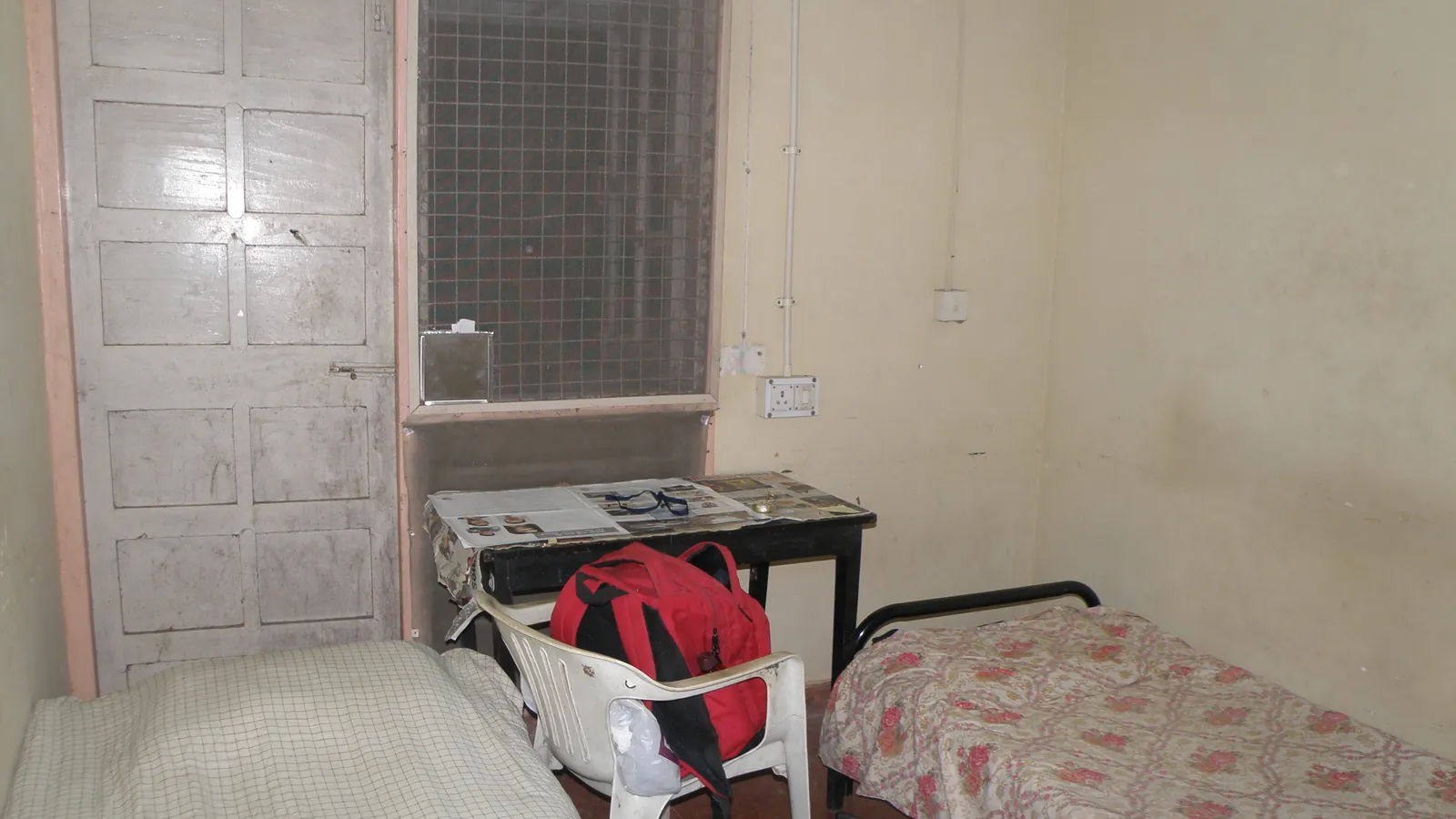
Hostel room allotment is often rushed: a floor plan, a quick walk, a list on the warden's desk. The things that shape your year are quieter: how much noise reaches your bed at night, how far the washroom is, how much daylight comes in, and who sleeps in the other bed.
Why does your hostel room matter so much?
Because it is where you sleep, and many college students do not get enough sleep. A review of research on college students found that 50% report daytime sleepiness and 70% get insufficient sleep (Hershner and Chervin, Nature and Science of Sleep, 2014). The same review notes that standard sleep advice, such as keeping a quiet environment, can be hard to follow in college dormitories. Your room choice is one part you control.
Which floor and wing should you pick?
Start with noise. The World Health Organization lists sleep disturbance among the health effects of environmental noise and recommends keeping night-time road traffic noise below 45 dB Lnight, the average sound level over the night (WHO compendium, environmental noise, 2022). You will not carry a sound meter on allotment day, but you can use the floor plan and your ears:
Stay away from the side facing the main road, the main gate or the parking area, where bikes and autos come and go late.
Avoid rooms right next to the stairwell, lift, common room, TV room or pantry. They are often busiest exactly when you want to sleep.
Middle floors are a safe default. Ask seniors whether the top floor heats up in summer and whether the ground floor gets damp, mosquitoes or a lot of passing footfall.
For the washroom, two or three doors away works well: close enough at 2 a.m., far enough that you do not hear every bucket and tap from 6 a.m.
How much does daylight in a hostel room matter?
It may matter more than most students expect. In a small pilot study of 49 office workers, those whose workplaces had windows slept an average of 46 minutes more per night during the workweek than those without windows (Boubekri and colleagues, Journal of Clinical Sleep Medicine, 2014). That was a small study of offices, not hostels, so treat it as a reason to check the window, not a promise. Teenagers' body clocks tend to run late (why teenagers feel sleepy later at night), and a dim room does not help. Prefer a window that opens to the outside, not only onto the corridor.
How do you choose a roommate in a college hostel?
Roommates rub off on each other. At Dartmouth College, where first-year roommates were randomly assigned, economist Bruce Sacerdote found that peer effects were very important in academic effort, and that peer effects on grades showed up at the level of the individual room (Sacerdote, Quarterly Journal of Economics, 2001).
If you get a say, matching sleep times matters more than matching hometown or branch. Five questions to ask before you agree to share:
What time do you usually sleep and wake up?
Do you study late in the room, or in the library?
Lights off completely, or a table lamp is fine? Fan speed, cooler or AC?
Late-night calls: in the room or in the corridor?
Friends in the room: how often, and until what time?
If rooms are allotted for you, ask them in the first week. For later disagreements, this guide on solving fights between friends in a hostel can help.
A quick way to compare two hostel rooms
Score each factor 0 (bad), 1 (okay) or 2 (good). Double the two sleep factors, then add up.
Night noise (x2)
Roommate's sleep time matches yours (x2)
Washroom distance
Daylight from an outside window
Desk space, plug points and phone signal
Worked example. You sleep at 11 p.m.
Room A: second floor facing the main road, three doors from the washroom, outside window, roommate sleeps at 1 a.m., decent desk. Score: noise 0, roommate 0, washroom 2, daylight 2, desk 1 = 5.
Room B: third floor at the back, next door to the washroom, window only onto the corridor, roommate sleeps at 11 p.m., decent desk. Score: noise 4, roommate 4, washroom 0, daylight 0, desk 1 = 9.
Room B wins though it looks worse on a tour. Patch its weak points with earplugs and daytime study in the library. For the desk itself, see how to set up a study desk in a hostel room.
Whichever room you get, short planned study sessions travel well. Fermi's AI tutor can work out what you already know and build a plan for the session, so a quiet hour in the library goes to the right topic.


