On this page
When a TV loses its picture, an inverter stops charging or a washing machine throws an error code, someone has to work out why and fix it. That is the job of an electronics technician or service engineer, and in India you can start training for it right after Class 10.
What does an electronics service engineer actually do?
The Directorate General of Training (DGT) describes the work in its curriculum for the Mechanic Consumer Electronic Appliances trade. An electronics mechanic tests faulty equipment, finds defects with oscilloscopes, signal generators, ammeters and voltmeters, replaces faulty parts with hand tools and a soldering iron, and keeps records of repairs.
The same document lists the jobs the trade leads to, including:
Field technician for UPS and inverters, washing machines, or water purifiers and mixers
Television repair technician, in a factory or a service centre
DTH set-top box installer and service technician
CCTV or solar panel installation technician
Field Engineer TV, which the curriculum says is also called Service Engineer – TV
Many are after-sales roles: you install at the customer's premises, diagnose, fix minor faults or replace modules, and recommend factory repair for bigger faults.
Which diploma routes lead into electronics repair?
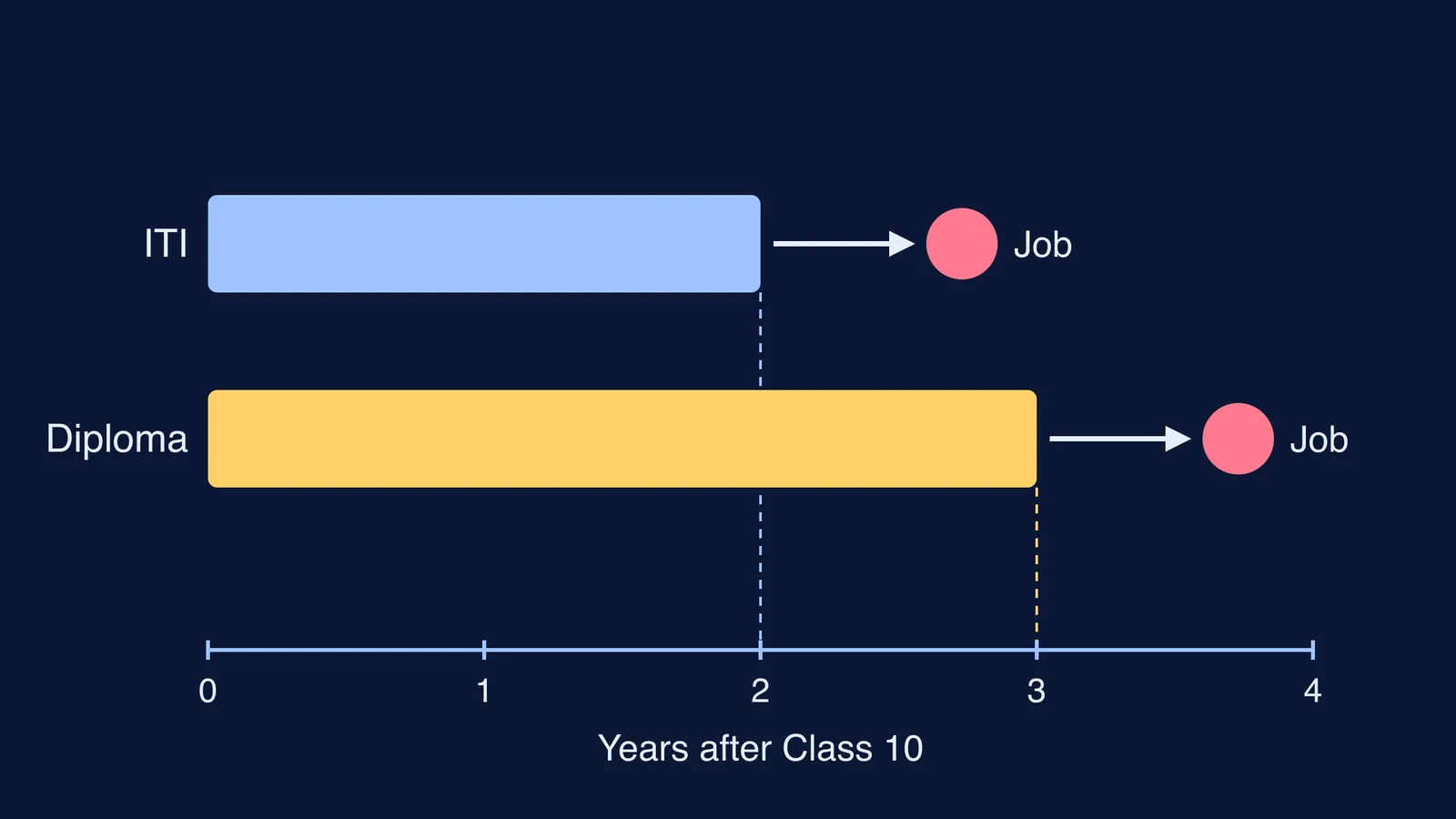
ITI trade (two years). The ITI trade Mechanic Consumer Electronic Appliances is a two-year course at NSQF Level 4. To join, you need a Class 10 pass with science and maths (or a vocational subject in the same sector), and you must be at least 14. Each year has 1,200 training hours, 840 of them trade practical, plus 150 hours of compulsory on-the-job training or a supervised group project. When you pass, DGT awards you a National Trade Certificate (NTC).
After the NTC, the curriculum lists these next steps: a technician's job, an apprenticeship, lateral entry into an engineering diploma, or Class 12 through NIOS.
Polytechnic diploma (three years). A polytechnic diploma in electronics, or in electronics and communication, runs for three years; the DGT curriculum refers to it as a "03 years Diploma" from AICTE or a recognised board. In September 2020, AICTE told state governments and universities that there is no restriction on admitting diploma holders to B.Tech courses through lateral entry. Check your state's counselling notice for seats and cut-offs.
Short skill qualification. The Electronics Sector Skills Council of India (ESSCI) awards shorter, job-specific qualifications. Field Technician Computing and Peripherals is an NSQF Level 4 course of 510 hours: 150 of theory, 210 of practical work and 150 on the job. Entry routes include Class 12 at age 18, or Class 10 plus a two-year NTC or NAC. The listed next step is Service Engineer – IT Hardware.
ITI or polytechnic: which should you choose?
We have a full comparison of ITI and polytechnic after Class 10. For electronics repair, three questions settle most cases:
Do you want to earn within about two years? Choose the two-year ITI trade, then an apprenticeship. It still lets you move into a diploma later through lateral entry.
Might you want a B.Tech later? The diploma is the more direct route, because diploma holders can join a B.Tech through lateral entry.
Have you finished Class 12 and want a specific job quickly? Look at an ESSCI qualification in the product area you like.
How do technicians diagnose a fault?
DGT's description of a television repair technician shows the basic logic. First find which section of the TV has failed. If the fault is on the printed circuit board, find the specific fault and correct it, or replace the board with a new one. Here is that logic as a routine you can practise:
Ask: what exactly happens, since when, and did anything change, such as a power cut, a fall or water?
Observe: look for burnt smells, swollen capacitors, loose plugs and error lights.
Isolate: split the device into blocks (power supply, control board, display, motor) and decide which block can explain every symptom.
Measure: test that block with a multimeter, and an oscilloscope where needed, and compare readings with the service manual.
Repair or replace: change the part or module, then test the whole device under normal use.
Record: write down the fault, the readings and the fix.
Worked example: a TV has sound but no picture. Sound suggests the power supply and main board are at least partly working, so the display and backlight section is a sensible first suspect.
What can you start doing in Class 9 or 10?
Get really good at current, voltage, resistance and power. If a topic still feels shaky, the Fermi Concept Library has a lesson on each physics concept.
Learn to identify electronic components by sight and by their markings.
Practise basic soldering on a kit, under supervision.
Circuits are easier to see than to read about. The Fermi Simulation Lab has interactive simulations you can experiment with before you touch real hardware.
Next step: open the trade curriculum linked above, read its job roles pages, and pick the two roles you would most like to try.