On this page
The old remote that stopped working, the wired keyboard nobody uses, the landline phone in the cupboard: sooner or later a curious child asks, "Can I open it?" Usually you can say yes, if you pick the right gadget, get the power out first and stay close enough to answer questions.
Which old gadgets are safe for a child to open?
Think in two lists: simple things that ran on removable batteries or a computer port (green), and anything that ran straight off the wall socket or has a battery built in (red).
Green: wired keyboards and mice, TV remotes (batteries out), landline handsets, wind-up toys that have fully run down, old calculators with the cells removed.
Red: microwave ovens, old box (CRT) TVs and monitors, desktop computer power supplies, phones, laptops, power banks, smartwatches and wireless speakers.
The red list is about stored energy. Capacitors may store hazardous energy even after equipment has been switched off, according to Virginia Tech's Environmental Health and Safety office, which treats 50 volts or less as the safe level. Microwave ovens are the clearest case: UC Berkeley's safety guidelines say never to tamper with any part of one, because it runs on high voltage and current that can be lethal if handled wrongly.
Built-in batteries are the other reason. Lithium-ion batteries sit in phones, laptops, tablets and even children's toys, and "even used batteries can have enough energy to injure or start fires", the US Environmental Protection Agency warns.
How do you check a gadget before your child opens it?
Run this check out loud, so your child learns it too.
Did it plug straight into a wall socket? If yes, it goes on the red list, however harmless it looks.
Is there a battery you cannot pop out by hand? If yes, red list.
Are there coin or button cells inside? An adult takes them out, tapes over the ends and puts them somewhere high before anyone else touches the device.
Button cells deserve that extra step. If swallowed, the battery reacts with saliva to make caustic soda that can burn through tissue, and symptoms are not immediately obvious, explains Great Ormond Street Hospital. They hide in remotes, calculators, key fobs, digital thermometers and musical greeting cards.
What tools and supervision does a child need?
Match the job to the age, not the enthusiasm.
Under 8: you undo the screws; your child lifts the cover, sorts the parts and asks the questions.
8 to 12: your child uses the screwdriver with you in the room and the three-question check already done.
Teens: they can work alone on green-list items once they have shown they follow the rules every time.
Small Phillips and flat screwdrivers, an egg tray for screws, a plastic card for prying (never a kitchen knife) and safety glasses for springy parts cover almost everything. Keep younger siblings away from loose screws. If your teen is ready for more, our guide to teaching a teen to use basic tools safely covers the next steps, and the house rules in basic electrical safety at home are worth reading together first.
What can they learn from the parts inside?
Here is a worked example with an old wired keyboard, a classic first project.
Before opening, ask: "How does the computer know which key you pressed?" Write down the guess.
Undo the screws and lift the keys. Underneath you will usually find rubber domes and thin plastic sheets with printed tracks.
Press a dome against the sheets. Pressing pushes two tracks together and closes a circuit; each key closes a different pair.
Compare what you found with the first guess.
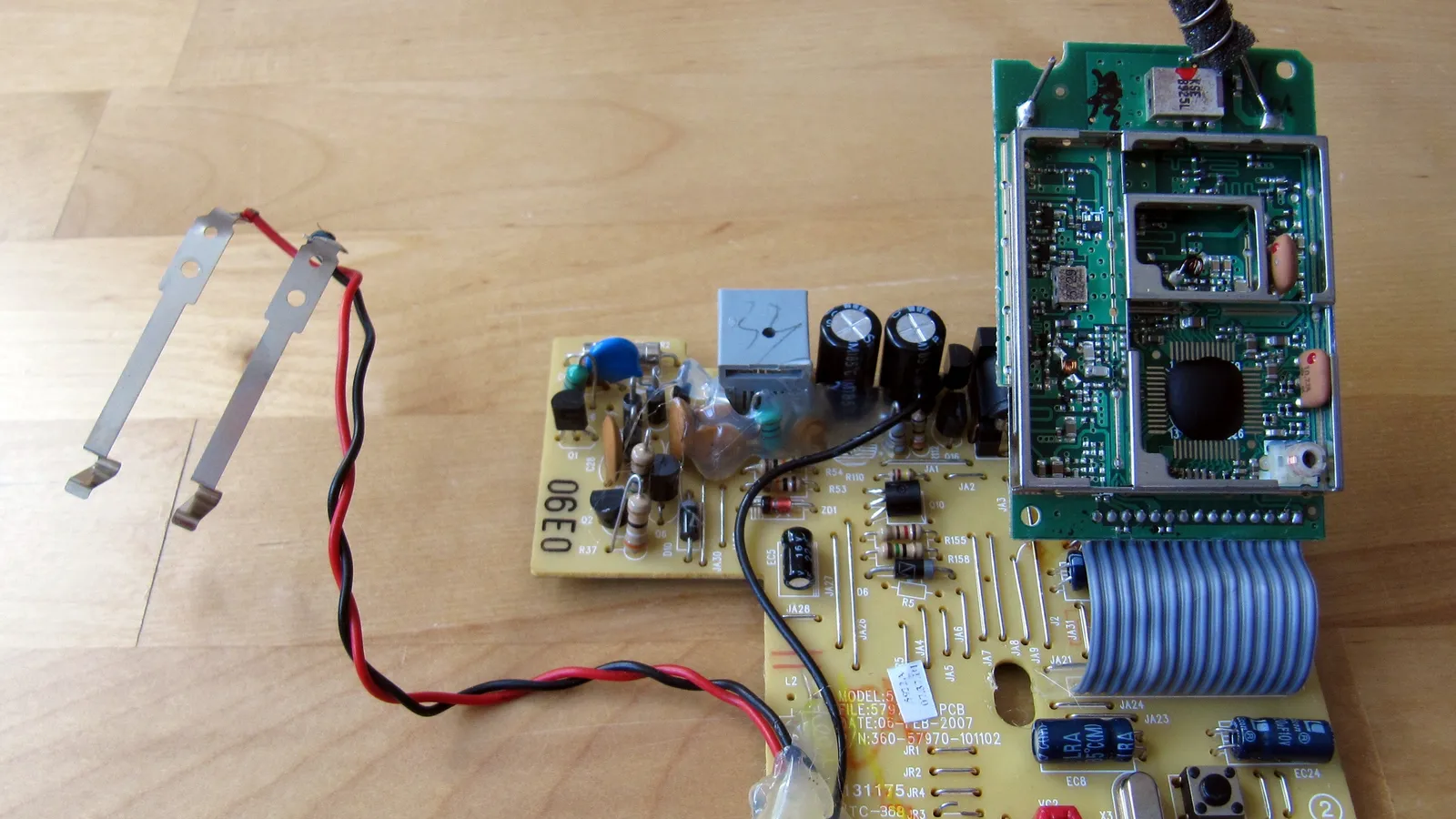
A landline handset works the same way and adds a speaker: a magnet and a coil of wire. If the child wants to know why current in a coil makes it move, the Fermi Simulation Lab has interactive simulations for ideas that are easier to see than to read. To put names to the parts on the board, try our guide to identifying electronic components.
What should you do with the parts afterwards?
Keep motors, speakers, springs and gears in a labelled box for future projects. The rest is e-waste, and the world produced a record 62 million tonnes of it in 2022, of which only 22.3% was documented as properly collected and recycled, according to the Global E-waste Monitor 2024.
Lithium-ion batteries and devices containing them should not go in household garbage or recycling bins, the EPA advises; tape the terminals and take them to a battery collection point. In India, the Central Pollution Control Board publishes a list of registered e-waste recyclers and dismantlers, and many brands run take-back schemes.
This weekend, pick one green-list gadget, run the three-question check together and let your child hold the screwdriver.