On this page
Aerospace engineering is the branch that designs aircraft, rockets and spacecraft. After a BTech in India, many routes into design jobs, research and an MTech use one exam: GATE. Here is what the branch teaches, who hires, and how to keep your options open.
What does a BTech in aerospace engineering cover?
A useful outline of the core subjects is the official GATE 2026 Aerospace Engineering syllabus from IIT Guwahati. It has six sections:
Engineering mathematics: linear algebra, calculus and differential equations.
Flight mechanics: aircraft performance and stability.
Space dynamics: Kepler's laws and escape velocity.
Aerodynamics: airfoils, lift and drag, and compressible flow.
Structures: stress, strain and vibrations.
Propulsion: jet engines, turbomachinery and rockets.
In the GATE AE paper, 90% of questions come from core topics and 10% from special topics, according to the same syllabus.
If you are in Class 11 or 12, much of this is physics you already study: gravitation, fluids and thermodynamics. Orbits are hard to picture from equations alone. The Fermi Simulation Lab has interactive simulations for ideas that are easier to see than to read.
Which organisations hire aerospace engineers in India?
ISRO. The Indian Institute of Space Science and Technology (IIST) in Thiruvananthapuram lists 1,498 alumni in ISRO on its homepage.
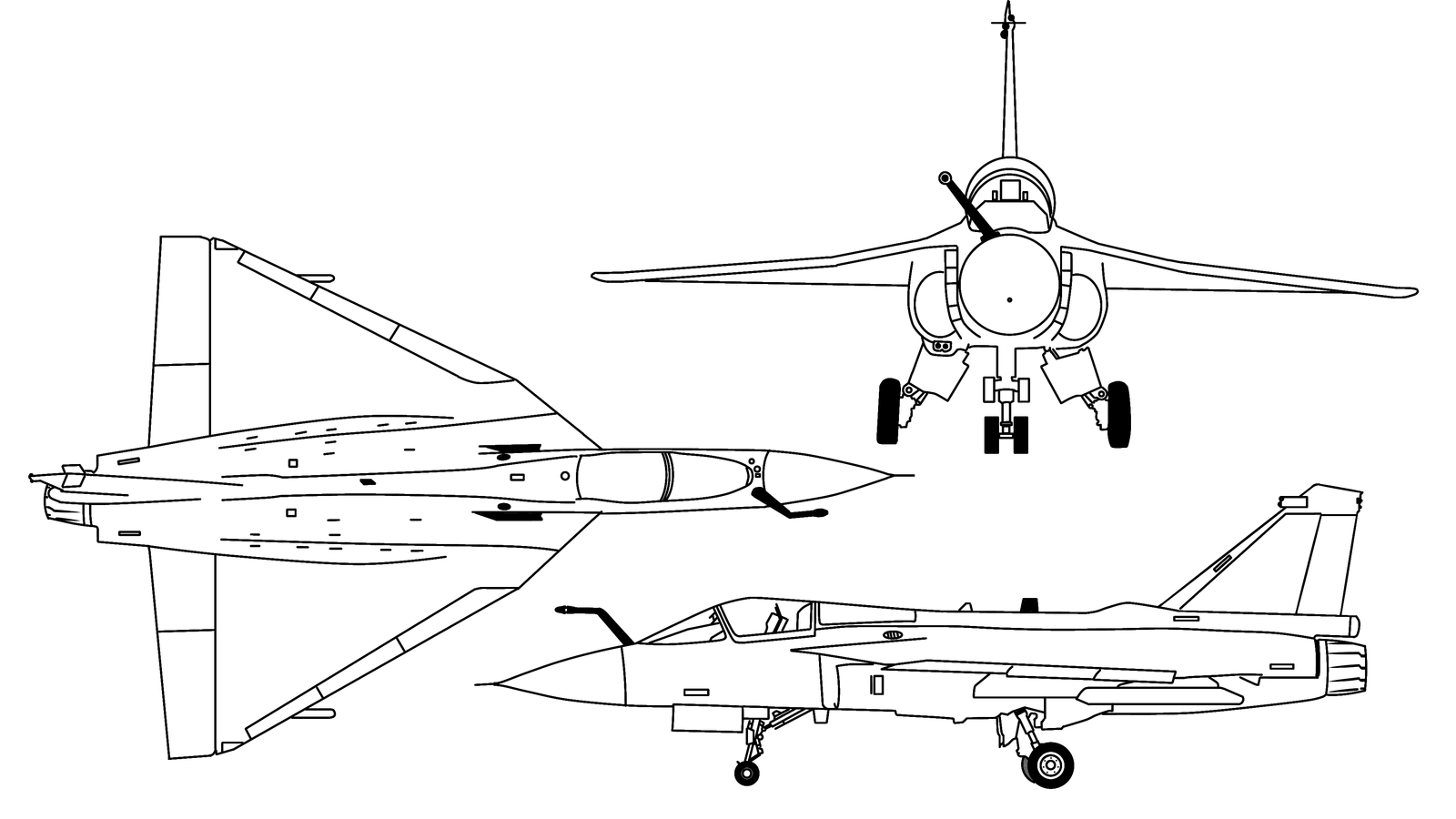
Aeronautical Development Agency (ADA). The ADA website lists the Light Combat Aircraft (LCA) Air Force Mark-1, Mark-1A and Mark-2, the naval LCA, and the Advanced Medium Combat Aircraft among its programmes and products.
CSIR-National Aerospace Laboratories. Set up in 1959, CSIR-NAL describes itself as the only government aerospace R&D laboratory in India's civilian sector.
Hindustan Aeronautics Limited (HAL). HAL's 2026 Design Trainee recruitment included Aeronautical among its disciplines, with an online test and then an interview, as reported by Careers360.
DRDO laboratories. Our guide to the research scientist route into DRDO and ISRO explains how they recruit.
Can an aerospace graduate join ISRO through GATE?
It depends on each advertisement. Here is a worked example.
ISRO's July 2026 recruitment of Scientist/Engineer 'SC' covered seven disciplines: civil, architecture, electrical, refrigeration and air-conditioning, mechanical, electronics and computer science. Aerospace was not listed as a discipline. The official FAQ_28072026.pdf) says only qualifications in the application's drop-down menu could apply, and the GATE paper had to match the degree. There was no written test; candidates were shortlisted for interview on GATE scores in a 1:7 ratio, and only 2025 and 2026 scores counted.
Yet a 2016 advertisement from ISRO's satellite centre in Bengaluru, now called URSC, did list Aerospace Engineering. Your branch name alone does not decide eligibility; each advertisement's table does.
Use this checklist on every notice:
Is my exact degree listed?
Which GATE paper does the post accept: AE, ME or another?
Which GATE years are valid?
Is there a written test, or is the shortlist on GATE alone?
What minimum marks, and within what course duration?
Many PSUs also use GATE scores in recruitment, as the GATE 2026 site notes. Our explainer on PSU jobs through GATE covers that process.
What are the higher study options after BTech aerospace?
A valid GATE score can be used to seek admission to master's and direct doctoral programmes, and a qualifying score to seek financial assistance for them, says the official GATE 2026 site.
Admission routes differ by institute. At IIT Hyderabad's Department of Mechanical and Aerospace Engineering, GATE-qualified candidates apply through the Common Offer Acceptance Portal (COAP) and receive a stipend under Ministry of Education norms, while a self-sponsored MTech costs about ₹11 lakh for two years with no financial support, according to its MTech brochure. If you are weighing a job against an MTech or study abroad, read our guide on choosing between a GATE job and an MS after BTech.
A simple plan for your four years
Year 1: Take mathematics and mechanics seriously; later subjects build on them.
Year 2: Print the GATE AE syllabus and tick off topics as your courses cover them.
Year 3: Do an internship or project, and start saving past ISRO, HAL and DRDO notices to study their eligibility tables.
Year 4: Take GATE in the paper your target posts accept, and apply to both jobs and MTech programmes.
If the physics under a topic such as compressible flow or rocket performance is not clicking, the Fermi Concept Library has a lesson for every concept in physics and mathematics, so you can rebuild the basics before attempting problems.
Next step: open the GATE 2026 papers and syllabus page and read the AE syllabus once to see whether this branch matches what you enjoy.