On this page
If your college admission form asks for an "ABC ID", it wants the number that links your credits to a national credit account. Here is what that account holds, how it connects to APAAR, and when it matters.
What is the Academic Bank of Credits?
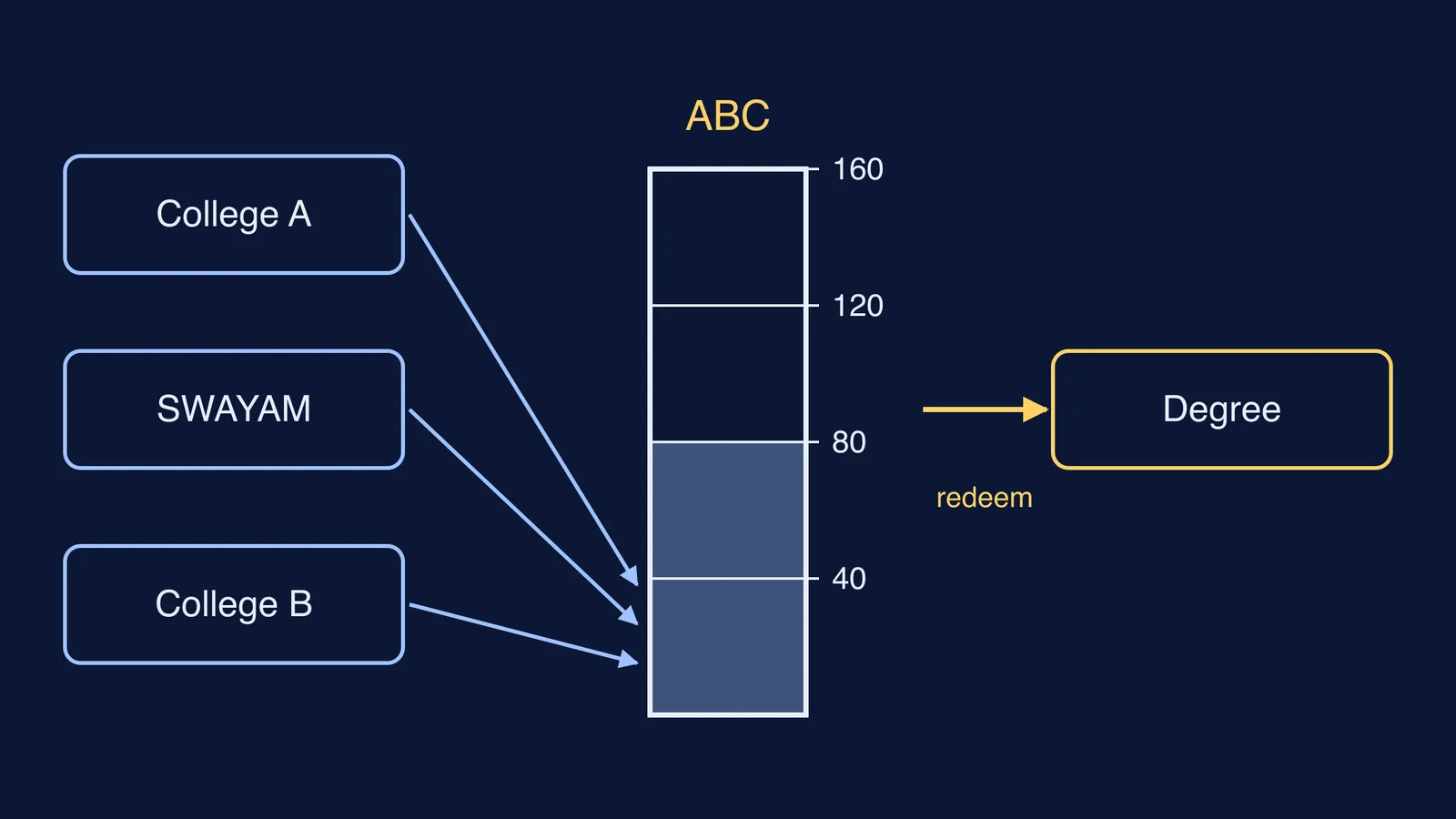
The UGC's 2021 regulations define the Academic Bank of Credits as "an academic service mechanism as a digital/virtual/online entity" that lets students hold an academic account for credit recognition, accumulation, transfer and redemption (UGC regulations, clause 2.2). The same regulations describe it as a bank "on the pattern of commercial banks", with students as the account holders (clause 5.3).
The currency is the credit. Under the regulations, one credit is one hour of theory or tutorial, or two hours of lab work, each week for a semester (clause 2.7). Our guide to how credits, SGPA and CGPA work covers the maths.
The most important rule is who makes deposits. ABC does not accept credit documents from students; it only accepts credits sent by the registered institution that awarded them (clause 6.1). Courses taken online through national schemes such as SWAYAM and NPTEL can also be counted (clause 6.3).
Is the ABC ID the same as the APAAR ID?
Yes. A Press Information Bureau backgrounder dated 30 June 2026 says students register on the ABC portal and receive "a unique ABC ID or APAAR ID linked to their Aadhaar and DigiLocker account" (PIB backgrounder). The same document describes APAAR as a unique 12-digit student ID under the "One Nation, One Student ID" initiative, covering school, higher education and skill records. It reports 26.30 crore verified APAAR IDs generated as of June 2026, and says IDs can also be made at a Common Service Centre.
Many students already got one in school: the backgrounder lists 16.62 crore APAAR IDs under school education. Our APAAR ID guide for students walks through creating or finding yours.
How long do credits stay in your ABC account?
Credits can be redeemed for a qualification for a period set by the colleges involved, up to a maximum of 7 years (clause 6.6). Only courses taken at registered institutions during or after the 2021-22 academic year count (clause 6.11). Once credits are redeemed for a degree, diploma or certificate, they are debited permanently and cannot be reused for another qualification (clauses 8.7 and 8.9).
When do you actually use your ABC account?
Mostly at two moments: leaving early and moving colleges.
Exiting early. The UGC's December 2022 undergraduate framework sets the exit points (UGC curriculum and credit framework, section 3.2.3):
UG certificate: exit after year one with 40 credits, plus a 4-credit vocational course in the summer
UG diploma: exit after year two with 80 credits, plus a 4-credit vocational course in the summer
Three-year degree: 120 credits
Four-year honours degree: 160 credits
The same framework lets students who exit re-enter within three years and finish within a maximum of seven years. See our explainer on multiple entry and exit under NEP.
Moving colleges. Transfers are not automatic. Under the 2021 regulations, the receiving college sets its own rules for accepting outside credits, and you must earn at least 50% of your credits from the institution that awards the degree, plus its required core credits (clauses 8.2 and 8.3).
A worked example: you finish year one at College A with 40 credits, then stop for a year without claiming a certificate. All 40 sit in your account. You apply to College B's second year. College B decides how many of those credits it accepts. If it awards a 120-credit degree, at least 60 of those credits must be earned at College B, and you need to finish before the seven-year limit runs out.
Your ABC setup checklist
Find or create your APAAR ID through DigiLocker, the ABC portal or a Common Service Centre.
Check that your name and date of birth match your Aadhaar and Class 12 marksheet exactly.
Give the ID to your college at admission and ask whether the college is registered with ABC.
After each semester result, log in and confirm the credits appear. If not, write to your college office first.
Keep certificates for any SWAYAM or NPTEL courses, and ask your department whether it accepts them.
Before exiting or transferring, get written confirmation of which credits the new college will accept, and note the date your oldest credits expire.
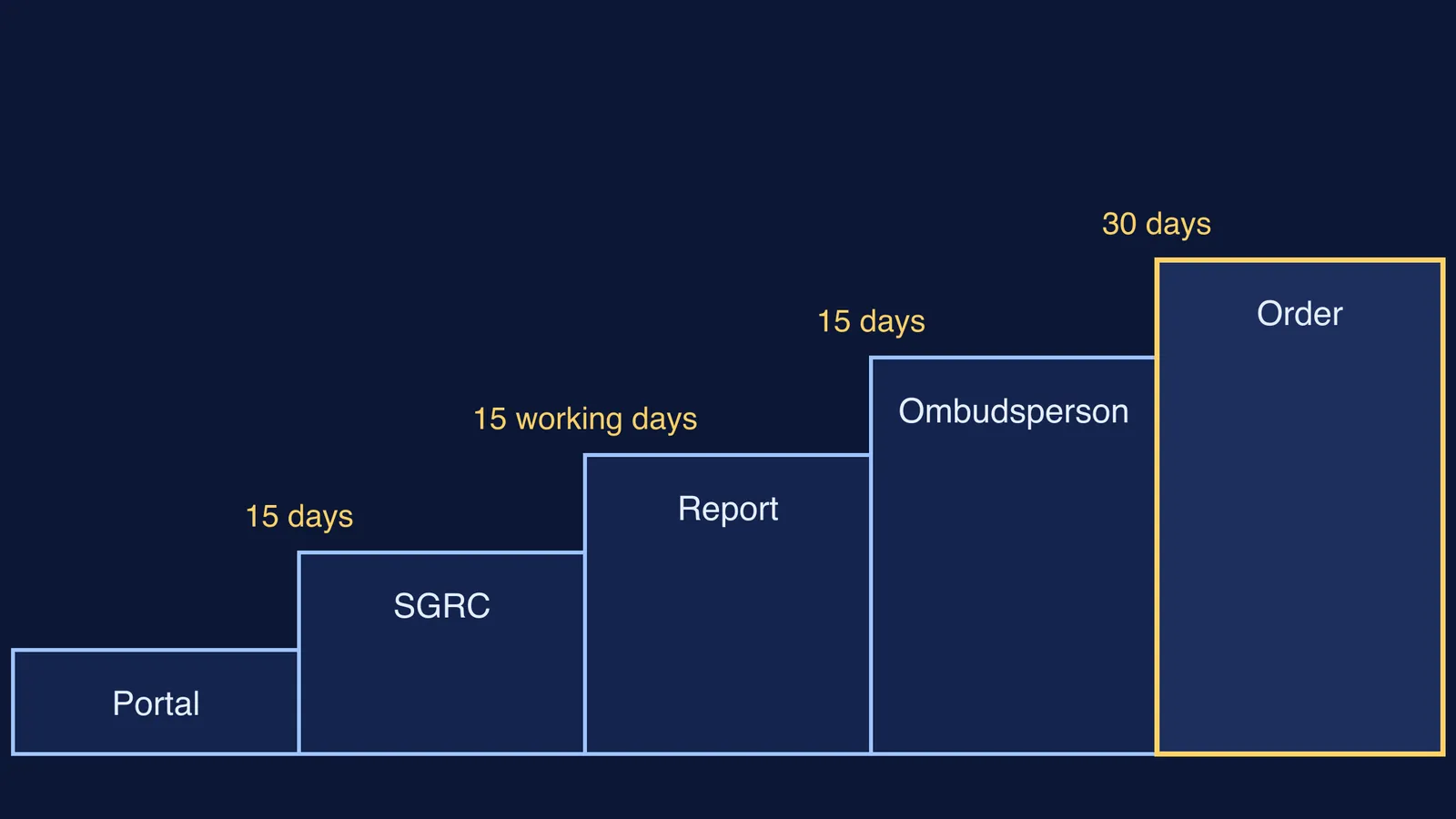
If a complaint goes nowhere, the regulations require a grievance redressal mechanism at your college and at the national level (clause 9.5).
If you come back after a break and your maths or physics feels rusty, Fermi's AI tutor can work out what you already know and build a plan for the session, so the first week back is less of a scramble.