On this page
It is 11.40 pm, the light under your teenager's door is off, and the soft glow of a screen is still there. Many families know this scene. The question is not whether your child is good or bad with a phone. It is whether the bedroom is the right place for one at night, and how to change the habit without turning it into a battle.
Should a teenager keep the phone in the bedroom at night?
The evidence points one way. A 2016 meta-analysis in JAMA Pediatrics pooled 20 studies covering 125,198 children aged 6 to 19.
Children who used a portable device at bedtime had more than twice the odds of inadequate sleep (odds ratio 2.17), according to that JAMA Pediatrics analysis.
The same study found that children who had access to a device at night but did not use it still had higher odds of inadequate sleep (odds ratio 1.79) and excessive daytime sleepiness (odds ratio 2.27). All 20 studies were cross-sectional, so they show a link rather than proof of cause, but this is the strongest argument for moving the phone, not just setting a rule about using it.
An earlier systematic review of 67 studies by Lauren Hale and Stanford Guan found screen time was linked to worse sleep, mainly shorter or later sleep, in 90% of them. The authors note that cause has not been confirmed, but the pattern is consistent.
Why it matters for school: teenagers aged 13 to 17 need 8 to 10 hours of sleep a day, according to the US Centers for Disease Control and Prevention. The American Academy of Pediatrics advises families to keep phones and screens out of children's bedrooms at night and to avoid screens for an hour before bed.
Why a family charging spot works better than taking the phone away
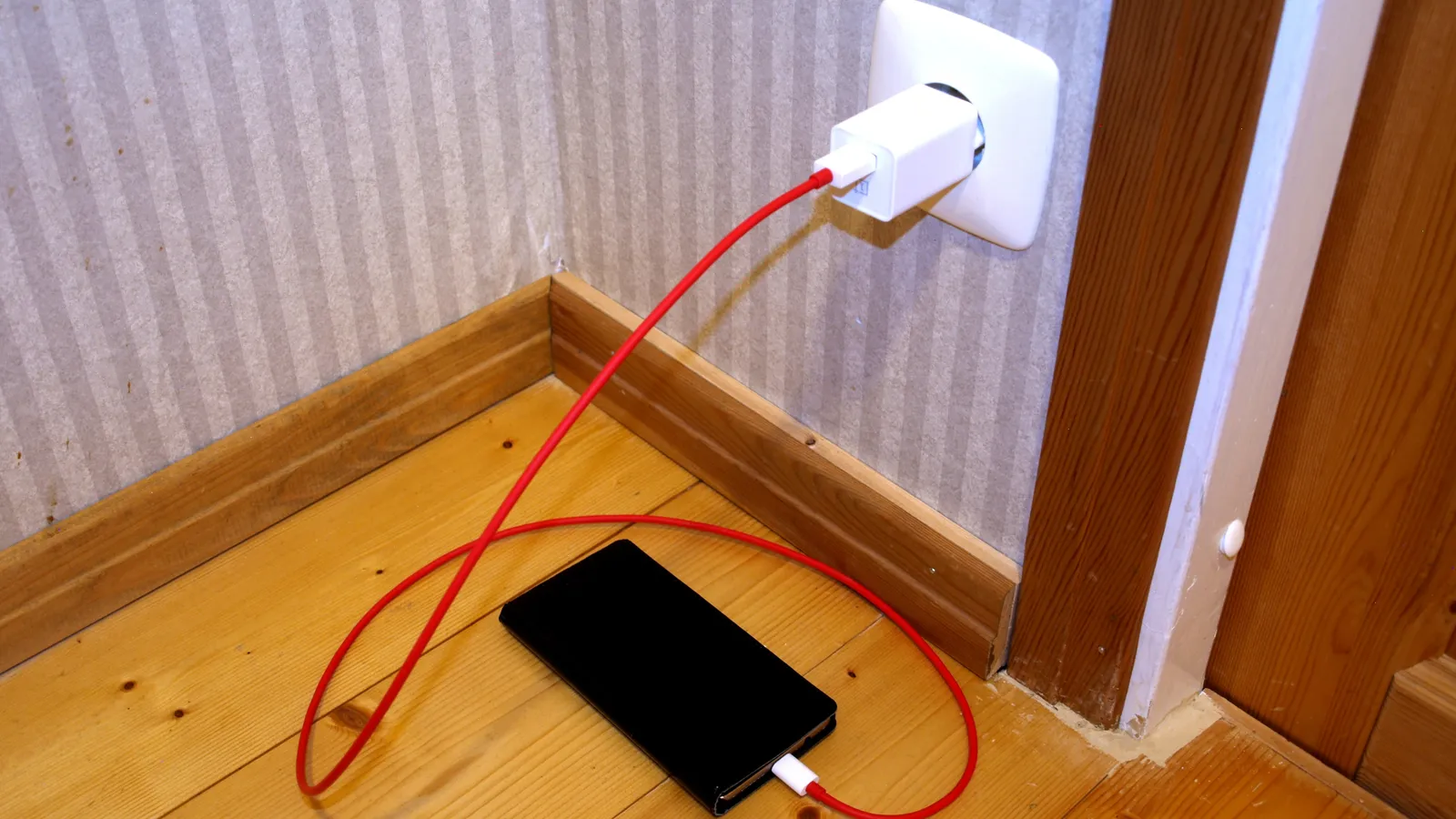
Confiscation feels like punishment, and teenagers react to punishment. A charging spot is a household rule, like shoes at the door. It works better when:
Everyone uses it. Parents' phones go there too. Teenagers notice double standards fast, and our post on how your own phone use shapes your child's study habits explains why.
It is in a shared space. A shelf in the hall or living room, with a multi-plug, not your bedroom.
It has a fixed time. For example, 10 pm on school nights and 11 pm on weekends.
It is boring. No checking, no searching bags. The phone is either on the shelf or it is not.
How do you introduce it without a fight?
Pick a calm afternoon, not the night you found them scrolling at 1 am. Then try this five-step conversation.
Start with yourself. "I've noticed I check my phone in bed and sleep badly. I want to change that, and I'd like the whole family to try it with me."
Share the reason, briefly. "Doctors say teenagers need 8 to 10 hours, and studies link even having a phone within reach at night to less sleep."
Ask, then listen. "What would make this hard for you?" Write down their answers. Usually it is alarms, friends' messages, or late study.
Solve each worry together. A cheap alarm clock. Telling friends "I'm offline after 10". Finishing doubts earlier.
Agree a trial. "Let's try two weeks, then review." A trial with an end date is usually easier to say yes to than a permanent ban.
If the first reaction is anger, step back and read what to do when a teen gets angry about the phone before trying again.
What about alarms, study and "I need it for..."?
These are the objections you will hear, with a fair answer to each.
"It's my alarm." A basic alarm clock does the job, and it cannot show notifications.
"Friends message me late." Night-time settings can silence everyone except family. Our guide to setting up Focus mode on a teen's phone walks through it.
"I study on it." Then study ends before the phone goes to the shelf. If late-night doubts are the reason, a plan made earlier in the evening helps: Fermi's AI tutor can work out what your teen already knows and build a plan for the session, so the hard questions get done before 10 pm.
"What if there's an emergency?" Keep one parent's phone on with the ringer up, outside the bedroom.
A two-week plan
Day 1: Set up the shelf, multi-plug and alarm clock together.
Days 1 to 3: Parents go first and say so out loud.
Days 4 to 14: Everyone's phone on the shelf by the agreed time.
Day 14: Review over a meal. What helped? What should change? Adjust the time, not the rule.
Tonight, choose the shelf. Tomorrow, have the conversation.