

On this page
You ask for the phone, and suddenly there is shouting, a slammed door, maybe tears. It feels out of proportion, but it usually isn't random.
Why does my teenager get so angry when I take the phone away?
For many teens, the phone holds their friends, their group chats and their plans. Taking it away can feel like being cut off mid-conversation.
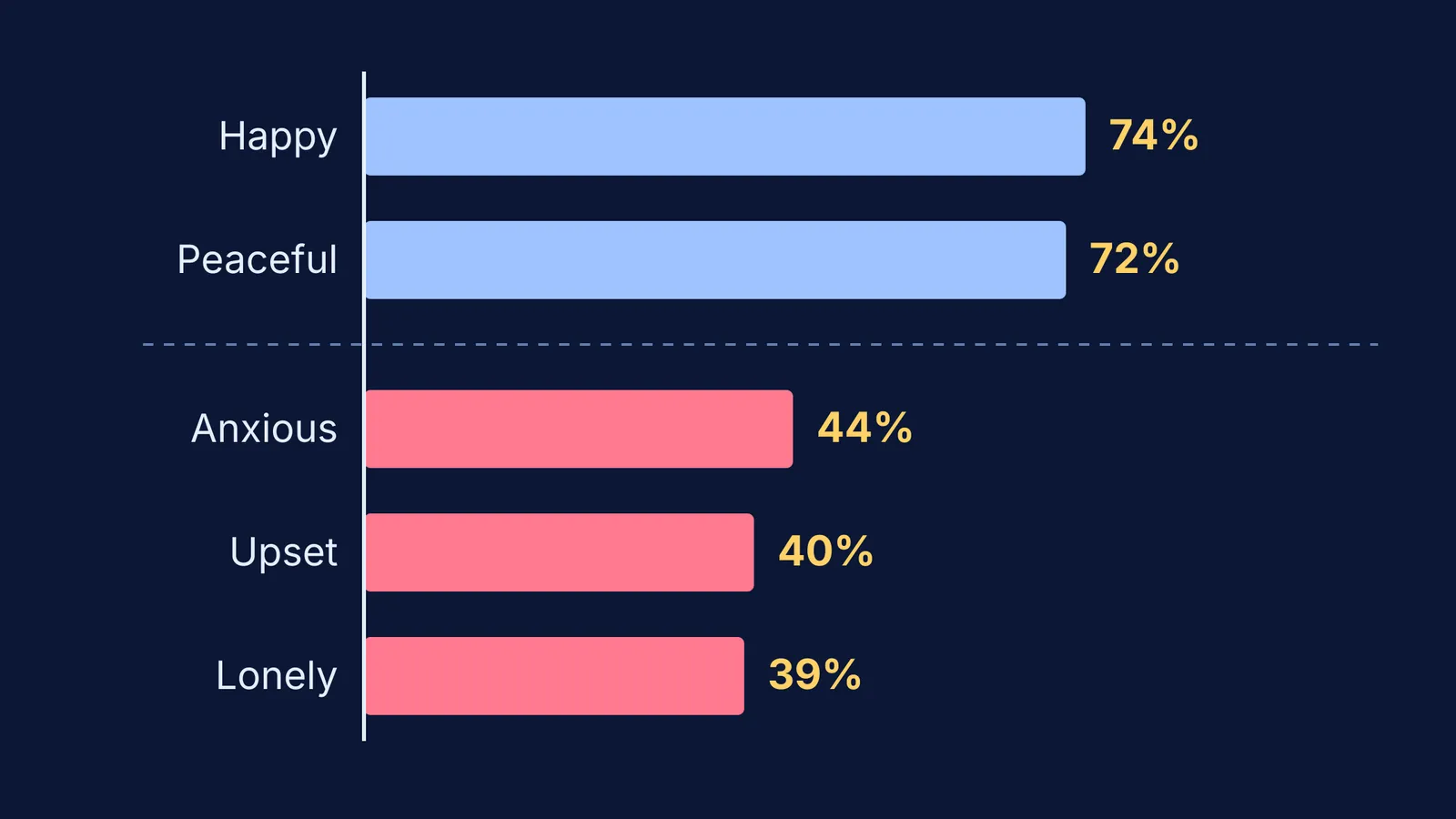
In a Pew Research Center survey of US teens aged 13 to 17, 74% said being without their smartphone often or sometimes makes them feel happy and 72% said peaceful, while 44% said it makes them feel anxious. The same survey found that 38% of parents and 38% of teens say they at least sometimes argue about how much time the teen spends on the phone.
The body reacts too. In a 2015 study in the Journal of Computer-Mediated Communication, Russell Clayton and colleagues found that when iPhone users were kept from answering their ringing phone, their heart rate, blood pressure and anxiety rose and they found fewer words in a word-search puzzle. The 40 participants were university students, not teens, but it hints at why the first reaction is so strong.
How the phone is taken matters as much as the fact that it is taken. Across four studies with 1,472 young people aged 12 to 21, Van Petegem and colleagues found that controlling parenting was linked to adolescents feeling pressured and pushing back, a reaction psychologists call reactance. A sudden grab, with no warning and no reason given, is likely to feel like exactly that kind of control.
How do you agree on phone limits before the fight?
The American Academy of Pediatrics suggests discussing family media rules with your children rather than announcing them, and setting screen-free zones such as the dinner table, homework time and before bed. It also says parents are role models, so the plan should cover your phone too.
Sit down on a calm day, not right after a fight, and agree on five things:
Where the phone sleeps. For example, charging in the living room from 10.30 pm.
Study blocks. When the phone is out of the room, and what happens to genuine needs like the class group chat.
Warnings. A two-minute heads-up before handover, so a message can be finished.
What happens if a rule is broken. One clear, short consequence, decided now, not invented while angry.
A review date. Look at it again in a month, and let your teen propose changes.
Write it down. Our guide to a simple family phone agreement with a teen has a template, and setting up Focus mode on a teen's phone lets the phone itself keep study blocks quiet.
Here is how that looks for one family. Meera is in Class 11 and keeps sliding from homework into reels. She and her parents agree on a 7 to 9 pm study block with the phone on the dining table, a five-minute check at 8, and the phone charging outside her room after 10.30. If she breaks it, the next evening's study block starts with the phone already handed over.
If the study block itself is the hard part because your teen doesn't know where to start, Fermi's AI tutor can work out what they already know and build a plan for the session, so the phone-free hour begins with a clear next step.
What should I say when my teen explodes over the phone?
It will still blow up sometimes. When it does:
Lower your voice, not your standard. Speak slowly.
Name the feeling. "I can see you're really angry. You were in the middle of something."
Point to the agreement. "We agreed the phone goes on the table at 7. It goes back at 9."
Don't debate while you're both hot. "I'm happy to talk about changing the rule on Sunday. Not right now."
Give space. Let them go to their room. Do not follow them to make one more point.
Reconnect later. A snack or a chat about something else.
If they say something hurtful, you can say: "I won't talk while we're shouting. I'll come back in ten minutes." Then do it. The same calm approach works for a child who gets angry when you correct homework.
When is it more than a phone fight?
The WHO's European office reports that 11% of adolescents showed signs of problematic social media use in 2022, up from 7% in 2018, based on nearly 280,000 young people aged 11, 13 and 15 in 44 countries and regions. It describes this as addiction-like behaviour: struggling to control use, withdrawal symptoms without it, and neglecting other activities.
Talk to a doctor, school counsellor or other professional if the anger includes threats of self-harm, violence, or weeks of poor sleep, withdrawal from friends or falling marks. In India, Tele MANAS offers free mental health support 24 hours a day on 14416, in English and regional languages.


