

On this page
The scene is a familiar one in many homes. Your child is sitting at the kitchen table, working through a set of maths problems or writing an essay. You notice they have written the wrong answer for the third question, or misspelled a common word, so you gently point it out to be helpful. Instead of thanking you for saving them from a bad grade, they explode in anger. They might crumple the paper, shout, or refuse to finish the assignment altogether.
You might wonder why your willingness to help is met with such hostility. It can feel deeply ungrateful and confusing. The answer, however, is not that they hate learning or that they want to fail. The problem is almost entirely about how the correction is delivered and what it represents to them at that moment.
Why does my child get angry when I correct their homework?
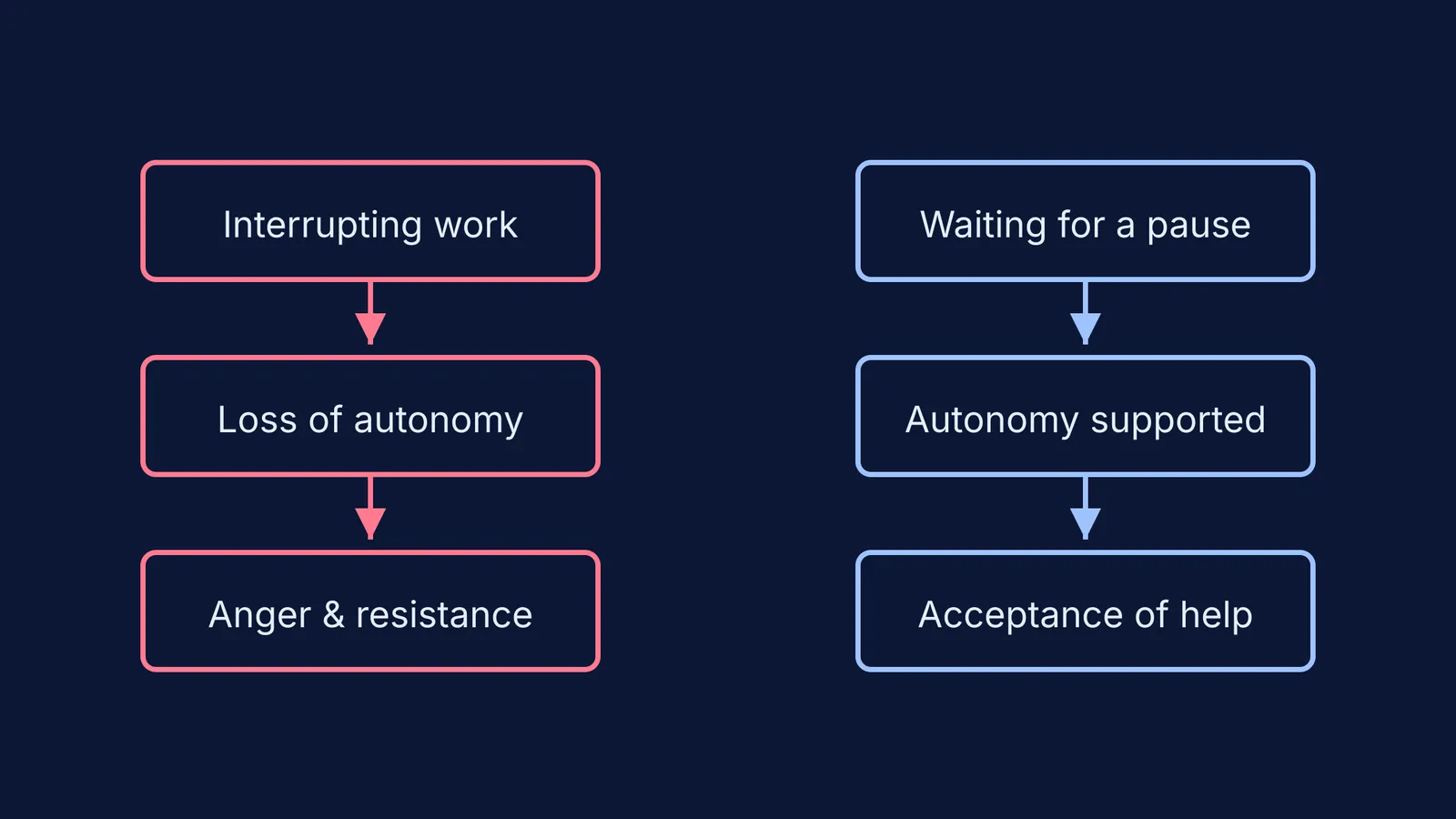
It comes down to a clash between a parent's desire to help and a child's psychological need for autonomy. A 2021 Stanford University study found that parents who intervene while a child is actively engaged in a task have children who struggle more with self-regulation. When you interrupt a child who is already focused, you inadvertently signal that they cannot manage the task themselves.
This parental over-engagement frustrates their basic need to feel capable and competent. Instead of seeing a helpful tip, the child perceives a direct threat to their independence. This threatens their sense of control over their own work, which triggers an immediate emotional defense mechanism. For young children and teenagers alike, this loss of control often manifests as sudden anger, tears, or shutting down entirely. The focus shifts instantly from learning the material to regaining their lost independence.
How can I correct homework without causing an argument?
The key is to shift from a controlling style of involvement to an autonomy-supportive one. Research consistently shows that autonomy-supportive involvement—where parents let the child take the lead—is linked to higher academic motivation and better emotional well-being.
Here is a practical, three-step framework you can use to offer corrections in a way your child can actually accept.
Wait for a natural pause. Do not interrupt them mid-sentence or mid-calculation. Wait until they finish the problem, take a breath, or look away from the page. This prevents you from breaking their focus or taking over the task.
Ask permission first. Give them the power to accept or decline feedback. Say, "I noticed something on number four. Would you like me to show you, or do you want to check it yourself?" If they say no, let it go. Allowing them to hand in imperfect homework teaches them to take responsibility for their own work.
Point to the area, not the answer. If they agree to your help, do not take the pencil or give them the correct number. Instead, point to the general area and leave the fix to them: "Take another look at this line right here."
What if they ask for help but still get angry?
Even when a child specifically requests your assistance, they may still become defensive if you take over the task. This happens because "help" to a child usually means "give me a hint," while parents often interpret it as "explain the entire concept from scratch." When a parent launches into a long lecture, the child feels their control over the task slipping away.
To avoid this trap, ask a clarifying question before you offer advice. Try saying, "Do you want me to explain this whole problem, or do you just want a small hint to get unstuck?" Most of the time, they only need a tiny nudge. Giving them exactly the level of support they asked for respects their boundaries and keeps the temperature in the room low.
When a neutral third party helps
Sometimes, the parent-child dynamic is simply too loaded with expectations for smooth homework sessions. When you need a break from being the enforcer, shifting the responsibility to a neutral guide can preserve your relationship and make helping children learn without adding pressure much easier.
This is exactly where Fermi's AI tutor comes in. Rather than answering questions, Fermi teaches — it holds a line of reasoning across a whole session, notices where a student is stuck, and decides whether to explain, ask, or show. Because the feedback comes from a machine rather than a parent, children do not feel judged or micromanaged. They can make mistakes freely, which keeps frustration low and engagement high.
Setting the stage for independence
The ultimate goal of homework is not just to get the right answers on the page, but to build independent study habits. If you step in too quickly, you become a permanent crutch. If you step back and support their autonomy, they learn how to catch their own errors.
If you are looking for more ways to introduce independence into their evenings, you can start by trying an AI tutor with your child for a single subject, or by simply sitting in the same room reading a book while they work. They will learn that you are available if they get stuck, but that the work—and the achievement—is entirely their own.


