On this page
Result day for JEE Main lasts a few hours, but the way a family responds in those hours can stay with a teenager for much longer. You cannot change the score. You can decide, in advance, how the house responds to it.
It helps to know what is at stake. In its public notice dated 24 October 2026, the National Testing Agency says JEE (Main) 2027 will be held in two sessions: Session 1 in January 2027 and Session 2 in April 2027. The same notice says JEE (Main) Paper 1 is used for B.E./B.Tech admission to NITs, IIITs and other participating institutions, and is also the eligibility test for JEE (Advanced). So a January result is usually a checkpoint, not a verdict. Check exact result dates only on jeemain.nta.nic.in, not on forwarded messages.
Should parents check the JEE Main result before the child?
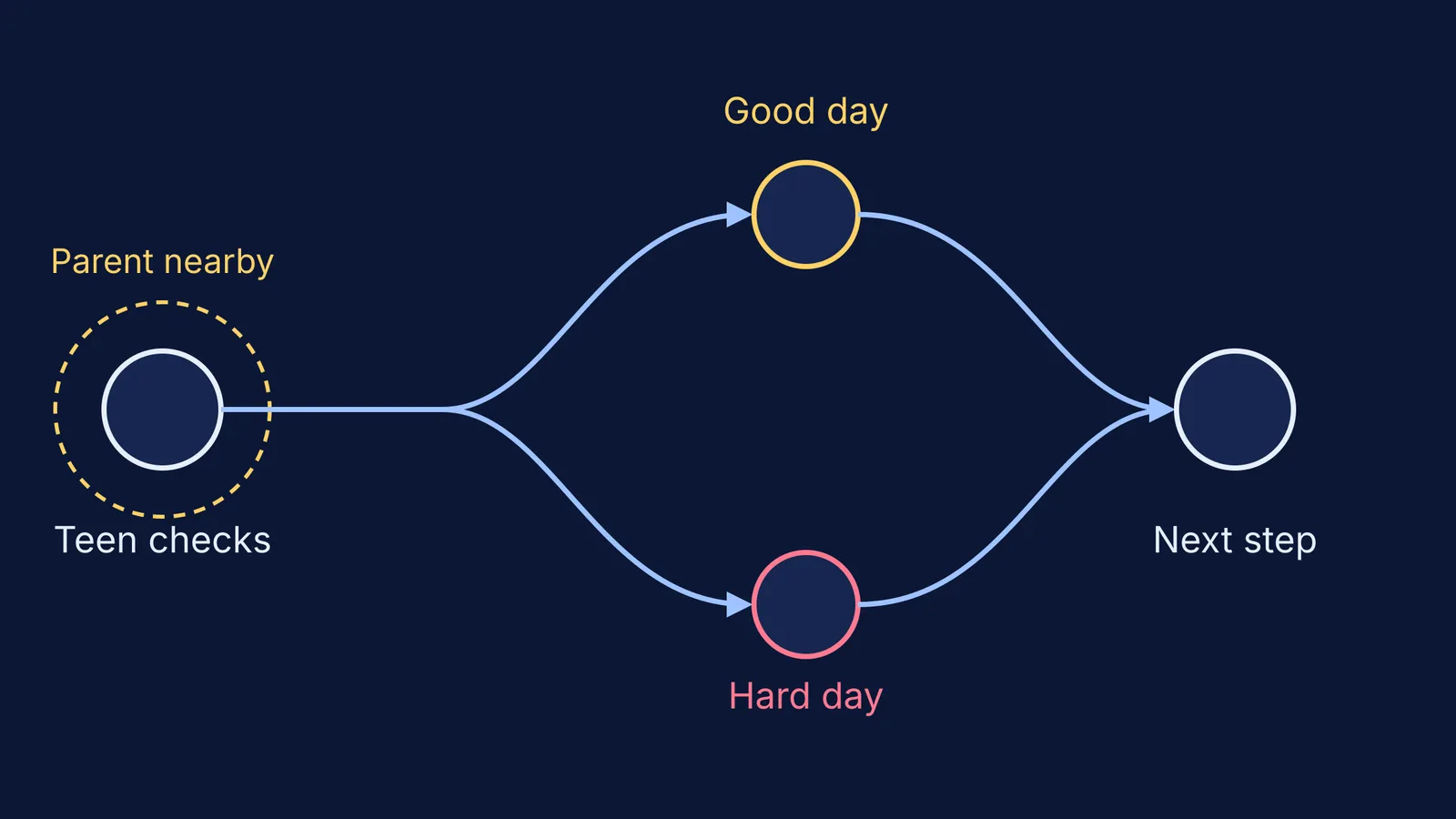
No. Let your teen log in and read the scorecard first, alone or with you in the room, as they prefer. Ask them the week before: "When the result comes, do you want me next to you, in the next room, or out of the house?" Then do exactly that.
Checking first, even with love, takes away the one thing they control that day: when and how they find out. It also means your face reacts before theirs, and they will read it.
Do not ask for their application number or password "just to see".
Keep relatives, coaching groups and WhatsApp off until your teen says what they want to share.
Keep your phone face down while they read.
What should parents say when the JEE Main result comes out?
What children learn from you on this day is less about the marks and more about what you think a setback means. In four studies, psychologists Kyla Haimovitz and Carol Dweck (Psychological Science, 2016) found that parents who saw failure as debilitating tended to focus on their children's performance and ability rather than their learning, and that children could accurately tell how their parents viewed failure. Your reaction to a disappointing score sends that kind of signal too.
A short script for each kind of day:
If the result is good:
"You worked for this. How do you feel?"
Let them tell people first, if they want to.
Celebrate the effort, then pause any talk of ranks and colleges until tomorrow.
If the result is lower than hoped:
"I'm sorry. That hurts. I'm right here."
Say nothing about other children, coaching fees or what relatives will say.
"We don't have to decide anything today."
If it is somewhere in between: ask, "Is this what you expected?" and follow their lead. Mixed results can be the hardest, because nobody knows which script to use.
If your teen is anxious in the days before, our guide on talking to a child worried about entrance results has more words to use.
What should you plan for the next 48 hours?
Decide this before result day, so nobody makes big choices while upset.
Evening of result day: a normal dinner, their favourite food, no post-mortem. On a good day, a small family treat. On a hard day, quiet company.
Next day: sleep, a walk, time with a friend. No mock tests.
Day two or three: sit together for twenty minutes. Ask what they think went wrong or right, and what they want to try next session. Write down two or three things, not twenty.
If the result means re-planning for April, our piece on how to talk about a JEE backup plan without signalling doubt helps you raise options calmly. If the result means preparing for JEE (Advanced), see how parents can help at home between JEE Main and Advanced.
When your teen is ready to restart and does not know where to begin, Fermi's AI tutor can work out what they already know and build a plan for the session, so the first day back starts with a clear next step instead of a blank page.
When is it more than a bad day?
Disappointment, tears and a day or two of silence are normal. Watch for things that last or worry you: not eating or sleeping for several days, withdrawing from everyone, or talk of hopelessness or self-harm. Do not try to handle these alone.
IIT Kanpur's counselling service describes Tele MANAS as a free, 24x7 national mental-health helpline launched by the Ministry of Health and Family Welfare, reachable on the toll-free numbers 14416 or 1800-891-4416 and offering services in around 20 languages. A doctor or school counsellor is also a good first call.
One exam session measures a few hours of work. The way your family behaves on result day is what your teen will carry into the next one.