On this page
For an only child, study time can mean a closed door, a phone within reach and nobody else doing the same thing. Research does not single out only children as less motivated, and one thing that is easy to add is company.
Is being an only child the reason for low motivation?
Probably not on its own. In a 1990 study in the Journal of Genetic Psychology, S. Mellor tested predictions from earlier meta-analyses and found that the developmental outcomes of only children were similar to those of firstborns and children from two-child families. The same paper found no support for explanations based on only-child "deprivation" or "uniqueness", and pointed instead to the quality of the parent-child relationship.
A 2023 analysis of four British birth cohorts, born between 1946 and 2002, found that only children scored similarly on cognitive tests to children from two-child families, although the "only child advantage" had weakened in the most recent cohort. What differs is the setting: no sibling doing homework at the same table.
What does an only child miss when studying alone?
Self-determination theory, developed by psychologists Richard Ryan and Edward Deci, names three basic psychological needs: competence, autonomy and relatedness. In their 2000 paper in American Psychologist, they write that when these needs are satisfied people show more self-motivation, and when they are thwarted motivation drops. The same paper notes that threats, deadlines, directives, pressured evaluations and imposed goals tend to reduce intrinsic motivation, while choice and acknowledging feelings tend to support it.
For an only child studying alone, relatedness may be the need that study time leaves out, and autonomy can get squeezed when all the attention lands on one child. The ideas below add people back without adding pressure.
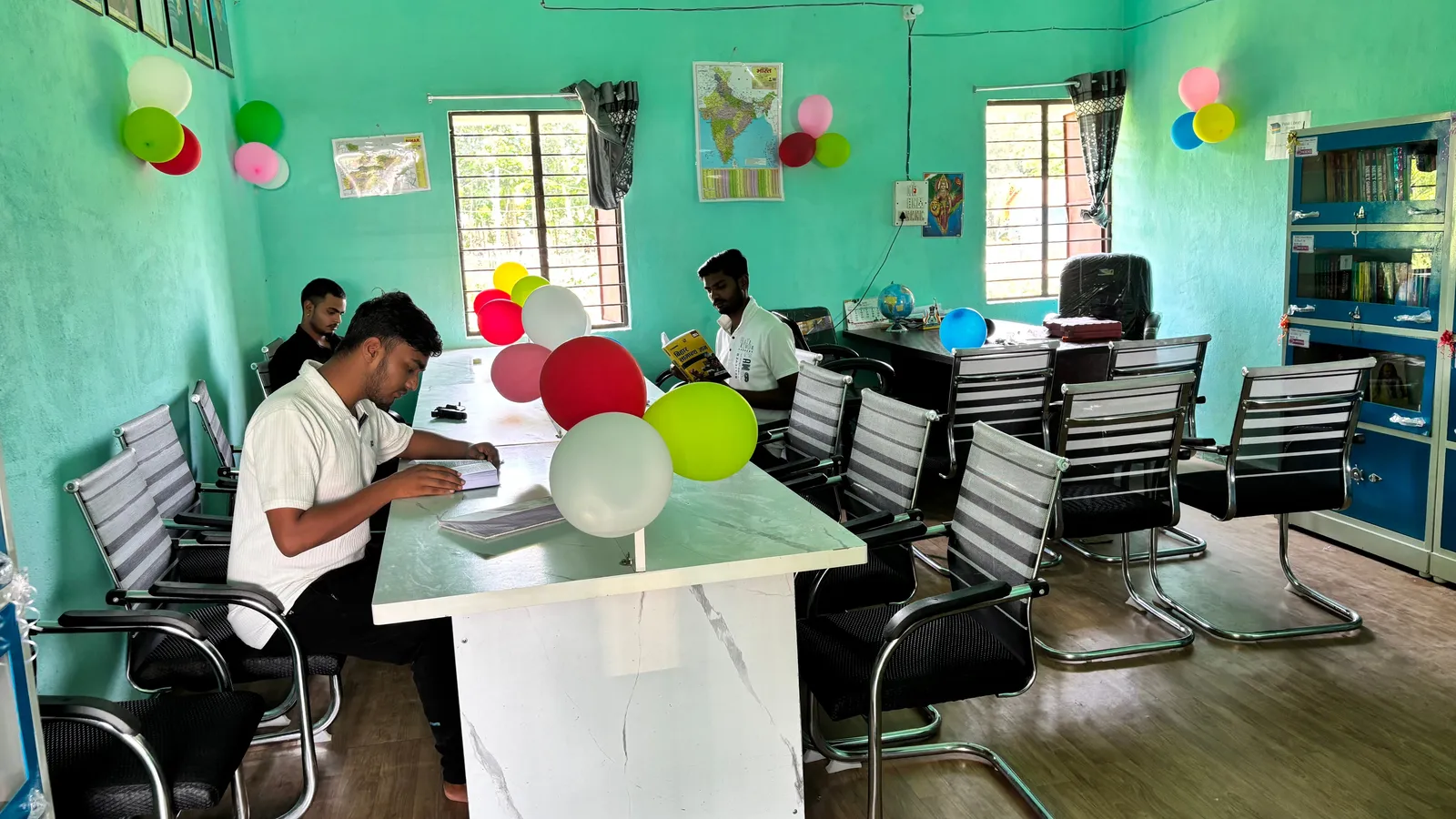
How can an only child find a study buddy?
Learning alongside peers has evidence behind it. A 2003 meta-analysis of peer-assisted learning in primary school students found a weighted average effect on achievement of d = 0.33, and programmes that gave students more autonomy had larger effects. That evidence is from younger children, so treat it as a pointer for teenagers rather than proof, but a partner does give you a fixed time to start.
Ways to find one:
A classmate who lives nearby, for two fixed afternoons a week, alternating homes.
A cousin in a similar class, on a video call with cameras on and mics muted for 40 minutes, then 10 minutes of quizzing each other.
A neighbour's child in another class: you need not share subjects, only a quiet table and a start time.
A parent doing their own reading or office work at the same table.
Our guide to running a study group at home with friends covers ground rules so the session does not turn into a party.
Do library visits help an only child study?
A library offers what a bedroom lacks: other people quietly working. Look for a public or district library, your school library after hours, or a reading room nearby. Agree on a weekly slot and a pick-up time, so the visit becomes routine rather than a negotiation. If your teen asks to stay late, read our advice on when a child wants to study late in the library before you decide.
How do you set a shared goal without adding pressure?
A shared goal works best when your child chooses it and the family shares the effort. A meta-analysis by Peter Gollwitzer and Paschal Sheeran of 94 independent tests found that if-then plans, which psychologists call implementation intentions, had a medium-to-large effect on reaching goals (d = 0.65).
Put both ideas into a 15-minute Sunday conversation:
Your child picks one goal for the week in their own words, for example "finish the electricity chapter and do 20 questions".
You pick a goal of your own, such as reading a book or finishing a work course module. Now the goal is shared.
Each of you writes one if-then plan: "If it is 5 pm on Tuesday or Thursday, then I sit at the dining table with the chapter open."
Choose the company for each session: study buddy, library or family table.
Next Sunday, each of you says what happened. No marks, and no comparisons with cousins.
Solo sessions will still happen, and the hardest part is often knowing where to begin. Fermi's AI tutor works out what you already know and builds a plan for the session, so you sit down to a clear next step instead of a blank page.
If motivation stays low across every subject, the wider ideas in how to motivate a teenager who seems lazy about studying may help.
When is it more than motivation?
If your child seems withdrawn, sleeps badly, has lost interest in things they used to enjoy, or talks about feeling hopeless, speak to a doctor or school counsellor. In India, the government's Tele MANAS helpline offers free mental health support on 14416 or 1-800-891-4416.
Start this Sunday with one goal each and one person to study beside.