On this page
When it pours for the third day running, the problem is rarely a lack of toys. It is a long afternoon, restless legs and a pull towards screens. The fix is a short menu of games you can start in five minutes, with a little learning folded in and enough movement to use up energy.
Why plan for indoor play during the monsoon?
Because the rainy season is long. India gets about 75% of its annual rainfall in the southwest monsoon, June to September, according to the India Meteorological Department's rainfall normals for 1971-2020, released in 2022. July is the wettest month, with an all-India normal of 280.4 mm, followed by August at 254.9 mm, in the same IMD release.
That is weeks of lost outdoor time, so a list on the fridge beats inventing something new each day.
What indoor activities can kids do with almost no preparation?
Sorted by set-up time, using things most homes already have.
Zero prep
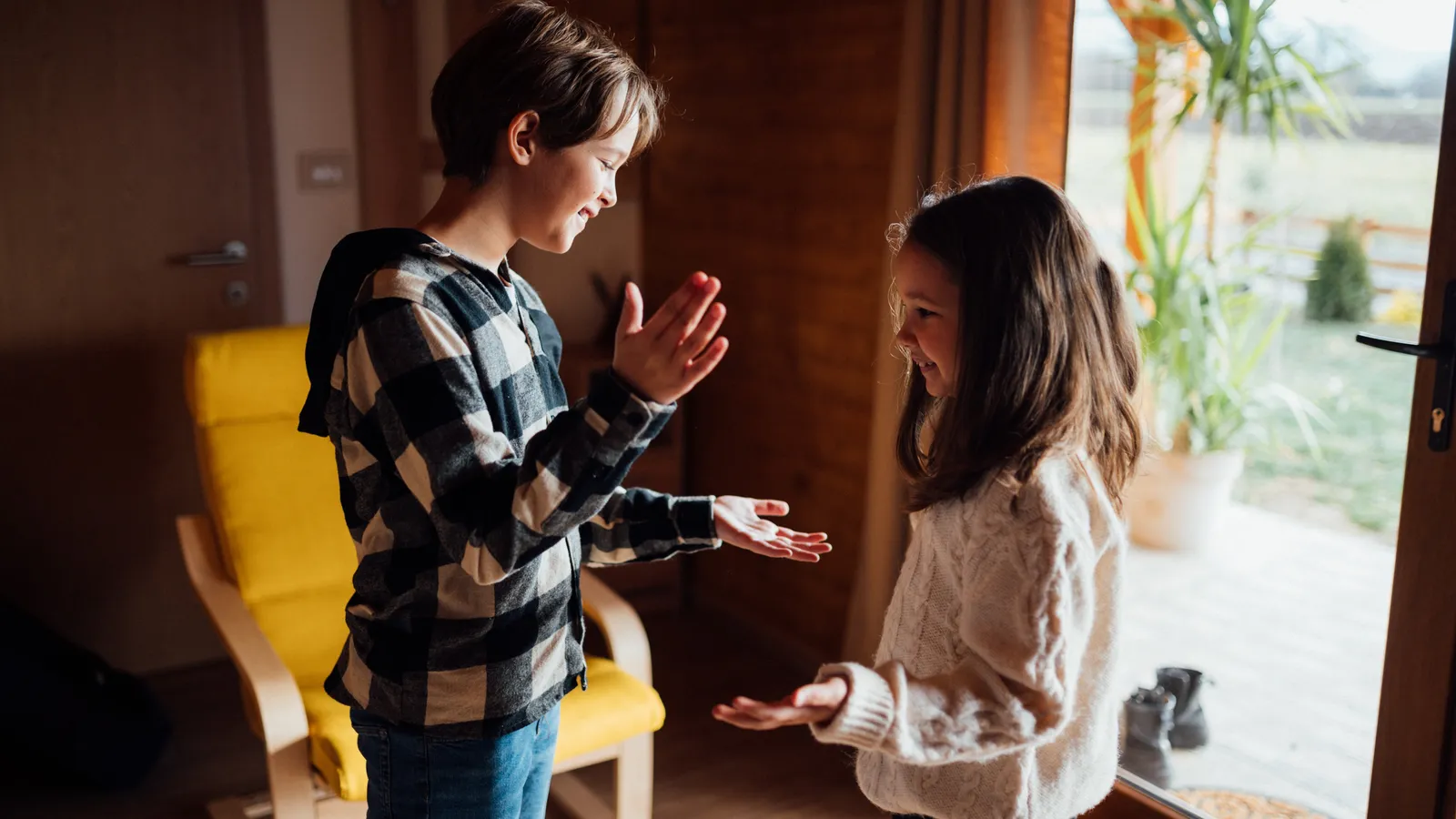
Clapping and rhythm games. Copy a clap pattern, then add one beat each round. It asks for memory and attention.
Twenty questions. One person thinks of an animal, object or place; others ask yes-or-no questions.
Freeze dance. Music on, music off, statues. Add a rule: freeze in the shape of a triangle.
Five minutes of prep
Bottle rain gauge. An adult cuts the top off a straight-sided plastic bottle. Stand it somewhere open to the rain, tape a ruler to the side, and read the water level in millimetres each evening. That is the unit the IMD uses.
Paper-boat load test. Fold a boat, float it in a bucket, and ask: how many one-rupee coins before it sinks? Predict first, then test. Try a bigger boat and compare. For younger children, our sink or float activity for preschoolers is a gentler start.
Card games for number sense. Pull two cards and race to add or multiply them. Our post on card and dice games for number sense has more.
Cushion obstacle course. Pillows as stepping stones, a dupatta as a tunnel under two chairs. Time each run and chart the times.
Kitchen science. Sugar versus salt dissolving in water, then leave a saucer out for a few days: see our guide to growing salt or sugar crystals with kids.
How do you turn a game into learning without spoiling it?
The research term is guided play: the child leads, and the adult sets up the activity and nudges with questions instead of giving a lesson.
A 2022 meta-analysis in Child Development pooled 17 studies, with average child ages from 1 to 8, and found guided play had a greater positive effect than direct instruction on early maths skills and shape knowledge, and a greater effect than free play on spatial vocabulary (Skene and colleagues, 2022). Studies defined guided play in different ways, so treat it as a habit, not a formula.
The American Academy of Pediatrics makes a related point in its clinical report The Power of Play: play with parents and peers promotes the social-emotional, cognitive, language and self-regulation skills that build executive function.
Here is what guided play sounds like during the paper-boat test:
Before: "How many coins do you think it will hold? Write your guess."
During: "Where did you put the coins? What happens if you put them all on one side?"
After: "Your guess was 6 and it held 9. Why do you think it held more?"
Next time: "What could we change to make it hold even more?"
You are asking, not telling. If your child loses interest, stop. The game is the point.
How much active play and screen time do children need on rainy days?
WHO guidelines advise an average of 60 minutes a day of moderate-to-vigorous physical activity for children and adolescents (WHO, 2020). For children aged 3 to 4, WHO recommends at least 180 minutes of physical activity spread through the day, and no more than 1 hour of sedentary screen time, with less being better (WHO, 2019).
Rain does not change those numbers, so the active games matter as much as the quiet ones.
What does a low-prep rainy afternoon look like?
Here is a sample plan for a child of about 6 to 10, from 2 pm to 6 pm:
2:00 Freeze dance or the cushion course, 15 minutes.
2:15 Paper-boat load test with the guided-play questions above.
2:45 Snack, then free time with no plan.
3:30 Card game.
4:15 Obstacle course again: can they beat their own time?
4:45 Read the rain gauge and note the number in a notebook.
5:00 Quiet drawing, reading or a puzzle.
A teenager curious about why one boat holds more than another can look up the idea behind it in the Fermi Concept Library, where each concept in physics, chemistry, biology, mathematics and computing has its own lesson.
Stick the plan on the fridge, swap activities as the week goes on, and keep one rule: at least one game a day that gets everyone off the sofa.