

On this page
A toy car that has stopped moving, a torch that will not switch on, a bicycle chain that keeps slipping: most homes have one of these waiting in a drawer. Before you replace it, try fixing it with your child. You get shared time, and your child practises the slow, careful thinking that school science asks for.
Why fix broken toys with your child instead of replacing them?
Most of us think we know how everyday objects work until we have to explain them. Psychologists Leonid Rozenblit and Frank Keil called this the illusion of explanatory depth: people feel they understand complex things with far greater precision, coherence and depth than they really do. Their 2002 paper in Cognitive Science found the illusion was far stronger for explanations of how things work than for facts, procedures or stories. A broken torch tests that feeling: the bulb either lights or it does not.
Talk matters as much as the screwdriver. In a 2019 study in Child Development, Aiyana Willard, Cristine Legare and colleagues asked parents at a children's museum gear exhibit to encourage their children to explain, to explore, or to play as usual. The study included 65 children aged 4 to 6. Families told to encourage explaining talked more about how the gears worked, and in that group, parents' questions predicted children's further talk about and testing of the gears.
One caution from earlier museum research. A 2001 study in Psychological Science by Kevin Crowley, Maureen Callanan and colleagues found parents were three times more likely to explain science to boys than to girls at interactive exhibits. If you have a daughter, make sure she gets the explanations and the screwdriver too.
How do you fix a broken toy with a child, step by step?
Use four steps, and let your child say each one out loud.
Look. Describe what is wrong before guessing. "It lights for a second, then goes off" is more useful than "it's broken".
Guess. Name two or three possible causes and write them down.
Test one thing at a time. Change one part, then try again. Change three at once and you won't know which mattered.
Explain. Before you close it up, your child says why it failed and why the fix works.
How do you fix a torch that will not switch on?
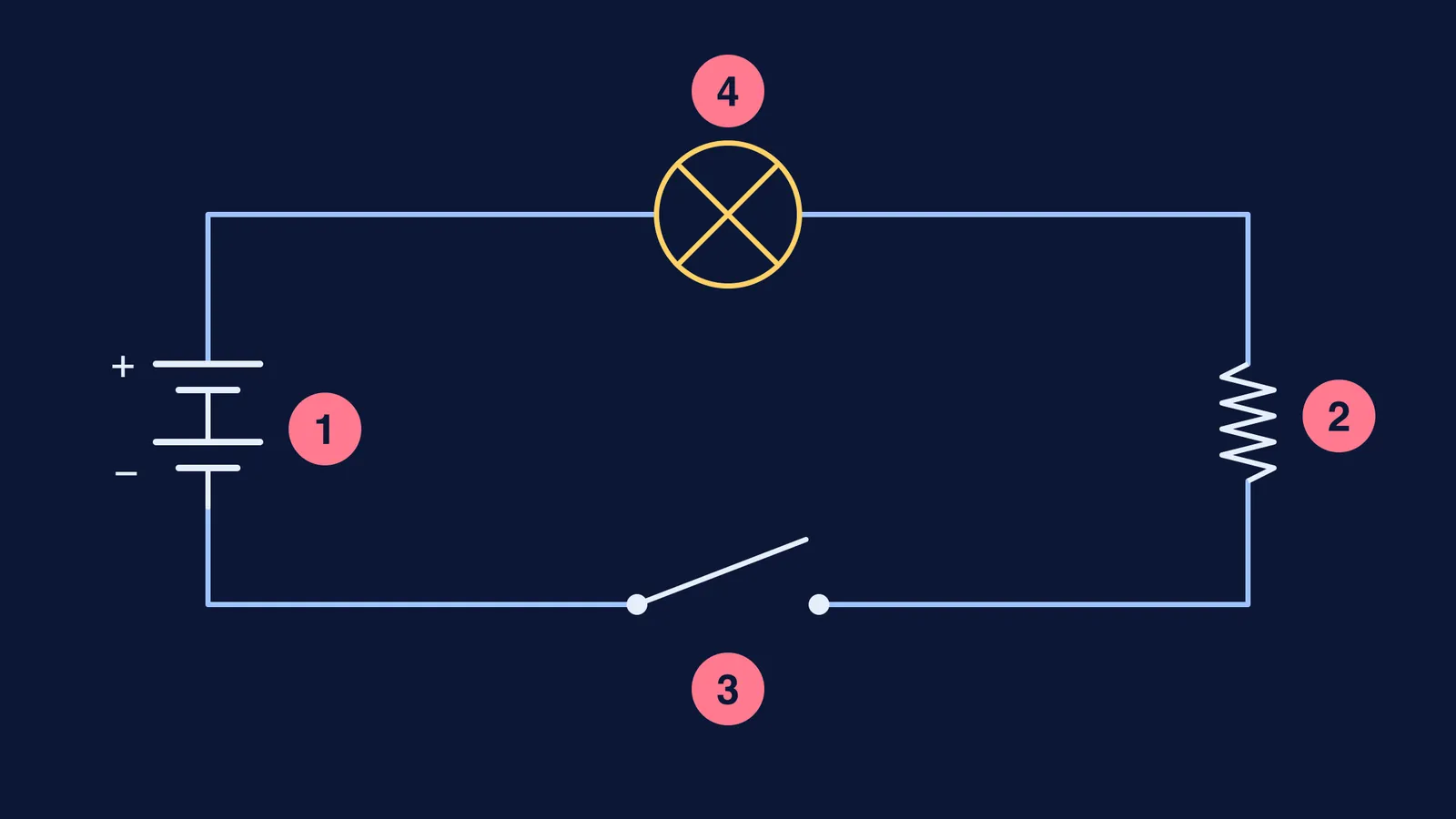
A torch is a simple circuit: cells, a spring and contacts, a switch and a bulb or LED, all in one loop. If any link in the loop is broken, nothing lights. Check the links in this order, easiest first:
Cells. Are they the right way round, with the positive end where the torch shows "+"? Try fresh cells borrowed from a working remote.
Spring and contacts. Look for rust or white crust on the spring. Rub it gently with a pencil eraser, or bend it back so it presses firmly on the cell.
Switch. Press it while looking inside. Does the metal strip actually touch?
Bulb or LED. Is it seated fully? Try a spare if you have one.
Each test rules out one cause, the same reasoning a physics practical needs. If the circuit is hard to picture, the Fermi Simulation Lab has interactive simulations for ideas that are easier to see than to read. Our guide to simple circuit projects for kids has four safe builds to try next.
What should you say when your child gets frustrated?
Patience takes practice: stay with a problem a little longer than feels comfortable. These lines help:
"What have we ruled out so far?"
"What is one thing we haven't tested yet?"
"Let's take a five-minute break and look again."
"We didn't fix it, but we found out it isn't the cells. That counts."
"Tell me how it works, as if I've never seen one."
If a step needs adult strength or a sharp blade, say what you are doing and why, then hand it back.
Which repairs are safe for which age?
Under 6: sorting screws into a bowl, holding the torch, pressing the switch, spotting which wheel won't turn.
6 to 10: small screwdrivers, changing cells, tightening loose wheels, re-gluing parts with an adult nearby.
11 and up: a bicycle puncture, chain adjustment, simple soldering with an adult. Our guides on teaching your child to use basic tools safely and fixing a bicycle with a teenager go further.
Keep two hard limits. Never open anything that plugs into the mains, or a swollen or leaking battery; those go to a repair shop. And watch for button batteries in small toys, remotes and key fobs. The UK's Office for Product Safety and Standards warns that a swallowed button battery can kill a child, and advises moving any item whose battery compartment is not secured by a screw out of reach of small children. Store spare batteries out of reach and get rid of dead ones straight away. If you think your child has swallowed one, take them straight to a hospital emergency department, and do not give them anything to eat or drink or try to make them sick.
Pick one broken thing in your house this weekend, sit down together, and start with step one: look.


