On this page
"All my friends have phones" is rarely only about the phone. Underneath it are three real needs: not missing what the group is planning, not feeling like the odd one out, and wanting to be trusted. You can meet most of those needs before you hand over a smartphone, as long as your child hears "not yet, and here is when" rather than a vague "we'll see".
Do all their friends really have phones?
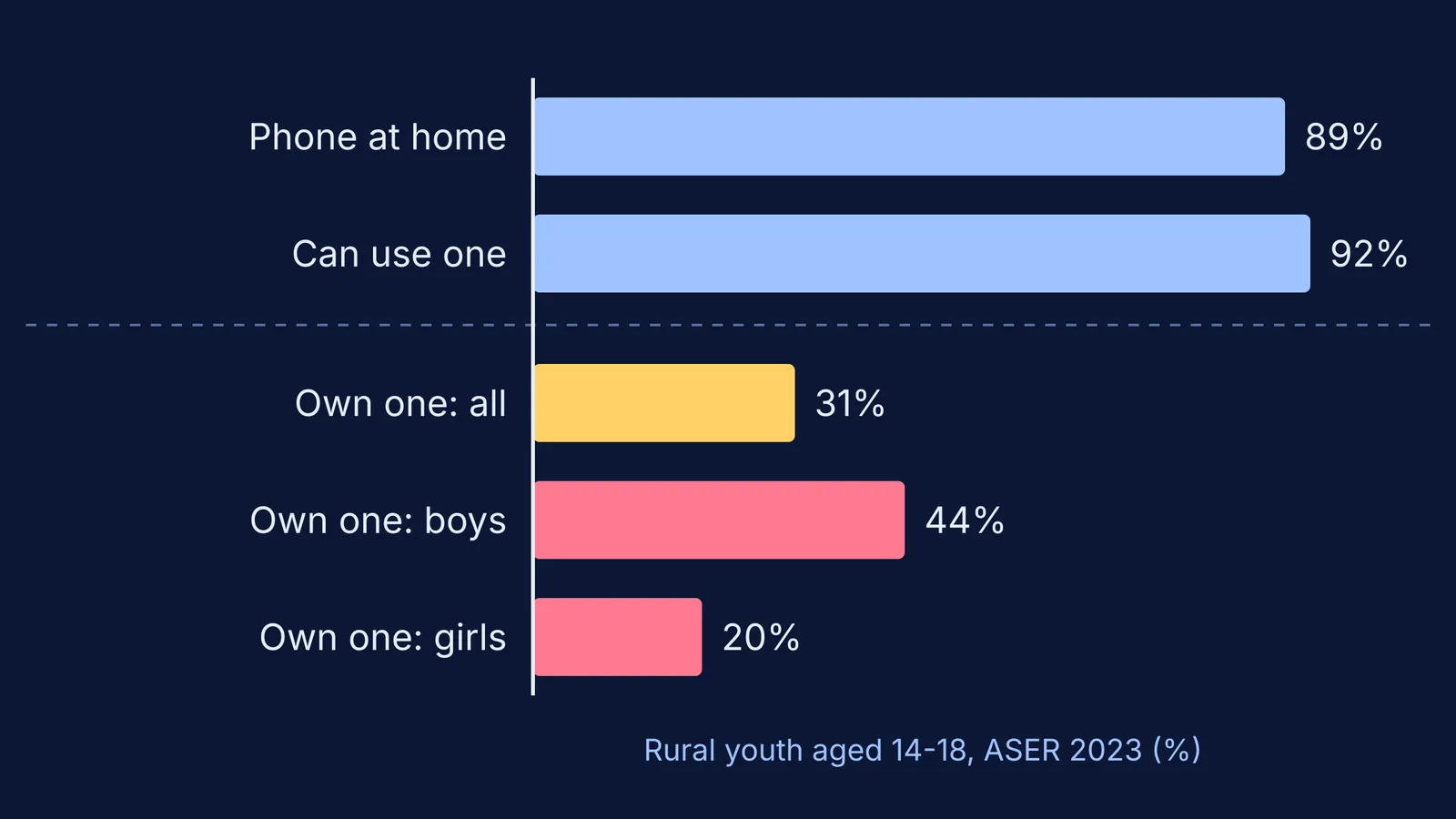
Often fewer than it seems. The ASER 2023 survey of rural youth reached 34,745 young people aged 14 to 18 in rural districts, and 89% said they had a smartphone at home and 92% that they could use one.
But only 31% of those who could use a smartphone had their own, according to the same ASER 2023 findings. The gap by gender was wide: 44% of boys who could use a smartphone owned one, against 20% of girls.
In other words, many teenagers who seem to "have a phone" are using a parent's or a sibling's. Ownership comes earlier in some places: the Common Sense census of US children found in 2019 that 53% had their own smartphone by age 11 and 69% by age 12.
The useful move is not to argue about the statistic but to ask, calmly, "Who, exactly?" Make the list together. That often shrinks the problem to something you can plan around.
What is your child actually worried about?
Ask before you answer. Three questions work well:
"What did you miss this week because you didn't have a phone?"
"Which part matters most: chatting, games, videos or making plans?"
"What would make you feel less left out right now?"
If the answer is "I didn't know about the cricket match on Sunday", that is a logistics problem with a logistics fix. If it is "everyone shares reels and I can't follow the jokes", that is about belonging, and it deserves sympathy even if your answer stays no.
How can they stay in touch without their own smartphone?
A basic phone for calls and SMS. It covers "I'm at the bus stop" and "can I stay a bit longer" without an app store.
A family device at set times. A shared tablet or an old phone that stays in the living room, with a short slot each evening to catch up on messages. WhatsApp's own rules say users must be at least 13, or older where local law requires it, so a younger child's group chat should run through your number.
Parent-to-parent plans. Ask a few other parents to message you about outings and pass them on the same day.
A watch for younger children. If safety on the way home is the real worry, read our guide on whether a smartwatch suits a young child.
Time in person. Invite friends home at the weekend.
How do you set a clear date for a first phone?
A date turns an argument into a countdown. Here is a simple plan:
Pick the date together. Tie it to something real, such as the start of Class 9 or a particular birthday, and write it down.
Describe what ready looks like. For example: looks after their things, comes home on time, tells you when something online upsets them. These are habits, not marks.
Use steps, not a switch. A basic phone now, a shared smartphone with controls a few months before the date, and their own phone on the date.
Agree the rules in advance. Where the phone sleeps at night, which apps are allowed, and what happens during exams. Our post on writing a phone contract with your teenager gives you a starting point, and the American Academy of Pediatrics offers a free Family Media Plan tool for setting family rules.
Review once, not every week. Check in halfway. If things are going well you might bring the date forward; if not, explain why it stays.
What should you say, word for word?
"I believe you that a lot of your friends have phones, and I can see it's hard to feel left out. My answer isn't never. It's [date]. Until then, here's how we'll make sure you don't miss plans: [basic phone, evening family device, or I'll pass on messages]. If something isn't working, tell me and we'll fix that part."
Then stop talking. A short, kind, specific answer lands better than a lecture about screens.
What if the pressure doesn't stop?
Hold the date and keep fixing the practical gaps. The same approach works for other "everyone has one" requests; see our guide to peer pressure over branded things.
If the phone is wanted for homework, a shared device at the study table does that job. When they sit down to study on it, Fermi's AI tutor works out what they already know and builds a plan for the session, so they start with a clear next step.
If feeling left out turns into lasting sadness, pulling away from friends or not wanting to go to school, talk to the school counsellor or call Tele MANAS, the free national mental-health helpline, on 14416.