On this page
Many parents consider a kids' smartwatch when their child starts commuting independently, attending after-school tuition, or playing in the neighbourhood park. A dedicated child smartwatch looks like the ideal middle ground: it provides GPS tracking and two-way calling without the algorithmic feeds, social media pressures, and open web browsers of a smartphone. But before strapping a connected device to an eight- or ten-year-old's wrist, families need to weigh measurable benefits against documented privacy flaws, classroom disruptions, and developmental costs.
What do smartwatches offer for child safety and contact?
The primary appeal of a children's smartwatch is controlled connectivity. Unlike conventional smartphones, most kids' watches restrict incoming and outgoing communications to a whitelist of ten to twenty parent-approved contacts. This setup allows children to check in after school or press an SOS button during an emergency without exposing them to unsolicited calls or internet browsing. For working parents coordinating pickups across busy Indian metro traffic or coaching centres, direct voice notes offer real peace of mind.
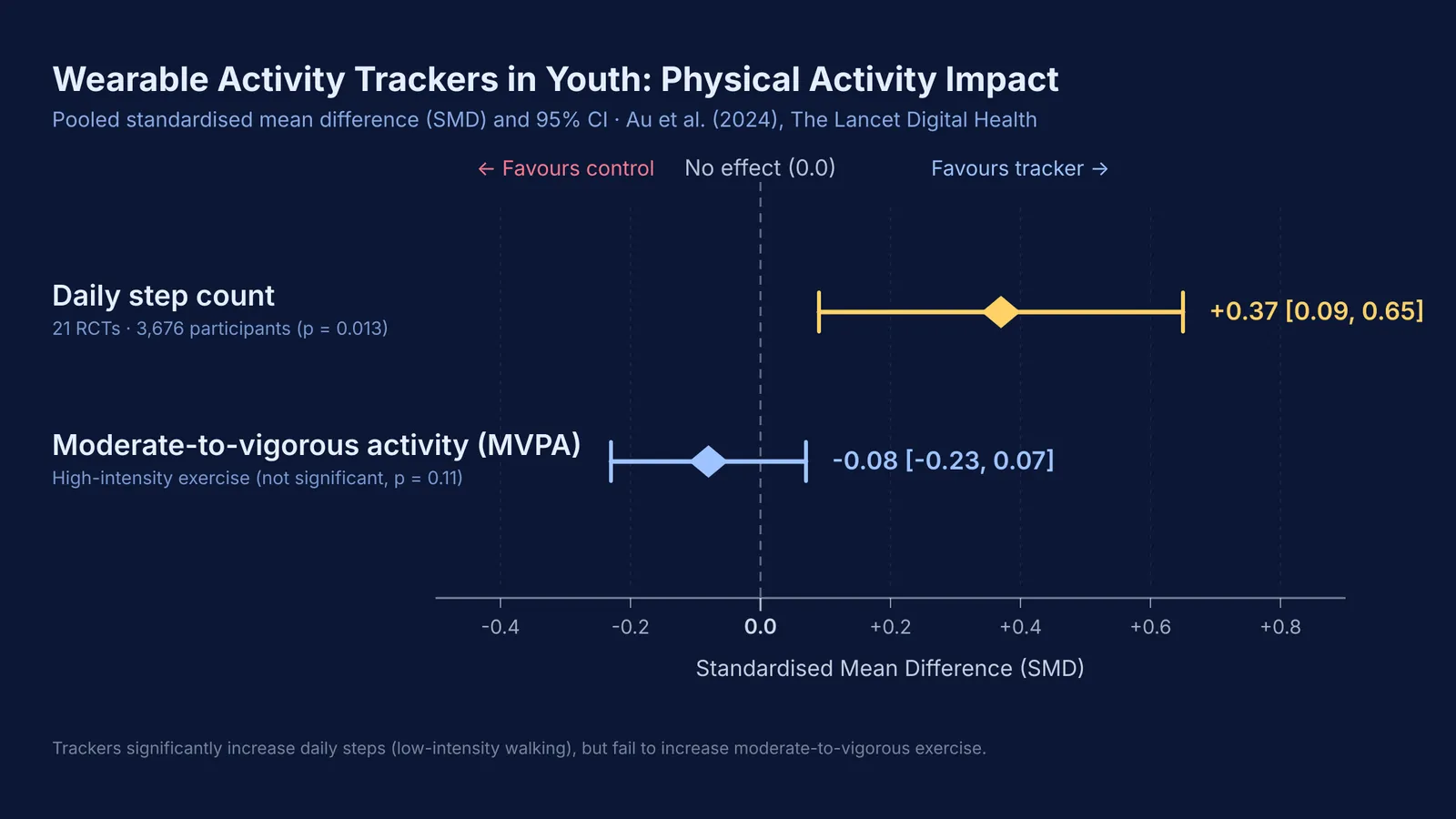
Wearables can also encourage daily physical movement through gamified activity tracking. A 2024 systematic review and meta-analysis published in The Lancet Digital Health00139-0) evaluated 21 randomized controlled trials covering 3,676 children and adolescents. The researchers found that wearable trackers produced a statistically significant increase in daily steps, with a standardised mean difference of 0.37. However, the study found no significant increase in moderate-to-vigorous physical activity, showing an effect size of −0.08. A watch can prompt a child to take a few extra laps around the apartment courtyard, but it does not automatically replace organised sports or active outdoor play.
What are the privacy, safety and developmental risks?
The greatest hidden downside of budget children's smartwatches lies in security. In a landmark investigation titled #WatchOut, the Norwegian Consumer Council tested several popular children's smartwatches and uncovered severe vulnerabilities. The report demonstrated that unencrypted data transmission allowed attackers to intercept coordinates, track children in real time, and spoof GPS locations so that parents saw false safety signals. Attackers could even hijack the device to contact the child directly.
Regulatory agencies have intervened when these tracking features cross the line into clandestine surveillance. In November 2017, Germany's Federal Network Agency, the Bundesnetzagentur, banned the sale of children's smartwatches with hidden ambient listening functions under Section 90 of the German Telecommunications Act. Regulators classified devices with silent remote-callback features as illegal spying equipment and directed parents to destroy them after discovering parents were secretly listening in on classroom teachers. In India, statutory safeguards have also tightened: Section 9(3) of the Digital Personal Data Protection Act, 2023 strictly prohibits data fiduciaries from tracking or behaviourally monitoring children under 18 without verifiable parental consent. Parents must review what to look for in educational app privacy before registering sensitive biometric or location data on overseas cloud servers.
Beyond technical security, child psychologists point to the developmental cost of constant surveillance. When parents track every step via geofenced boundaries, the device acts as an electronic umbilical cord. Over-monitoring can prevent children from developing internal risk assessment, situational awareness, and the confidence to ask trusted adults for help in person. Adopting autonomy-supportive parenting approaches helps children build genuine self-reliance rather than relying on a digital tether to navigate everyday life.
How do smartwatches affect classroom focus and homework?
Even without games or video apps, a smartwatch on the wrist poses an immediate distraction during lessons and study hours. A vibration against the skin triggers an instinctive urge to glance at the screen, pulling cognitive attention away from teachers and books. According to the UNESCO Global Education Monitoring Report 2023, incoming mobile notifications can take students up to 20 minutes to refocus on complex learning tasks, prompting nearly one in four countries to introduce school device restrictions.
At home, maintaining strict tech boundaries during study hours protects deep concentration. Families can establish research-backed family rules for screen time by creating device-free desks during evening homework. When students sit down to solve difficult mathematics or science concepts, tools designed for active learning make a substantial difference. The Fermi Problem Library provides worked problems with a step-by-step solver that explains the reasoning rather than printing an answer, preventing the frustration that often leads children to reach for their gadgets. For structured study sessions, Fermi's AI tutor can work out what a student already knows and build a plan for the session, keeping focus on core learning rather than screen-based distractions.
What should you check before buying a smartwatch for your child?
If your family decides that a smartwatch is appropriate for independent commutes or after-school travel, use this four-point checklist before making a purchase:
Hardware boundaries: Choose a model without cameras, games, or open internet browsing. Basic calling and location capabilities are sufficient for safety.
Security and encryption: Verify that the manufacturer uses end-to-end encryption for location data and voice notes, provides clear account deletion options, and contains no hidden ambient-listening functions.
Scheduled school mode: Ensure the companion application allows you to lock the watch display and silence all non-emergency alerts during classroom hours.
A shared family agreement: Talk with your child before setting up the device. Explain that the watch is an emergency tool for the commute, not an instrument for constant monitoring, and agree on device-free hours at home and at night.
A smartwatch works best as temporary training wheels for communication, not a permanent surveillance screen.