On this page
Your child walks in, drops the bag and lies down on the sofa. Homework starts late, dinner is a fight and bedtime slips again. If this happens most days, there is rarely just one cause. Four ordinary things are worth checking first: sleep, food, the commute and how much is packed into the evening. You can check each of them in a week.
How much sleep does a school child actually need?
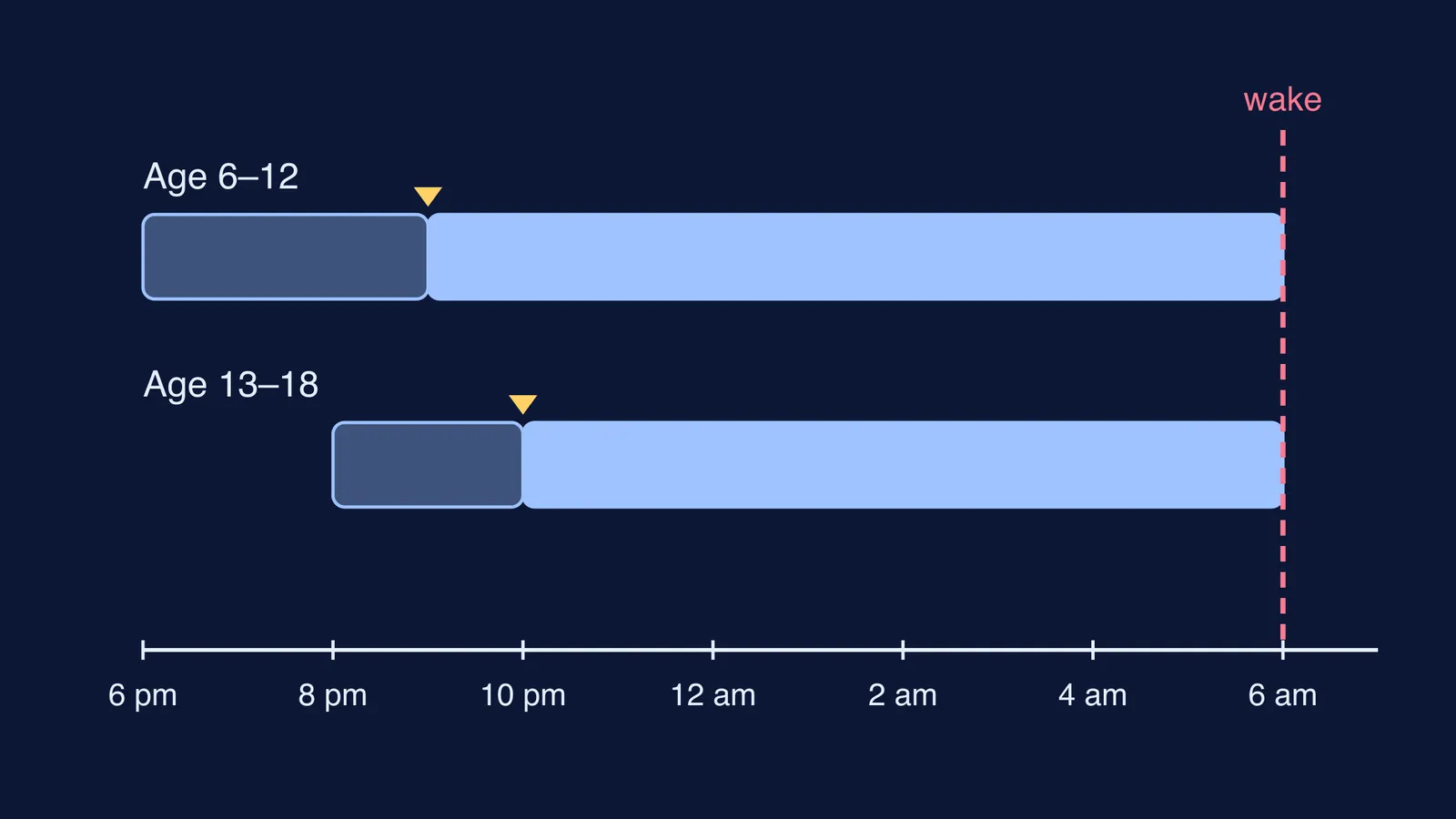
Start here, because it is the easiest to measure. A consensus statement from the American Academy of Sleep Medicine recommends 9 to 12 hours of sleep per 24 hours for children aged 6 to 12.
The same AASM statement recommends 8 to 10 hours for teenagers aged 13 to 18.
The panel also notes that regularly sleeping less than this is linked to attention, behaviour and learning problems. In other words, the child yawning over maths at 7 pm may simply be short on sleep, not lazy.
Here is the maths for a typical Indian school morning. Say the school bus comes at 6:45 am, so your child wakes at 6:00.
A 10-year-old needing at least 9 hours should be asleep by 9:00 pm, which means lights out around 8:45.
A 15-year-old needing at least 8 hours should be asleep by 10:00 pm.
If your teenager actually falls asleep at 11:30 pm, that is 6.5 hours, at least 1.5 hours short every school night.
Is my child eating enough between lunch and evening?
Many children eat their tiffin at 10:30 or 11 am, finish school at 2 or 3 pm and then wait for dinner at 8:30 or 9. That is a long gap for a growing body. Look for these signs: grumpiness that lifts after food, headaches on the way home, or a child who cannot start homework until they have eaten.
Pack a second small snack for the ride home, such as fruit, roasted chana or a roti roll.
Keep a filled water bottle in the bag and check whether it comes home full.
Offer a proper snack soon after your child gets home, before any homework or tuition.
If your child goes straight from school to coaching, our guide to tiffin and meals for long coaching days has packing ideas.
Could the commute or activity load be the problem?
An hour each way in a bus or auto, in heat and traffic, tires adults too. If the journey is long, see our piece on how far is too far for a school commute.
Then look at the evening. Tuition, a sports class, music and homework can fill every hour until 9 pm, leaving no time to just sit. Movement itself is not the problem. The WHO guidelines on physical activity recommend that children and adolescents aged 5 to 17 do an average of at least 60 minutes a day of moderate-to-vigorous activity across the week. The same guidelines advise limiting sedentary time, especially recreational screen time. A child who sits in class, sits in the bus, sits at tuition and then scrolls until midnight is missing both the movement and the sleep.
What should a restful evening plan look like?
Once you have the log, change one or two things, not everything. A sample weekday for a Class 7 child who wakes at 6:00:
3:30 pm: home, snack and water, 30 minutes with no screens and no questions about marks.
4:00 pm: outdoor play or a walk, if there is no sports class that day.
5:00 pm: homework in one block, hardest subject first.
6:30 pm: tuition or activity on no more than two or three days a week.
8:00 pm: dinner, then screens off.
8:45 pm: lights out.
If homework is what stretches the evening, check whether your child is stuck rather than slow. The Fermi Problem Library has worked problems with a step-by-step solver that explains the reasoning rather than printing an answer, which can help when one tricky sum is holding up the evening. If activities have piled up, our guide on what to do when your child has too many activities can help you decide what to drop.
Instead of "Why are you always tired?", try: "I've noticed you're really worn out after school. Let's write down your days this week and see what's draining you."
When is tiredness a sign to see a doctor?
Everyday guidance has limits. If your child still seems exhausted after a week or two of more sleep and better meals, or if the tiredness comes with other changes in health, sleep or mood that worry you, see your paediatrician. The AASM statement also advises parents who are concerned that their child is sleeping too little or too much to consult their healthcare provider. If you or your child are feeling low or overwhelmed, Tele MANAS, the Government of India's toll-free, 24x7 tele-mental health helpline, is available on 14416.