

On this page
According to the 2025 Comprehensive Modular Survey on Education by the National Sample Survey Office (NSSO), about 27% of all school students in India take private coaching. For a student in Class 11 or 12 preparing for board exams and entrance tests, a typical day often spans ten to twelve hours away from home.
During this intense growth phase, energy needs peak. The ICMR-National Institute of Nutrition (NIN) released its updated Dietary Guidelines for Indians in 2024, recommending approximately 3,020 kcal/day for boys and 2,440 kcal/day for girls aged 16 to 18. Packing enough food to cover these needs while avoiding the trap of street food requires a system.
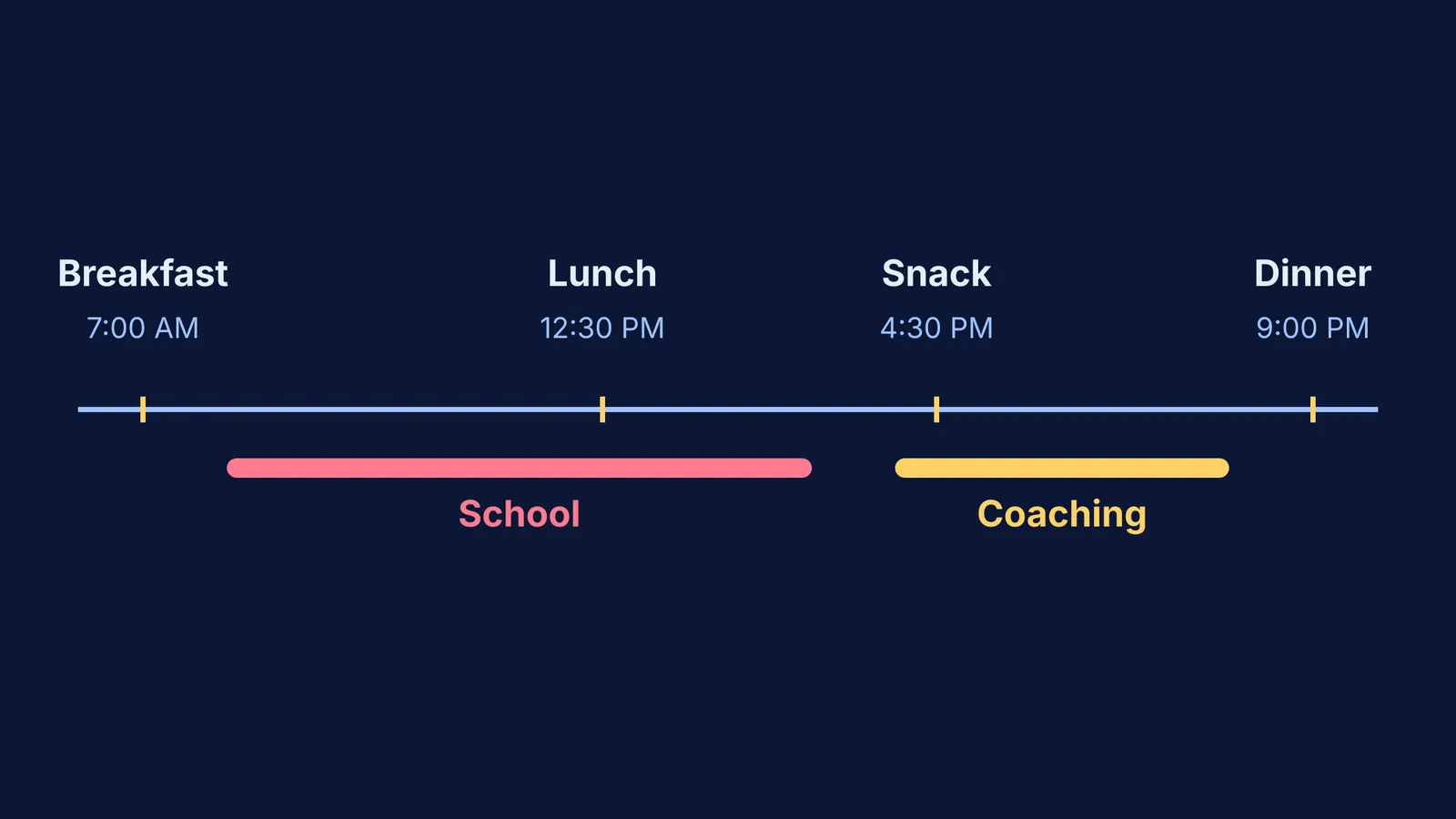
How to split food for school and coaching?
Rather than packing one massive lunchbox that your child might get tired of carrying, it is more practical to split the food into a main school lunch and a bridge snack for the transition to coaching.
The school lunch: This should be a dense, slow-releasing energy meal. The ICMR-NIN 2024 guidelines recommend that at least 50% of daily cereal intake should come from whole grains or millets (such as ragi, bajra, or jowar) rather than refined flours. Include a strong protein source like paneer, legumes, or a thick dal.
The coaching bridge: The gap between school and coaching is when students are most likely to buy ultra-processed, high-fat foods from a roadside stall. Pack a dry, non-spill snack that can be eaten on a bus or an auto-rickshaw. The ICMR-NIN 2024 guidelines suggest obtaining daily protein from nuts and seeds rather than relying on commercial protein supplements.
What are the best snacks for coaching classes?
When packing the evening box, focus on foods that survive a warm day in a backpack without spoiling. Here is a practical framework to build out the afternoon meal:
Carbohydrate base: Swap plain wheat rotis for multigrain or millet-based wraps. They hold less moisture, meaning they stay fresh longer in a closed box.
Protein anchors: Roasted peanuts, dry paneer bhurji, or boiled chickpeas help provide the 46 g to 55 g of daily protein recommended by the ICMR-NIN for this age group.
Hydration: A long day away from home requires serious hydration. Pack two water bottles, and remind them that the ICMR-NIN guidelines recommend 8 to 12 glasses of water a day. Avoid sugary energy drinks.
Does the school schedule affect digestion?
Eating in a rush between classes or while travelling can lead to digestive issues. The transition from a strict school timetable to a crowded coaching centre often means meals are eaten in less than fifteen minutes.
To help with this, cut fruits and vegetables into bite-sized pieces so they are easier to eat quickly. Instead of a whole apple, pack apple slices rubbed with a little lemon juice to prevent browning. Instead of a large paratha, roll it into a tight, foil-wrapped cylinder that can be eaten with one hand. Making the food physically easy to eat ensures that the lunchbox comes back empty, rather than half-full because the break was simply too short.
How to manage late-night study meals?
When your child finally gets home and finishes dinner, they still have self-study to tackle. While setting up a good study space at home helps, the real challenge is figuring out what to study when they are already exhausted.
Fermi's AI tutor can work out what they already know and build a plan for the session, so they sit down to a clear next step instead of a blank page. If they get stuck on a difficult question late at night, the Fermi Problem Library has worked problems with a step-by-step solver that explains the reasoning rather than just printing an answer.
Keep late-night snacks light—think makhana (fox nuts) or a glass of warm milk. It is also important to know what to do in a study break, according to the research. Finally, the ICMR-NIN guidelines emphasize the importance of 7 to 8 hours of sleep to regulate appetite and maintain a healthy body mass index. Overfeeding right before bed disrupts this cycle, so aim for a definitive cut-off time for food.


