On this page
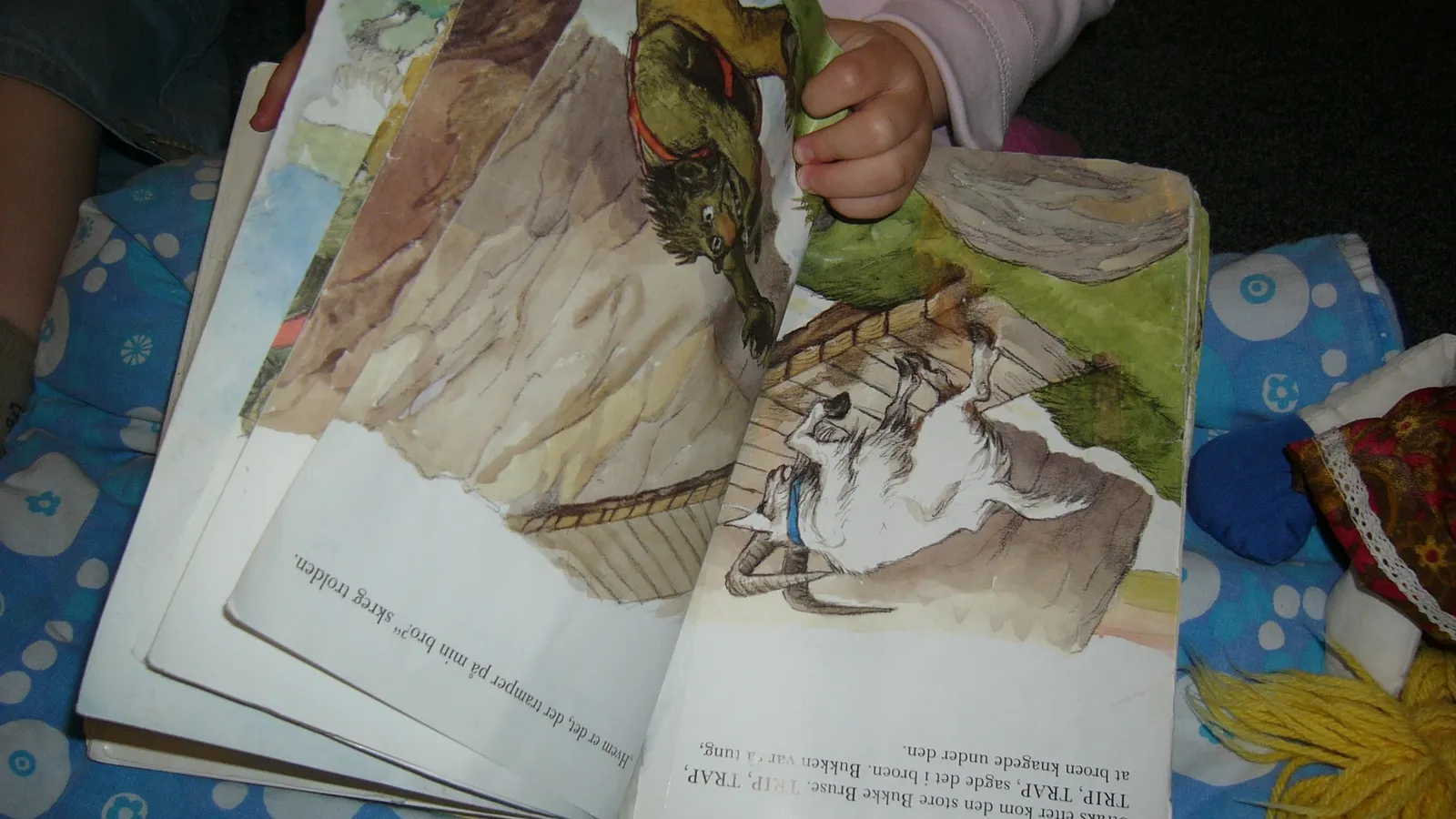
Your child brings you the same book for the fortieth night in a row. They know every page and correct you if you skip a line. It can feel like a wasted evening. It isn't. Rereading is one of the ways children learn, and it gives you a natural way to bring in new books.
Why does my child read the same book again and again?
A familiar book is easy to follow. A child who already knows the plot has spare attention for the words, the pictures and the small details they missed last time. Many children also enjoy knowing what comes next and getting the ending right.
Older children do it too. A ten-year-old rereading a comic or an adventure series is often enjoying the characters, not avoiding harder books. So treat rereading as a sign that your child likes reading, not as a sign that something is wrong. To widen what an older child reads, see our guide to building a reading habit in a 10-year-old.
Is rereading the same book good for children?
Yes, and there is research to back it up. In a study in Frontiers in Psychology (Horst, Parsons and Bryan, 2011), researchers read specially made storybooks to 3-year-olds three times over one week. Each child heard each new word the same number of times. The only difference was whether it came from the same story repeated or from different stories.
Children who heard the same stories again and again picked out the new words accurately, both straight away and at a later retention test. Children who heard different stories failed to learn any of the new words, according to the study's abstract. The study was small, with 16 children (eight in each group). In a 2013 review of this work, Jessica Horst explains that each time a child hears the same story, they can give more attention to the new word and less to the plot.
Guided rereading aloud helps school-age readers as well. The US National Reading Panel analysed 16 studies of guided oral reading. It concluded that guided repeated oral reading, with guidance from teachers, peers or parents, had a significant and positive effect on word recognition, fluency and comprehension across a range of grade levels. Fluency here means reading aloud with speed, accuracy and proper expression. These studies tested structured practice with feedback, not bedtime rereading of a favourite.
When is it worth a gentle nudge?
Usually it isn't. Rereading is worth a second look only when:
your child gets upset or refuses whenever any other book is offered, every time, for months
they always pick a book far below the level they read at school, and school reading is getting harder
they recite the book from memory but cannot read the same words when you point to them in another book
Even then, start with a chat with their class teacher. If you are worried about your child's language, attention or anxiety more broadly, a paediatrician is the right person to ask. Your worry is not a reason to take the favourite book away.
How do you offer similar books without taking the favourite away?
Use the favourite as a bridge. Here is a simple plan for the next two weeks.
Find out what they love. Ask: "What's the best page?" Is it the animal, the joke, the rhyme, the scary bit or a particular character?
Match one thing, change one thing. Look for a book with the same hook but a new story: same author, same character, same kind of animal or same rhyming style.
Read the favourite first, then the new one. "Let's read your book, and then I've found one I think you'll like." The new book is extra, not a replacement.
Let them reject it. Put it on the shelf face out and try again in a few days.
Mix in the language you speak at home. A Hindi or regional-language version of a similar story is just as good as an English one.
For children in Classes I and II, NCERT's Barkhaa graded reading series has forty stories across four levels on everyday themes such as animals, food and games, in English and Hindi. Because the stories are sorted by theme, a child who loves one animal story can try the next one at the same level.
If your child's favourite is a book about something like space or dinosaurs, follow that interest beyond fiction. Older children who keep rereading a science book can look up the idea that grabbed them in the Fermi Concept Library, which covers concepts in physics, chemistry, biology, mathematics and computing, each with its own lesson.
For more ideas, see our guides on what to do when a child reads only one type of book and how to find a good library for kids. Tonight, read the favourite one more time, and ask which page they would change.