

On this page
It is a familiar worry for many parents: you have a child who loves to read, but they will only pick up comic books, graphic novels, or the exact same fantasy series over and over again. You might wonder if they are missing out on learning new words, or if their reading habits will hold them back in school.
The good news is that reading narrowly is not a cause for panic. Research shows that sticking to one format or series can actually build a stronger foundation for lifelong reading than forcing a child to read a wide variety of texts they do not enjoy. Any material that keeps a child turning the pages is contributing to their development.
Is reading comics still reading?
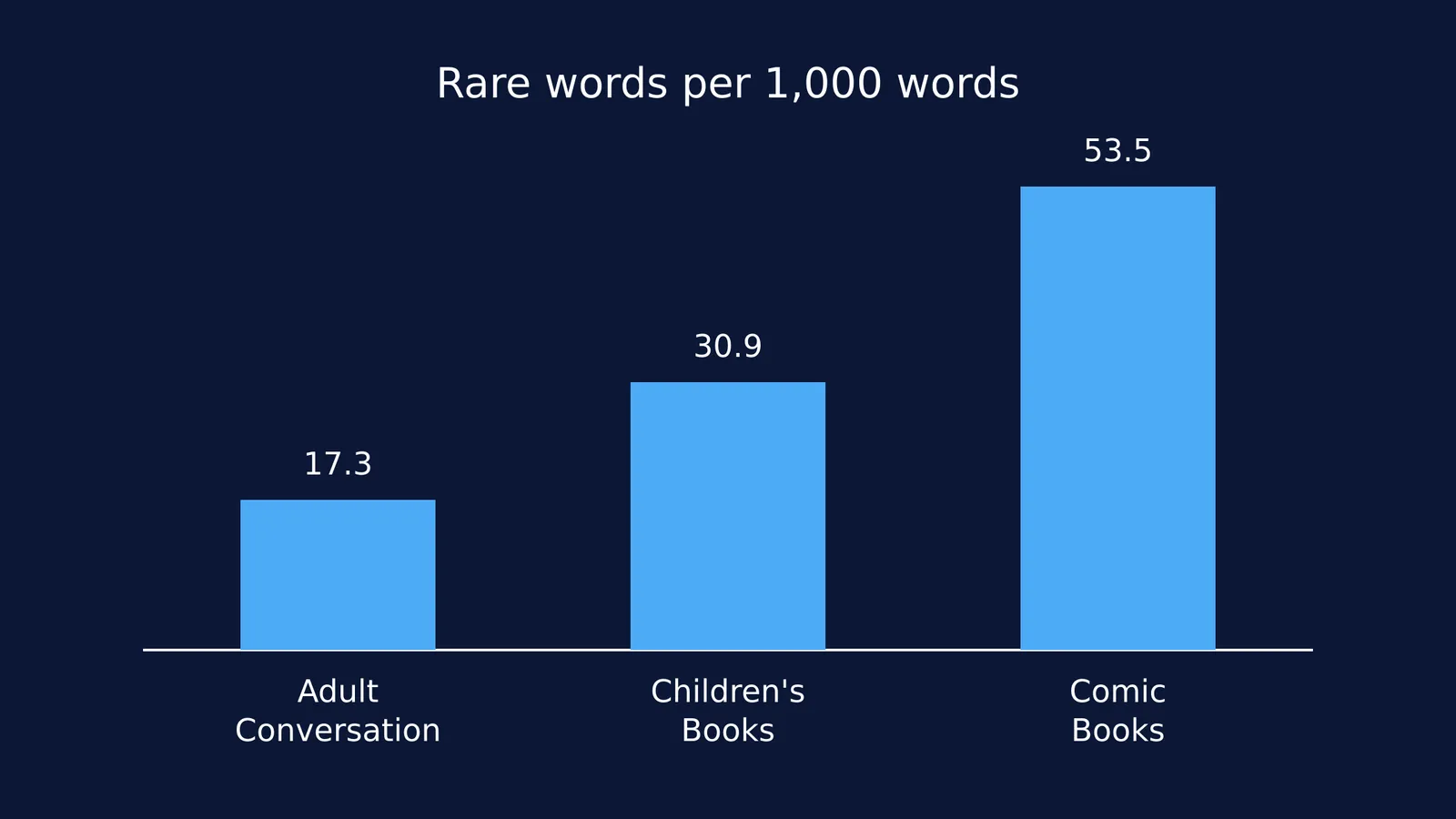
One of the biggest misconceptions about comic books is that they use dumbed-down language. However, a landmark 1988 study by researchers Donald Hayes and Margaret Ahrens found the exact opposite. They measured the frequency of rare words—words that fall outside the 10,000 most common words in English—across different types of media.
They discovered that comic books contain 53.5 rare words per 1,000 words. This is significantly higher than standard children's books, which contain only 30.9 rare words, and nearly three times higher than the conversations of college-educated adults, which average just 17.3 rare words. Because comic books pair complex vocabulary with visual context, they allow children to learn advanced words without feeling overwhelmed.
Why do children get stuck on one series?
Children often gravitate toward a specific series because it reduces the cognitive load of reading. When the characters and setting are already familiar, a child does not have to spend as much mental energy figuring out what is happening. Instead, they focus purely on decoding new words and improving their reading speed.
Choice is also the most critical factor in reading motivation. According to the 7th edition of the Scholastic Kids & Family Reading Report, 89% of children aged 6 to 17 agree that their favourite books are the ones they have picked out themselves. When a child feels in control of their reading material, they are much more likely to view themselves as a reader.
What happens during the fourth-grade slump?
Around the fourth grade, children transition from learning to read to reading to learn. School assignments begin to rely heavily on informational and non-fiction texts. If a child has only ever read simple narratives, they might experience what educators call the fourth-grade slump, a sudden drop in reading scores and motivation as the texts become more demanding.
While reading comic books helps build vocabulary, these formats do not always prepare students for the dense paragraphs found in science and history textbooks. Academic reading requires scanning for facts and understanding abstract concepts without visual aids. Parents can step in gently, offering magazines or visually engaging non-fiction books that match their child's existing interests.
How can you widen their choices gently?
If your child is happily reading their favourite series, the best approach is often to let them be. However, if they are entering higher grades, you can use low-pressure bridges. You might try reading a different genre aloud together, or finding a non-fiction book that connects to the themes of their favourite fantasy series.
You can also look for patterns in their other academic struggles. If they are reading fluently but hitting a wall in school subjects like maths, it might be time to address those challenges. Understanding what actually helps when your child says they are bad at maths can prevent frustration. In these moments, Fermi's AI tutor can work out what your child already knows and build a plan for the session, so they sit down to a clear next step rather than a frustrating blank page.
If they struggle with retaining school material overall, it can help to understand what to try first if your child loses interest in studies to better support their learning journey.
The Bridge Book Plan
To help your child branch out, try this simple framework:
Identify the appeal: Ask them what they love about their current book.
Find the bridge: Ask a librarian for a book in a new format that features the exact same elements.
Share the reading: Read the first chapter aloud to them so they get hooked on the plot.
Keep the old favourites: Never take away their preferred series as a punishment.
The goal is to foster a love of reading, not to check boxes on a list. As long as they are turning pages, they are building the skills they need.


