On this page
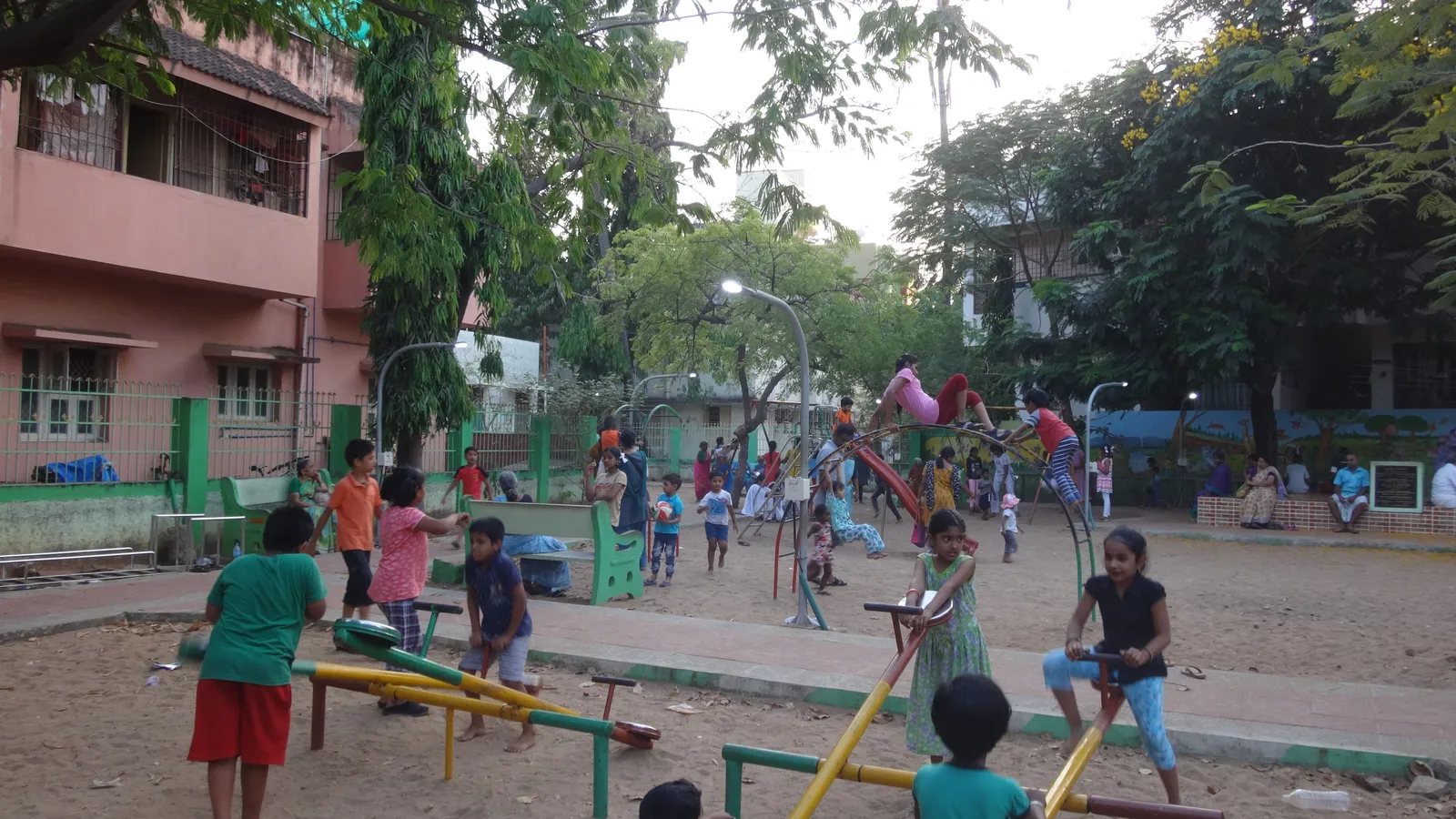
If your child comes home, sits down with homework or a phone and does not step outside until school the next morning, you are not alone, and it is rarely about willpower. In many Indian cities going out takes effort: tuition runs into the evening, the park is a short drive away, and friends live in different buildings. The fix is to make outdoor time a plan, not a lecture.
Why does my child not want to play outside?
Ask what stands between your child and the door, not what is wrong with your child. Four answers come up again and again:
No slot. School, tuition and homework fill the day, so play is whatever is left over, and nothing is left over.
No one to play with. Going down alone is boring. Children go where their friends are.
No easy place. If the nearest open space means crossing a busy road, a parent has to come, and that adds a second person's schedule.
Screens win by default. A phone is right there and needs no planning. Our guide to screen-free activities for evenings has ideas for the indoor half of this.
Each of these is a design problem, and each has a simple fix.
How much outdoor time does a child actually need?
The WHO guidelines on physical activity recommend an average of 60 minutes of moderate aerobic physical activity per day for children and adolescents. That is activity, not outdoor time as such, but for most city children outside is where running, cycling and games happen.
Most young people fall short. The WHO physical activity fact sheet reports that 81% of adolescents aged 11 to 17 were physically inactive, with girls (85%) less active than boys (78%). The same fact sheet says activity in childhood supports bone health, muscle growth, and motor and cognitive development.
Time outdoors may matter for eyesight too. In a cluster randomised trial in Guangzhou, China, published in JAMA, 6 of 12 primary schools added one extra 40-minute class of outdoor activity to each school day for grade 1 children, while the other 6 carried on as usual. Over three years, 30.4% of eligible children in the intervention schools developed myopia (short-sightedness), compared with 39.5% in the control schools. If you have concerns about your child's eyesight, an eye doctor is the right person to ask.
How do you get a child to play outside in a city?
Work on four levers, one at a time.
A set time. Pick one daily slot that does not move, such as straight after school or just before dinner. If the homework-or-play-first argument eats the slot, read our piece on whether homework should come before or after play time.
A friend. Talk to one other parent in your building or lane and agree on the same time. Two children who expect each other will go down without being told.
The nearest park, not the best one. A society compound, a school ground open in the evening, or a lane that is quiet after seven counts. Closer beats nicer, because you will actually use it.
A family walk. One walk a day with a parent, even after dinner, gives a child outdoor time that does not depend on friends or weather.
If homework keeps eating the outdoor slot because your child sits stuck on one topic, Fermi's AI tutor can work out what they already know and build a plan for the session, so study time has a clear finish.
What does a realistic outdoor week look like?
Here is a worked plan for a 12-year-old in a city flat with tuition from 5 to 7 pm on weekdays. It is a starting point towards the WHO 60-minute daily average, with school PE and everyday walking adding to it.
Monday to Friday, 4:15 to 4:50 pm: downstairs with the friend from the next building. Snack first, bag down, out.
Monday, Wednesday, Friday, 8:45 pm: 20-minute family walk round the block after dinner.
Saturday morning: cycling or a game at the nearest park with two or three friends, one parent rotating as the adult on duty.
Sunday evening: a longer family outing, such as a bigger park, the seafront or a maths scavenger hunt outdoors.
Write it on the fridge. A plan that everyone can see is harder to skip.
What should you say if your child refuses?
Skip "you never go out". Try this instead:
"I've noticed we're all stuck indoors. I want to fix that for the whole family, not just you."
"What would make going down more fun: a friend, a ball, your cycle?"
"Let's try 4:15 every day this week. On Sunday we decide together if it worked."
Then go with them for the first few days. It is easier to step out when a parent steps out too. If your child seems withdrawn, low or anxious for weeks, not just uninterested in going out, speak to a doctor or counsellor, or call Tele MANAS on 14416.
Pick one lever this week, put the time on the fridge, and step outside together tomorrow.