

On this page
Evenings often default to screens because they are easy. After a long day of school, homework, and extracurriculars, handing a child a tablet or turning on the television feels like a needed break for both them and you. But research consistently shows that the hour before bed is critical for how a child's brain processes the day.
A 2022 cross-sectional study of school-going children in New Delhi found that academic performance scores were significantly higher for students who kept their total daily screen time under two hours and did not have a habit of using screens before sleeping.
Pediatric guidelines recommend a screen-free hour before bed. The blue light from screens suppresses melatonin, delaying the onset of sleep and cutting into the 9 to 12 hours of rest children need to consolidate memory and regulate their emotions.
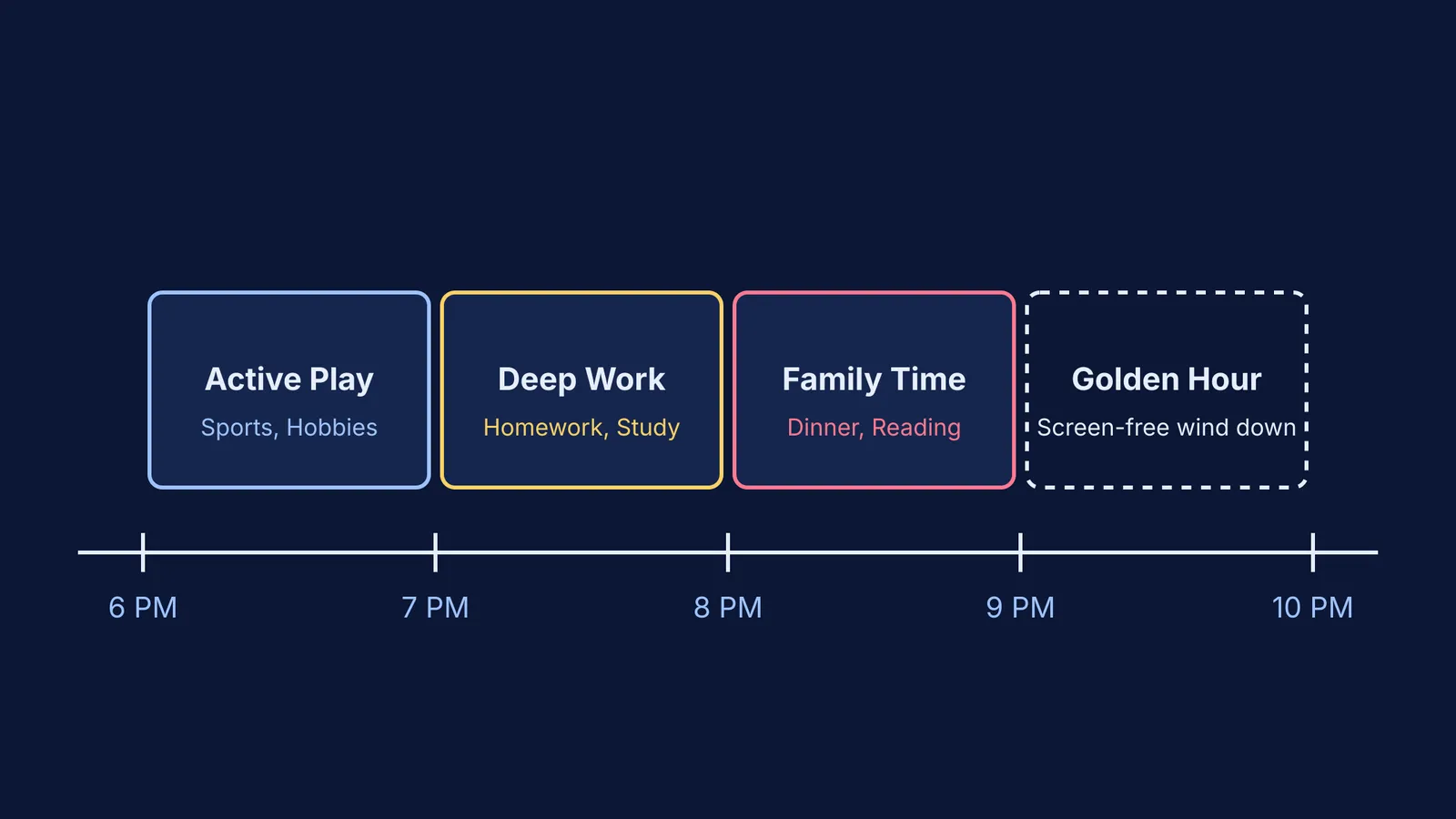
So, what should children in Classes 1–8 do instead? Breaking the evening into a predictable routine helps. Here is a list of low-cost, high-value activities to replace the default screen hour.
Why does the hour before bed matter?
The transition from the high energy of the day to the rest of the night requires a physical and mental winding down. Screens, especially interactive ones like tablets and smartphones, keep the brain in a state of high arousal.
When a child plays a video game or scrolls through short-form videos, their brain releases dopamine in quick, irregular bursts. This makes it difficult to switch to slower, calmer tasks. Protecting the hour before sleep allows their nervous system to settle. Exam season at home: routines that help the whole family can be built around this quiet time, ensuring that the house naturally grows calmer as bedtime approaches.
What can children do instead of screens?
The most effective alternative activities do not feel like extra homework. They should be engaging, low-pressure, and ideally involve some physical or creative input.
The shared quiet hour: One of the most effective ways to encourage reading is for the whole household to do it together. A family quiet hour: setting up shared study and reading time models the behavior you want to see. Set a timer where everyone reads a physical book or draws.
Listening to audiobooks or podcasts: Audio stories remove the visual stimulation of a screen while still capturing a child's imagination. Listening to a well-told story improves vocabulary and listening comprehension without the bright blue light that disrupts melatonin production. It is a relaxing way to transition from the day's activities into sleep mode.
Kitchen maths and science: Cooking is a highly practical application of STEM concepts. Measuring ingredients builds an intuitive understanding of fractions, volume, and ratios. Asking a child to halve a recipe forces them to use mental maths. Discussing why dough rises or what happens when lemon juice meets baking soda turns dinner preparation into active learning.
Spatial reasoning games: Board games, chess, and physical puzzles are excellent alternatives to digital gaming. They require sustained attention, turn-taking, and strategic planning—skills that directly transfer to classroom learning. Games involving building help develop visual-spatial working memory, which is crucial for later success in geometry and physics.
Preparing for tomorrow: Have children pack their school bags, check their timetables, and lay out their uniforms. This small, physical routine builds executive function and significantly reduces morning stress.
How to make evening study active?
When evening study does require a device, it should be highly focused and active, not passive. Passively watching educational videos or scrolling through solved examples rarely leads to true understanding.
Fermi's AI tutor works out what a student already knows and builds a plan for the session, teaching through the problem step by step rather than just printing an answer. This keeps the student actively engaged in the reasoning process.
If a specific topic is confusing, the Fermi Concept Library offers dedicated lessons, letting the student master the idea quickly, close the device sooner, and get back to practising on paper.
How do you start a new routine?
Changing an established habit is hard, and children will initially resist giving up their evening screen time. Start small. You do not need to ban screens entirely; instead, aim to build a study routine that lasts by shifting when screen time happens.
Move television or tablet time to the afternoon, and firmly protect the final hour before sleep. Frame it as a family experiment rather than a punishment. Outline the new evening schedule clearly—perhaps even drawing it on a whiteboard. It takes about a week to break the habit of reaching for the remote. After a few days of better sleep and calmer mornings, the new routine often sustains itself, leaving your child better rested and more focused for school.


