On this page
A toddler who can chant "A for apple" from a card deck has learned a sequence, not the letters themselves. Letters stick when they mean something: a name, a shop board, a song, a shape felt under a finger. Most of the studies below tested preschool and kindergarten children, who are older than most toddlers; with a 2-year-old, treat all of this as play, not lessons.
Why start with your child's name?
A child's name is the first word they care about seeing in print. In Treiman and Broderick's 1998 study, US preschoolers and kindergartners and Australian first graders knew the name of the first letter of their own first name better than other letter names. The advantage did not show up for letter sounds, so knowing "A is in my name" doesn't automatically mean knowing what A sounds like.
So write your child's name on their water bottle, drawings and bedroom door, then add the names around them: Amma, Papa, Dadi, a sibling.
What to say: "This is your name, Aarav. It starts with A. Let's find another A on the calendar."
How do signs and labels help a child learn letters?
In a randomised study by Michelle Neumann, 32 parent-child pairs (children about 3.6 years old on average) spent 30 minutes a week for 8 weeks finding, tracing and writing letters and words in signs and labels. The children made significant gains in letter knowledge and in reading environmental print.
In India print is everywhere: shop boards, milk packets, number plates, bus boards. Pick one letter per outing, not ten.
What to say: "That board says MEDICAL. The first letter is M, like Mumma. Can you see another M?"
Do alphabet songs actually teach letters?
Songs teach the order, but the middle blurs. Purdue University education researchers explain that people tend to remember the first and last few items of a long list better than the middle ones, and that children often sing the start and end of the ABC song more confidently than the middle. Think of how "L-M-N-O-P" often comes out as one word. Sing that stretch slowly and point to each letter on a chart. Rhymes help in other ways too; see how nursery rhymes help children get ready to read.
Some letters are easier to link to a sound than others. In a study of 660 children aged 3½ to 7½, Rebecca Treiman and colleagues found that letter sounds were easier to learn when the sound appears in the letter's name, especially at the beginning. B ("bee") and T ("tee") give their sound away. Letters like H and W don't, so expect them to need more practice. When you are ready for sounds, read our guide to teaching phonics at home in ten minutes a day.
Why trace letters by hand instead of typing them?
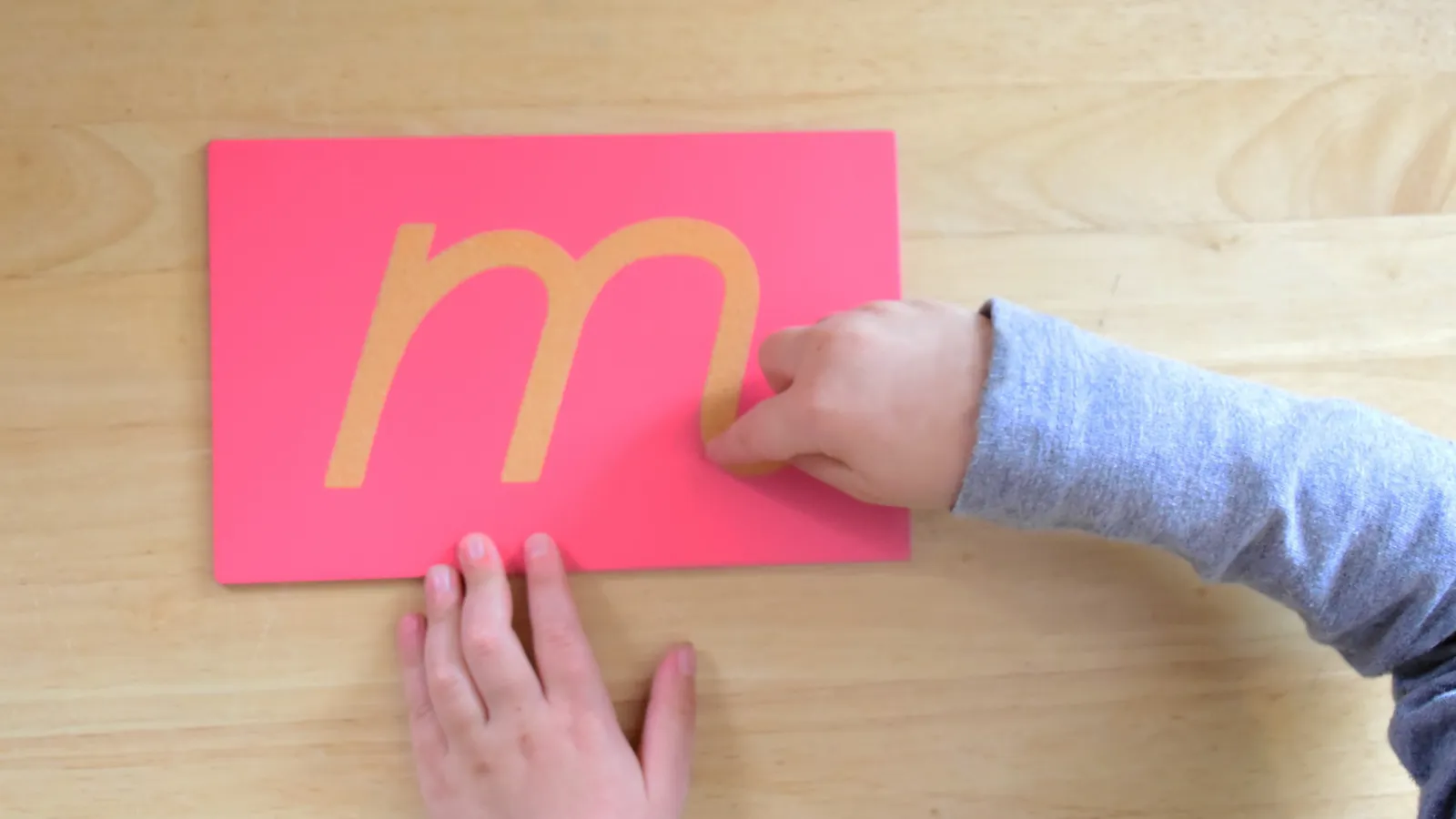
In a study by Florence Bara and colleagues, 5-year-olds did one of three versions of a letter-and-sound training. All three led to similar gains in letter recognition, but the group that also explored letters by touch made the biggest gains in sounding out made-up words.
In a study of 76 preschoolers aged 3 to 5, Marieke Longcamp and colleagues taught letters to two groups of 38, one by copying them by hand and one by typing them on a keyboard. Among the older children, the handwriting group recognised letters better.
At home, spread sand, rava or salt thinly on a steel plate. Your child traces a letter with one finger while saying its sound, then shakes the plate clean. If b and d keep swapping, see what helps when a child mixes up b and d.
What does a four-week plan look like?
Keep sessions to about ten minutes and stop while your child still wants more.
Week 1, name: find the first letter of their name in three places a day; add one family name.
Week 2, signs: on each outing, spot one letter from the name on a sign or packet and trace it in the air.
Week 3, songs and sounds: sing the alphabet slowly at a chart, then play "B says b-b-b" with B, D, T and P.
Week 4, sand tray: trace the week's letters while saying the sound, then find them on signs again.
At the end of each week, name a letter you have played with and ask your child to point to it. If they can, add two new letters. If not, repeat the week; repeating is not failing.
Keep the letter games in proportion. A meta-analysis by Piasta and Wagner found minimal evidence that alphabet teaching carried over into early reading or spelling skills, so keep talking, telling stories and rhyming too.
Later, if a school-age child at home is stuck on a science idea that's hard to picture, the Fermi Simulation Lab has interactive simulations for ideas that are easier to see than to read.
Tonight, stick your child's name on their door and ask them tomorrow to find its first letter.