On this page
It is 9 pm, the biology test is tomorrow, and your child has pasted the chapter into a chatbot and got back a tidy page of bullet points. It looks like revision. Memory research suggests that is only half the job: much of the remembering comes from the effort of producing the notes, and an AI summary is most useful once that work is done.
Are AI-generated notes good for revision?
They are good as a check and weak as a substitute. An AI summary can show what your child left out, spot a definition they got wrong and suggest a cleaner order for a messy chapter. What it cannot do is the remembering for them. A neat summary feels like learning because the page is clear, but feeling familiar with something is not the same as being able to recall it in the exam hall.
Why does making your own notes build memory?
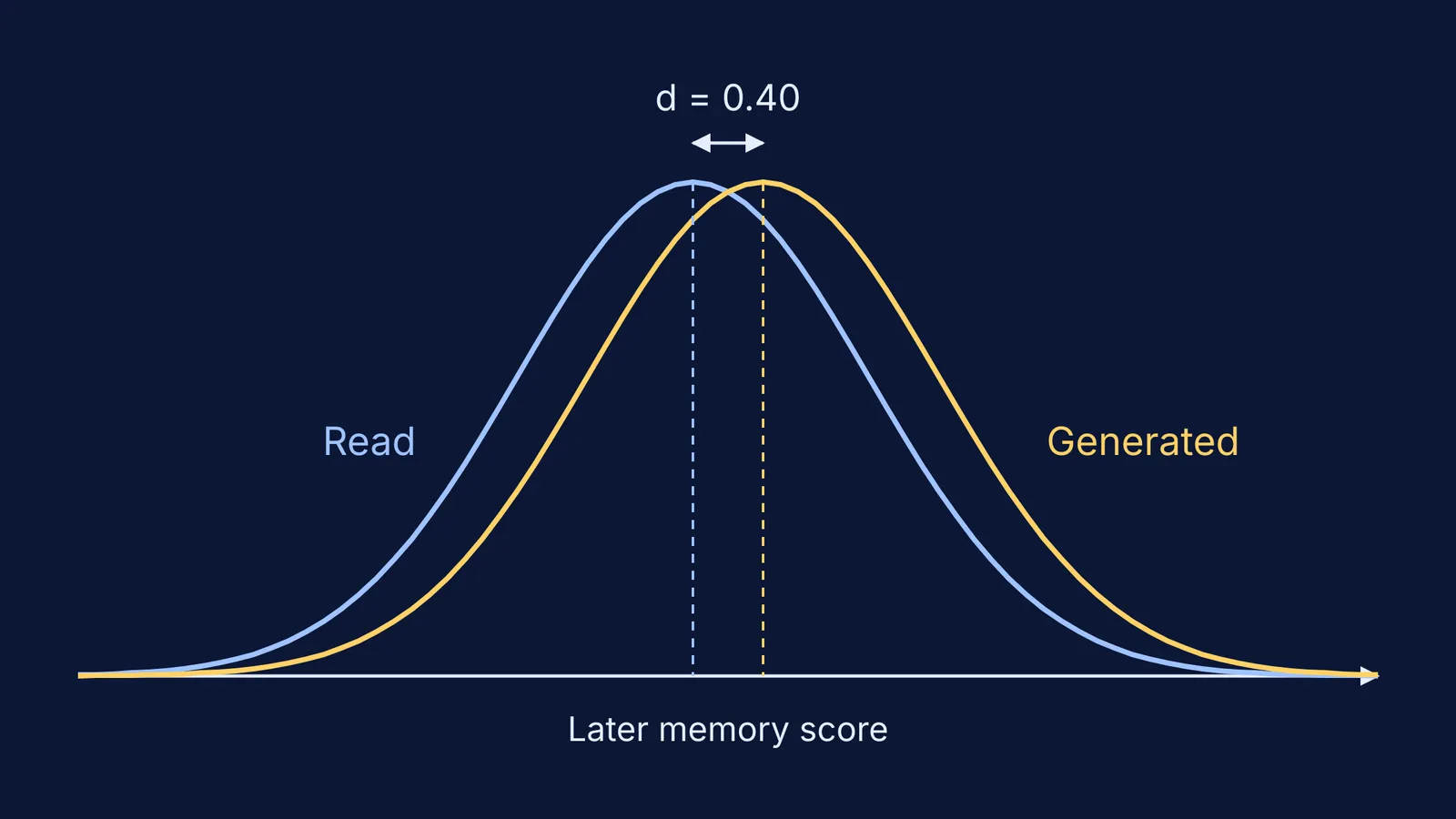
Psychologists call it the generation effect: people remember information they produce themselves better than information they simply read. A 2007 meta-analysis in Memory & Cognition pooled 445 effect sizes from 86 studies and found an average benefit of 0.40, which the authors describe as almost half a standard deviation of generation over reading.
There is an honest catch. In a 2013 review of ten study techniques, John Dunlosky and colleagues rated summarisation, highlighting and rereading as low utility, and practice testing and spaced practice as high utility. So writing notes is not magic either. Notes are likely to work best when they force your child to choose, rephrase and connect ideas, and then become the material they test themselves on.
That testing step matters. In Roediger and Karpicke's 2006 experiments, students who took recall tests on prose passages remembered substantially more after two days and after one week than students who restudied the same passages, even though restudying looked better after five minutes.
What happens when students lean on AI too early?
A field experiment with nearly a thousand high school maths students, published in PNAS in 2025, gave some students a standard ChatGPT-style assistant while they practised. Their practice grades rose 48%, but once access was taken away they scored 17% lower than students who never had it. The researchers write that, without guardrails, students tried to use the tool as a "crutch" and then did worse on their own. A second version, built with prompts designed to safeguard learning, largely avoided that drop.
The lesson for notes is the same. AI that does the thinking during practice leaves less behind for the exam.
How can you check an AI summary?
AI summaries make mistakes, and they make them confidently. In an October 2025 study by the EBU and the BBC, journalists reviewed more than 3,000 answers from four AI assistants and found that 45% had at least one significant issue. That study tested news, not textbooks, but the habit it points to fits every subject: check before you trust.
Five quick checks against the textbook your school uses, NCERT or otherwise:
Definitions: does each one match the book where the exact wording matters?
Numbers and units: are values, formulas and units the same as in the chapter?
Diagrams and labels: does the summary name every part the syllabus asks for?
Missing pieces: which headings in the chapter does the summary skip?
Added extras: is anything there that is not in the chapter at all? Cross it out.
For a longer routine, see our guide on asking AI to check your notes for mistakes.
A second-pass plan for tonight's revision
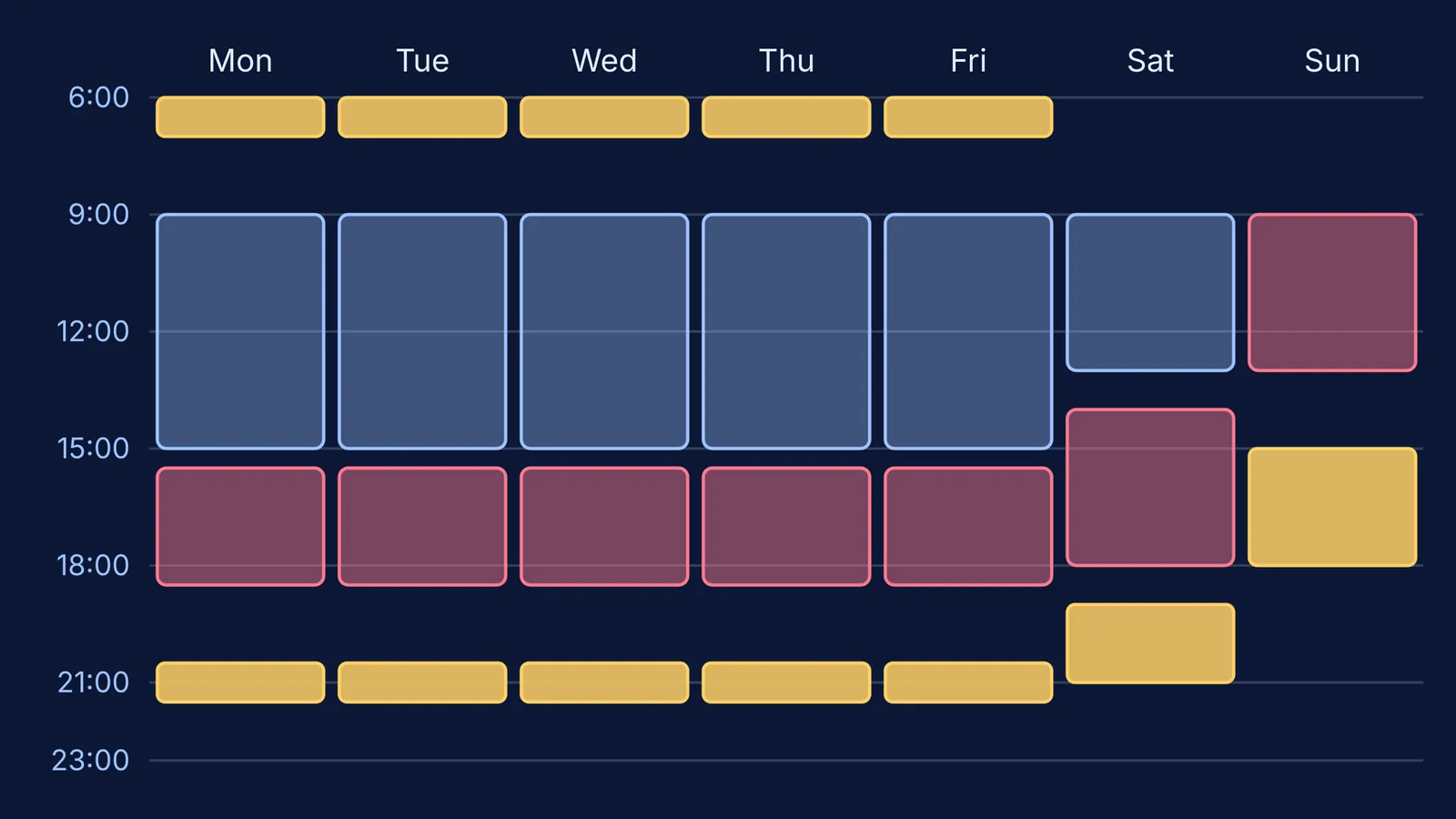
First pass, no screens: your child reads one section, closes the book and writes notes in their own words, with one question at the end of each heading.
Self-test: they cover the notes and answer those questions out loud.
Second pass with AI: they ask for a summary of the same section and compare it line by line with their notes, using the five checks above.
Fix and flag: they add anything missing in a different colour pen. Whatever they got wrong becomes tomorrow's first question.
Next day: they answer the questions again before rereading anything.
If your child needs help with the first step, our post on teaching your child to make notes from a textbook walks through it, and writing your summary first, then comparing it with AI shows the comparison in detail.
When the comparison exposes a concept your child cannot explain at all, the Fermi Concept Library covers every concept in physics, chemistry, biology, mathematics and computing, each with its own lesson, so they can relearn the idea instead of copying the corrected line.
The aim is not to ban the tool. It is to keep the hard, useful part, the remembering, with your child, and let the AI do what it does well: take a second look.