On this page
You do not need to code to train a machine learning model. The more useful part of the project comes after training: predicting where your model will go wrong, then trying to break it on purpose. That shows you what machine learning really depends on: the training data.
Can you train your own AI model without coding?
Yes. Google's Teachable Machine lets you "train your own machine learning model with the click of a button, no coding required", according to the Google announcement of Teachable Machine 2.0 from November 2019. It can learn to recognise images, sounds or body poses, from files you upload or from your webcam and microphone. The same post says "the training happens in your browser, so everything stays in your computer"; you can also choose to save a project to Google Drive.
Its makers describe Teachable Machine as a web-based tool for building classification models "without specialized technical expertise" in their 2020 CHI paper. A classifier is a model that sorts each new input into one of the groups you defined, such as "ripe banana" or "raw banana". If the difference between this and a hand-written rule feels fuzzy, our explainer on AI vs machine learning vs deep learning gives one example of each.
Why does an AI model fail on new examples?
Often because it learned a shortcut. Shortcuts are "decision rules that perform well on standard benchmarks but fail to transfer to more challenging testing conditions", as a 2020 paper in Nature Machine Intelligence puts it (free version on arXiv).
A well-known demonstration comes from a 2016 study by Ribeiro, Singh and Guestrin. They trained a wolf-versus-husky classifier on 20 photos chosen so that every wolf photo had snow in the background and no husky photo did. The model then called an image "wolf" whenever there was snow, whatever the animal looked like. Of 27 graduate students with at least one graduate machine learning course, 10 trusted the model after seeing its predictions; after being shown which parts of each image it relied on, only 3 still trusted it, and 25 named snow as its clue.
How do you do the project in one afternoon?
Pick a two-class question. Raw versus ripe bananas works with a webcam; a pressure-cooker whistle versus a doorbell works with a sound project.
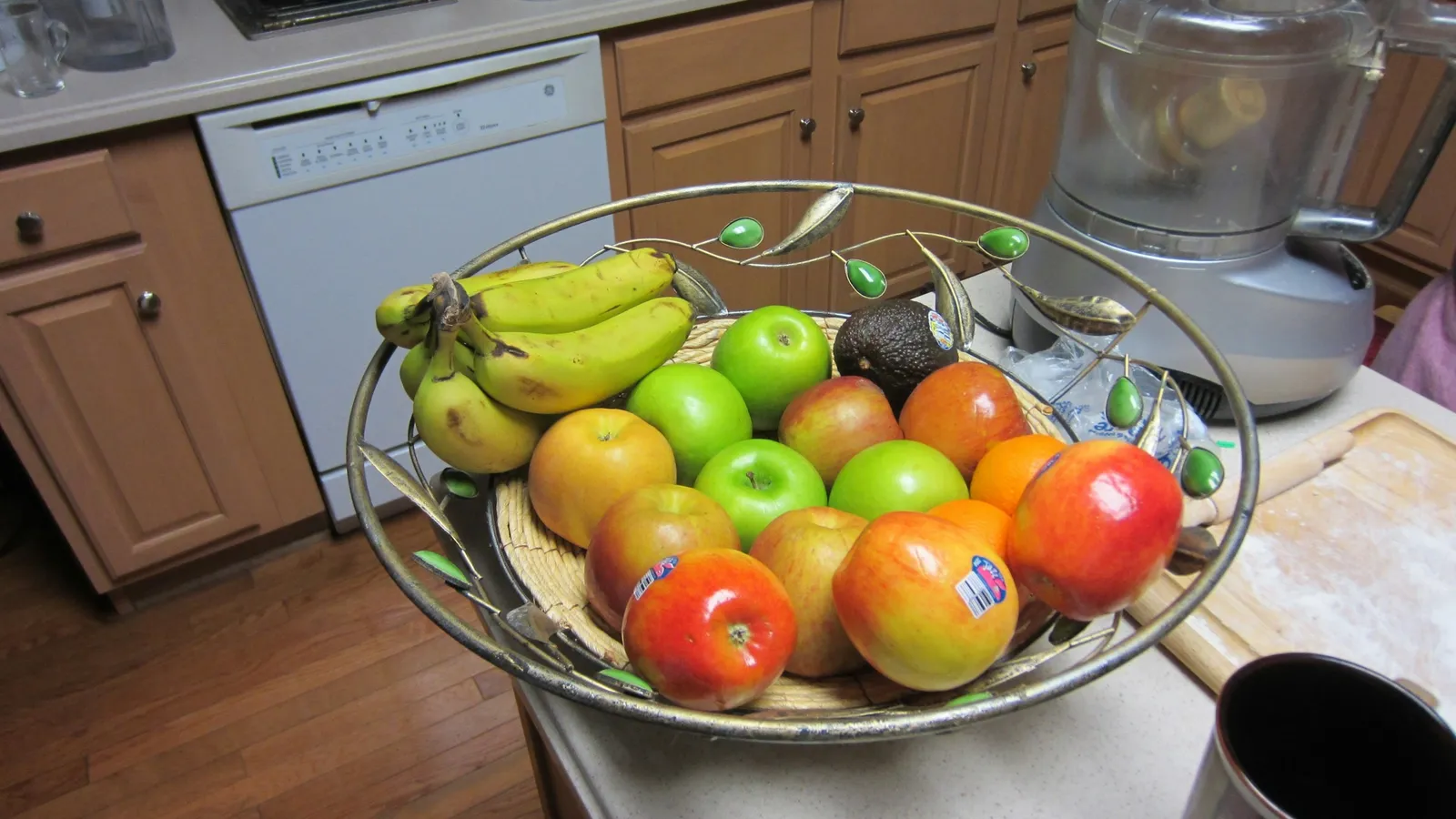
Collect round one carelessly, on purpose. Photograph all the ripe bananas on the kitchen counter and all the raw ones in the fruit basket. This plants a shortcut you can catch.
Write three predictions before you train. Which test will the model get wrong, and why?
Train, then test with tricky examples the model has never seen.
Fix the data and retrain. Mix backgrounds, light and angles across both classes, then run exactly the same tests again.
Worked example: the banana prediction sheet. These are predictions, not results; record what actually happens beside each.
Ripe banana in the fruit basket. Prediction: "raw", because the basket only ever appeared with raw bananas.
Raw banana on the counter. Prediction: "ripe", for the same reason.
Half-ripe banana with green tips. Prediction: unsure, since neither class had one.
Yellow tennis ball on the counter. Prediction: "ripe", because the model has no "neither" option and must pick a class.
Ripe banana in dim evening light. Prediction: may flip, because the lighting is new.
For sound, try the doorbell with the ceiling fan running, a whistle recorded from another room, and someone clapping. If round one fails the basket and counter tests and round two passes them, you have caught a shortcut and fixed it with data alone.
How do you write it up as a school project?
The CBSE Class IX Artificial Intelligence curriculum for 2025-26 lists the AI project cycle as problem scoping, data acquisition, data exploration, modelling, evaluation and deployment, so those make ready-made section headings. The same document teaches evaluation with true positives, false positives, true negatives and false negatives, and asks students to discuss possible bias in data collection.
Problem scoping: your two classes and why telling them apart matters.
Data acquisition: how many examples per class, and where each was taken.
Evaluation: your prediction sheet, with right and wrong answers counted before and after the fix.
Ethics: one paragraph on what a shortcut like yours would mean if the model sorted people instead of bananas.
For that last part, our classroom activity on testing an AI for bias gives you ready questions. To compare your trained model with rules you write yourself, try building a decision tree on paper.
If terms like classification or training data still feel shaky when you sit down to write, the Fermi Concept Library gives every concept in computing its own lesson. Fermi's AI tutor can work out what you already know and build a plan for the session, so you start the write-up with a clear next step.
Parents: let your child plant the shortcut and find it themselves. Watching the model call a tennis ball a ripe banana makes the idea of a shortcut concrete.