
On this page
You sat through the classes and highlighted half the NCERT pages, and the chapter still makes no sense. A review of ten study techniques rated rereading as low utility, and rated practice testing and spreading study over time as high utility (Dunlosky and colleagues, Psychological Science in the Public Interest, 2013).
AI can help, but only if you make it ask the questions. In a field experiment with nearly a thousand high school maths students, those who practised with a plain ChatGPT-style tool scored 17% lower once it was taken away than students who never had it, and a version with prompts designed to safeguard learning largely avoided that harm (Bastani and colleagues, PNAS, 2025).
Why does a chapter stay confusing however often you read it?
Often the chapter is not the real problem. Something it takes for granted is missing. A meta-analysis of 8,776 effect sizes found that what students knew before learning correlated highly with what they knew after it (r = .53) (Simonsmeier and colleagues, Educational Psychologist, 2022). The same analysis found that, on average, prior knowledge barely predicted how much students gained, and that link varied widely between studies. A gap just means you start one step earlier.
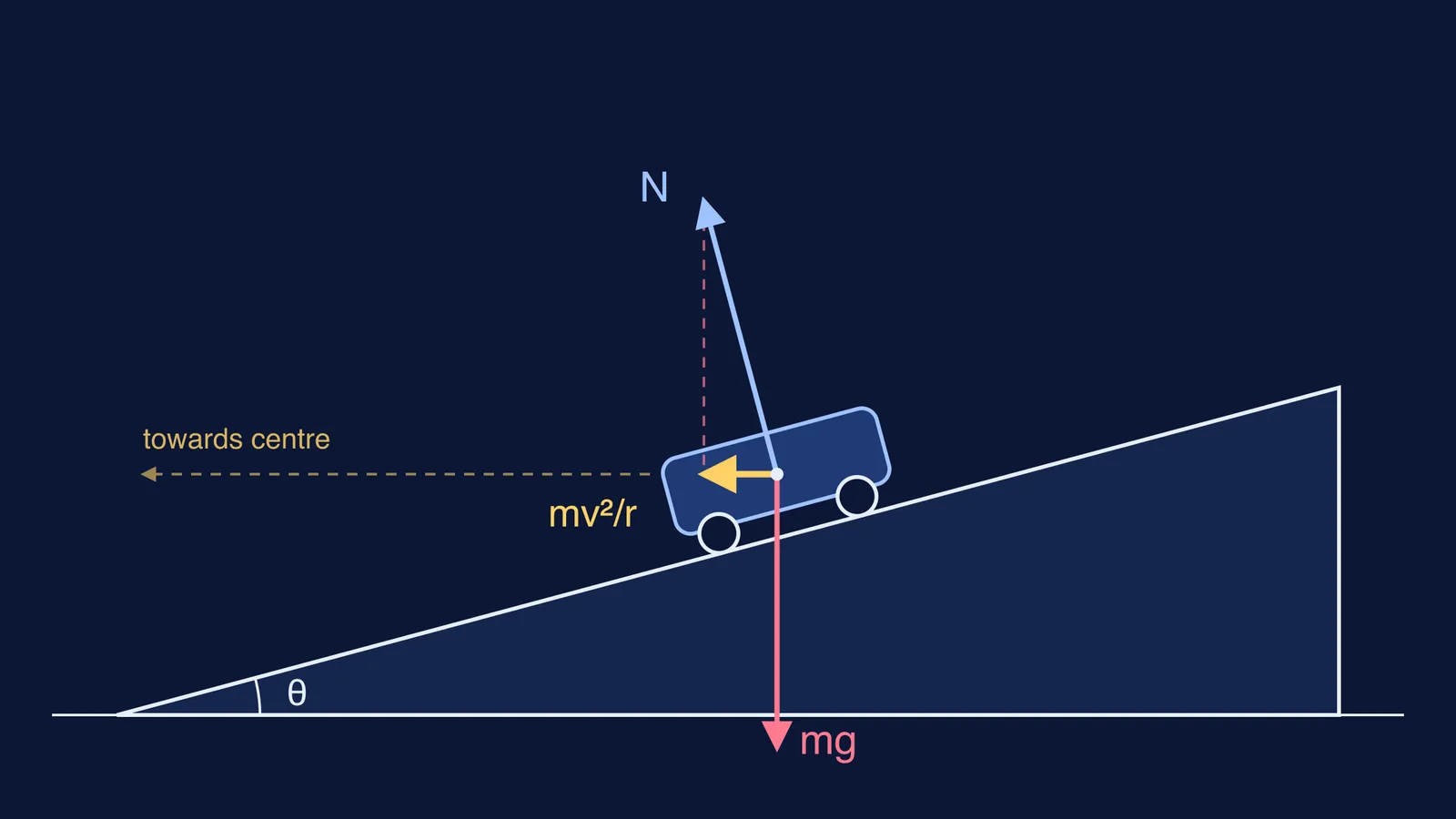
Our worked example is the Class 11 physics chapter Motion in a Plane, from the official NCERT textbook. Projectile questions feel impossible when the actual gap is splitting a vector into components.
How do you use AI to revise a chapter you have not understood?
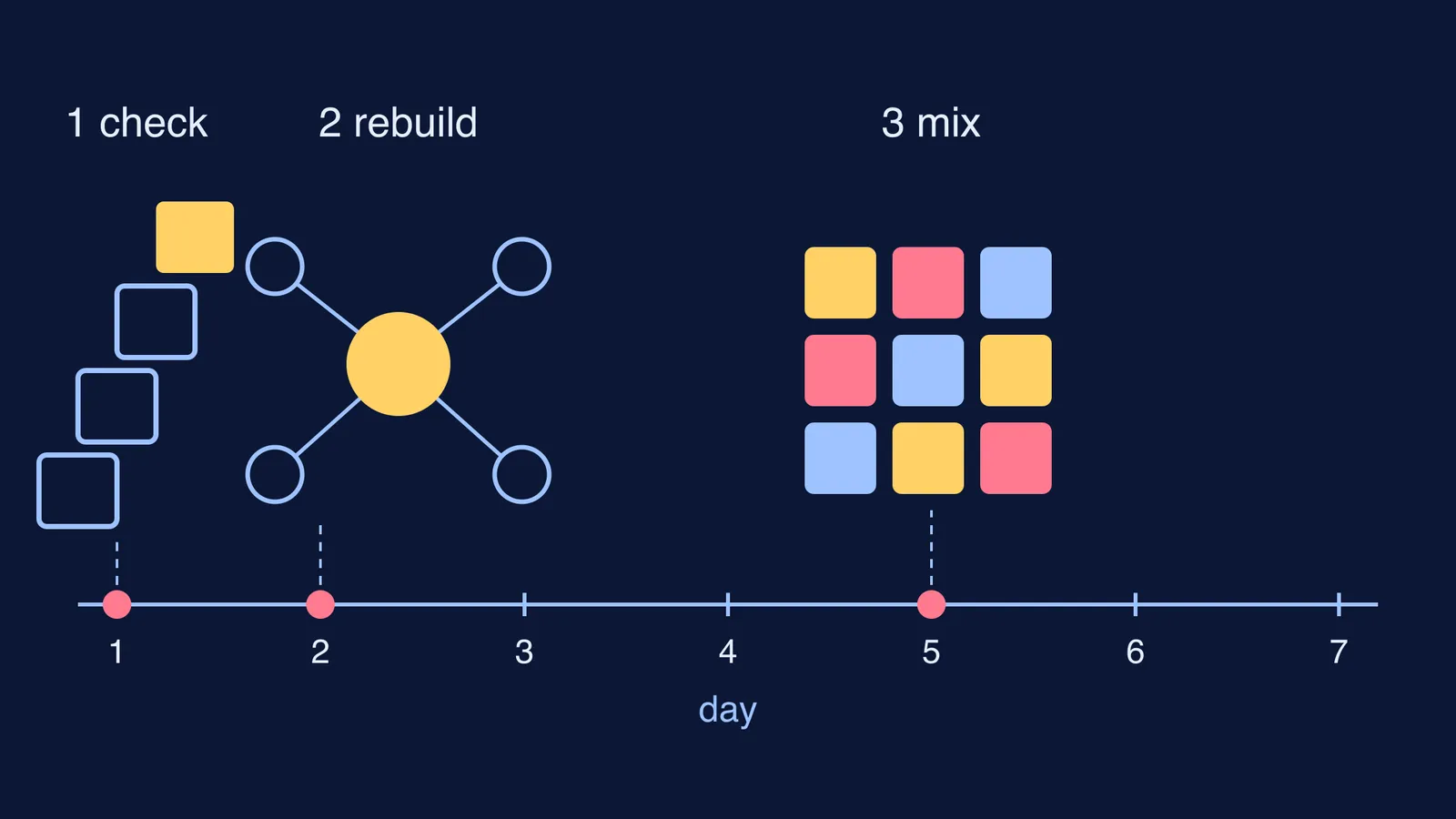
Use three sessions across a week: day 1, day 2 and day 5. The gap before the last session is deliberate, because spacing study out is one of the two techniques the Dunlosky review rated highly.
Session 1: how do you find the missing prerequisite?
Do not ask the AI to explain the chapter. Ask it to test you on what the chapter stands on.
"I am revising NCERT Class 11 Motion in a Plane and I do not understand it. List the ideas from earlier chapters it depends on. Ask me one short question on each, one at a time. Do not give the answer until I have tried, and tell me which idea I am weakest on."
For this chapter the list usually includes sine and cosine of an angle, adding vectors, resolving a vector into components, and the equations of motion in a straight line. If you miss the components question, that is the whole job of session 1: learn that one idea, then answer three fresh questions on it before you stop.
Session 2: rebuild the core idea with your own examples
Read the chapter's key section yourself, then explain it back. Self-explanation means generating your own inferences about how ideas connect: why each step follows from the last. A meta-analysis of 64 studies found that prompting learners to self-explain had an average effect size of g = 0.55 (Bisra and colleagues, Educational Psychology Review, 2018; British Psychological Society summary).
"I will explain why a projectile's horizontal velocity stays constant when we ignore air resistance. Do not correct me yet. Ask me why at each step until I reach something I cannot justify."
Then invent two examples of your own: a cricket ball thrown in from the boundary, a coin dropped from a moving bus. Ask the AI only to check whether your examples obey the idea, not to write new ones. If you cannot find where your reasoning breaks, try these scripts for telling an AI tutor exactly where you got stuck, or work through a dense passage by asking AI to explain an NCERT paragraph line by line.
Session 3: mixed practice
Now solve problems where you must first decide which idea applies. In one experiment with 126 seventh-grade students, maths skills practised with interleaved problems scored higher than skills practised in blocks on a surprise test 30 days later (Cohen's d = 0.79) (Rohrer, Dedrick and Stershic, Journal of Educational Psychology, 2015).
"Make nine problems mixing projectile motion, relative velocity and vector addition, in random order and without labels. Give me one at a time. After each attempt, ask which idea I chose and why before you check my answer."
For more control over the mix, see how to make mixed-topic practice questions with AI. Any idea you get wrong twice goes back to session 1 next week.
What if you still do not get it after three sessions?
That is useful information, not failure. Take your session 1 list and your wrong answers to a teacher. You now have a precise question instead of "I don't understand the chapter."
If the hard part is knowing where to begin, Fermi's AI tutor works out what you already know and builds a plan for the session, checking understanding as it goes. For a single missing prerequisite, the Fermi Concept Library gives each concept its own lesson and its place in the map.