On this page
In the 1960s India faced the threat of famine. The new wheat varieties that followed, and the jump in harvests they brought, became known as the Green Revolution, as a World Food Prize tribute to him recounts. One scientist sits at the centre of that story: the plant geneticist M. S. Swaminathan. This post covers what he did, the plant biology that made it work, and what a student can learn from his way of working.
Who was M. S. Swaminathan?
The Royal Society's biographical memoir gives his dates as 7 August 1925 to 28 September 2023 and his birthplace as Kumbakonam. It says the Bengal famine of 1942 to 1943 turned him towards genetics and plant breeding. He earned a PhD from the University of Cambridge in 1952 and returned to India in 1954.
The memoir describes him as an institution builder. He served as director general of the Indian Council of Agricultural Research, where he started a "lab-to-land" programme linking research to farms, and later as director general of the International Rice Research Institute in the Philippines. He was elected a Fellow of the Royal Society in 1973 and received the Bharat Ratna in 2024.
What did he do for Indian wheat?
Norman Borlaug had bred high-yielding dwarf wheats in Mexico. The World Food Prize tribute brochure, published for Swaminathan's 90th birthday, records that he asked Borlaug for help, and that in March 1963 Borlaug spent three weeks with him in the wheat belt of north India.
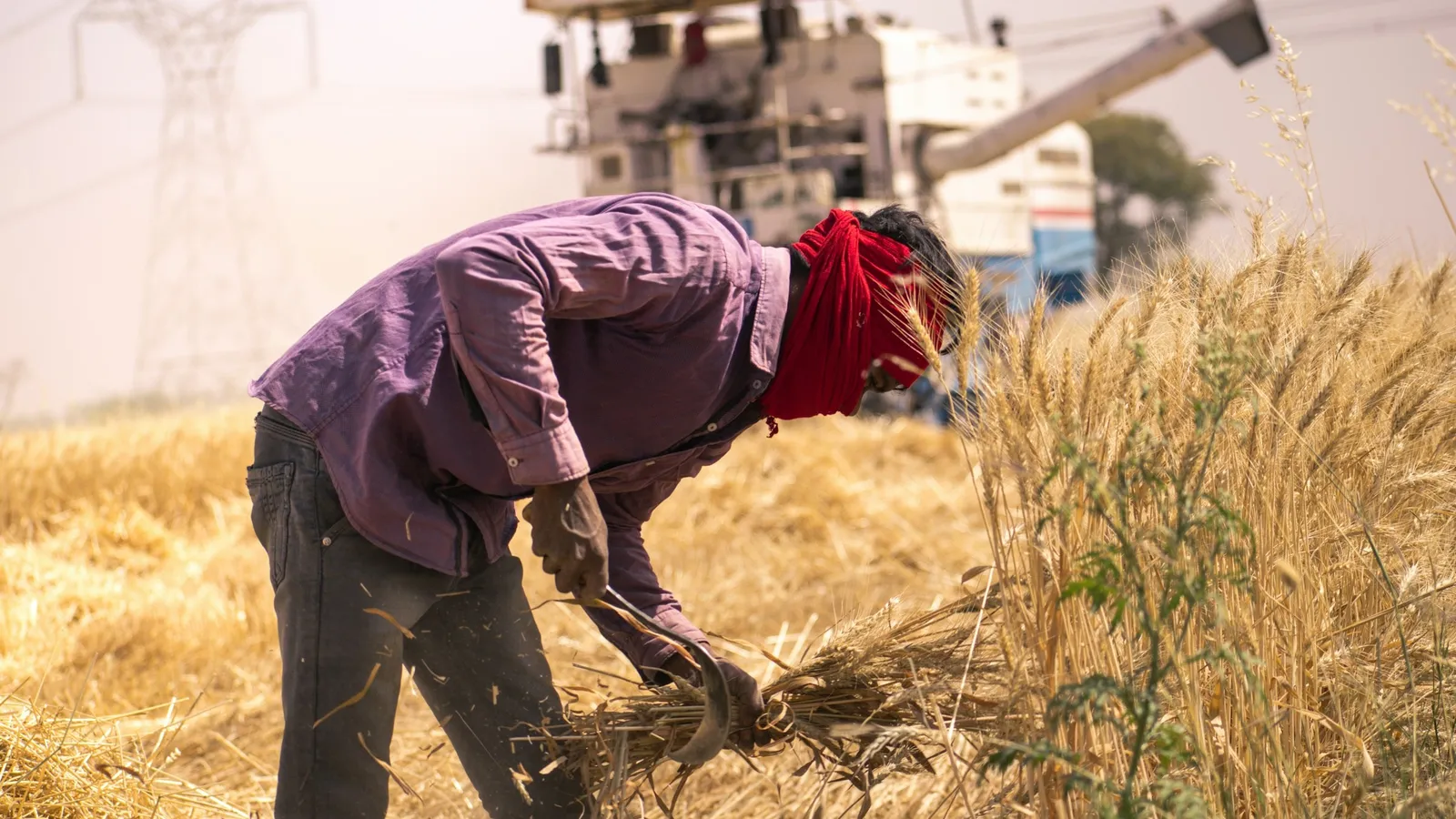
Swaminathan then set up national demonstration trials, including on poor farmers' fields, to test whether the new wheats would grow in Indian soils and climates. They did. There was one problem: Indian consumers did not like the red grain of Mexican varieties such as Lerma Rojo for chapatis. The brochure says Borlaug supplied more amber-coloured seed from his work in Pakistan, and Swaminathan did further research on these varieties to develop Sonalika and Kalyan Sona, which had the chapati-making quality people wanted. It also records that India's wheat harvest rose from about 12 million tonnes a year in the early 1960s to 70 million tonnes by 1999.
Why do shorter wheat plants give more grain?
In a 1999 paper in Nature, Jinrong Peng and colleagues explained the new varieties at the level of genes. Green Revolution wheats are shorter, they wrote, and increase grain yield at the expense of straw, and they are more resistant to damage by wind and rain. They are short because mutant alleles at the Reduced height-1 (Rht) genes make them respond abnormally to gibberellin, a plant growth hormone. A 2003 review by Peter Hedden adds that the rice dwarfing gene sd1 works through the same hormone, by blocking a step in gibberellin production. You meet gibberellins in Chapter 13, Plant Growth and Development, of the NCERT Class 11 biology textbook, which notes that they increase the length of the axis and promote internode elongation (bolting); our guide to plant growth regulators covers what they do.
Worked example (made-up numbers to show the idea). Suppose two wheat crops each produce 9 tonnes of above-ground plant material per hectare.
Tall variety: 30% of that is grain, so 0.30 × 9 = 2.7 tonnes of grain.
Semi-dwarf variety: 45% is grain, so 0.45 × 9 = 4.05 tonnes of grain.
The share of the plant that ends up as grain is called the harvest index. With the same total growth, the semi-dwarf gives 1.35 tonnes more grain, and because it resists wind and rain damage better, less of that grain is lost.
What came after the Green Revolution?
The memoir notes that Swaminathan later turned to nutritional security, specifically what is called "hidden hunger". In 1987 he became the first laureate of the World Food Prize. The tribute brochure says he used the US$200,000 award to start his own institute, the M. S. Swaminathan Research Foundation in Chennai, which works on hunger, poverty and the environment.
Milk had its own revolution in the same decades. Read how a cooperative model changed dairying in our profile of Verghese Kurien and Operation Flood.
What can a student take from how he worked?
Start from a real problem. A famine he lived through set his direction. A problem you care about will keep you working longer than marks alone.
Test in real conditions. He set up demonstration trials across the country, including on poor farmers' fields. Check your methods on the kind of question you will actually face.
Notice what users need. Consumers disliked red Mexican grain for chapatis, so the work went on to amber-grained varieties. Accuracy is not the only test of a good answer; it also has to be usable.
Join the biology to the numbers. The Green Revolution was genetics, hormones and arithmetic together. Practise moving between a concept and a calculation.
If you want to understand the hormone and gene ideas properly before reading further, the Fermi Concept Library covers every concept in biology, each with its own lesson.
Redo the worked example with the semi-dwarf at 50% grain instead of 45%, and work out how much extra grain it gives.