On this page
India was short of milk in the 1950s and 1960s and relied on imports. Today, a Press Information Bureau note says, it is the world's largest milk producer. Much of that change grew out of a farmers' cooperative in Anand, Gujarat, and an engineer who joined it. This post covers what Verghese Kurien did, the science and arithmetic behind the cooperative model, and what a student can learn from his way of working.
Who was Verghese Kurien?
The Indian Council of Agricultural Research's homage page gives his birth as 26 November 1921 in Kozhikode and his death on 9 September 2012. He took a bachelor's degree in mechanical engineering from Madras University in 1943 and worked briefly at Tata Iron and Steel. He then went to Michigan State University on a Government of India scholarship to study dairy engineering; ICAR records that he ended up taking a master's in metallurgy, with dairy engineering as a minor subject.
In 1949 he joined the Government Research Creamery at Anand as dairy engineer. There he met Tribhuvandas Patel, who was organising dairy cooperatives for local farmers, and left his government post to work with him.
What made the Anand dairy different?
The 1963 Ramon Magsaysay Award citation honoured Kurien, Patel and D. N. Khurody together. It says the Kaira District Cooperative Milk Producers' Union began in 1948 by combining two village societies with a dairy that processed 500 pounds of milk a day. By 1962 it had 219 farmer societies with 46,400 members, with Patel as the organiser and Kurien as manager providing administrative and scientific direction.
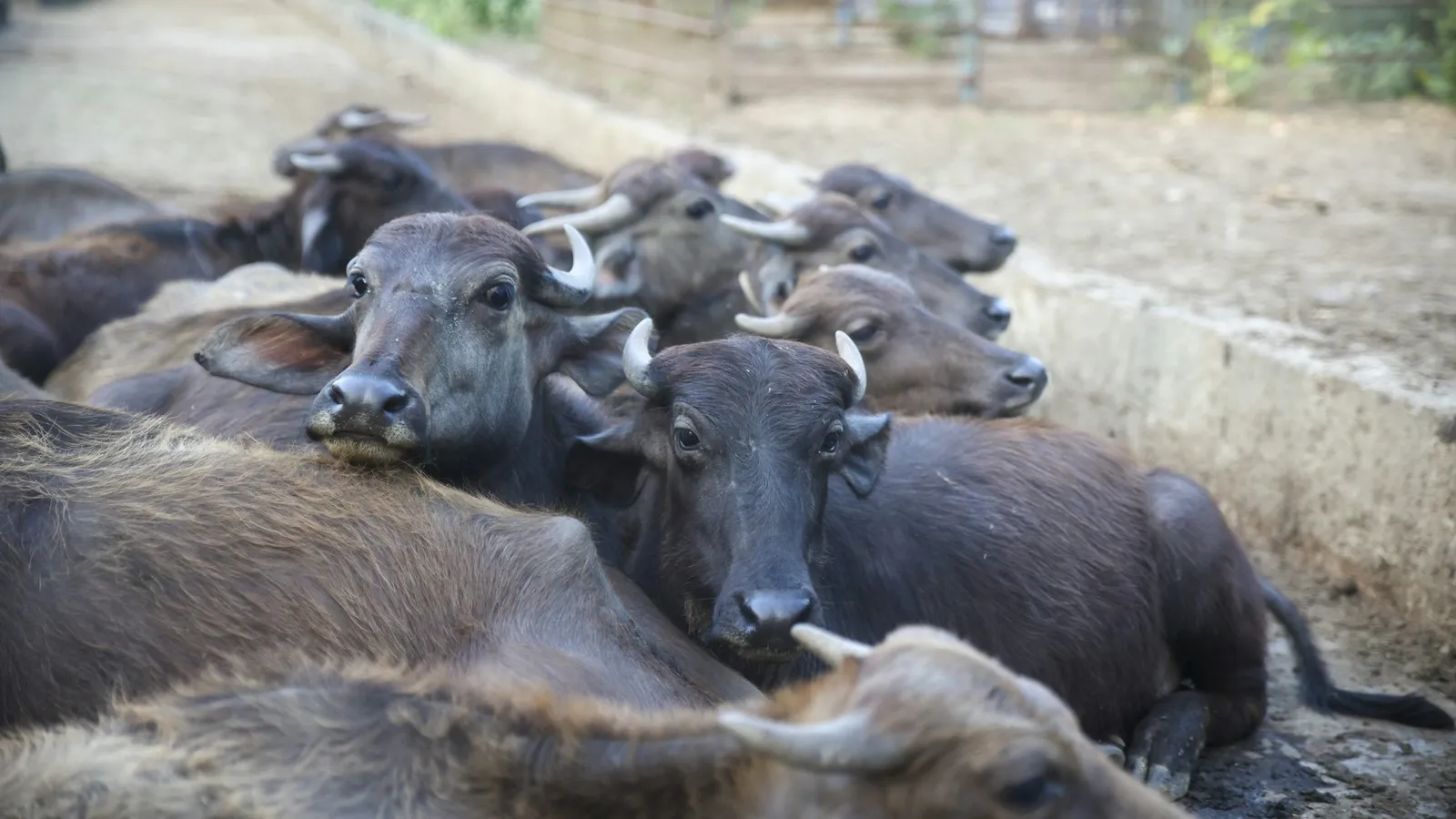
Milk output was higher in the winter months, and to absorb that surplus the union moved into milk processing. The citation says this plant was the first in India to produce milk powder, condensed milk and powdered milk for babies, and the first in the world to convert buffalo milk into powdered milk. ICAR's homage page adds that Kurien ignored those who said buffalo milk could not be processed and worked to standardise the technology. The products were sold under the name Amul.
How did the cooperative pay farmers fairly?
The National Dairy Development Board's page on the Anand Pattern explains the three tiers: a village society, a district union that processes and markets the milk, and a state federation. Any producer can join a village society by buying a share. Each member's milk is tested, and payment is based on the percentage of fat and SNF (solids-not-fat). At the end of the year, part of the profit returns to members as a bonus based on the quantity of milk they supplied.
Worked example (made-up rates to show the idea). Two farmers bring milk to the collection centre.
Farmer A brings 10 kg of milk at 7.0% fat: 0.070 × 10 = 0.70 kg of fat.
Farmer B brings 12 kg at 4.5% fat: 0.045 × 12 = 0.54 kg of fat.
At a flat ₹45 per kg of milk, A gets ₹450 and B gets ₹540. At ₹800 per kg of fat, A gets 0.70 × 800 = ₹560 and B gets 0.54 × 800 = ₹432. Paying by content rewards the richer milk.
Now suppose B adds 2 kg of water. The milk weighs 14 kg, but it still holds 0.54 kg of fat, so the fat percentage falls to 0.54 ÷ 14 ≈ 3.9%. Under flat pricing B earns ₹90 more; under fat pricing B earns nothing extra. Testing every member's milk takes away the reason to water it down. Real unions also price SNF and set their own rates, but the logic is the same. Our guide to concentration, molarity and molality uses the same kind of mass-fraction reasoning.
What was Operation Flood?
The NDDB was founded in 1965, and the PIB note for National Milk Day 2025 records that Kurien was its first chairman and that its mission was to copy the Anand model across India. Building on Anand, the NDDB launched Operation Flood in 1970.
NDDB's Operation Flood page sets out the phases. Phase I (1970 to 1980) was funded by selling skimmed milk powder and butter oil gifted by the European Economic Community, and linked 18 major milksheds to Delhi, Mumbai, Kolkata and Chennai. By the end of 1985 there were 43,000 village cooperatives with 4.25 million milk producers. Phase III ran to 1996. The PIB note says India is now the world's largest milk producer, at 239.30 million tonnes in 2023 to 2024, and that National Milk Day on 26 November marks Kurien's birthday.
For a parallel story in grain rather than milk, read our profile of M. S. Swaminathan and the Green Revolution.
What can a student take from how he worked?
Use your training where it is needed. He was an engineer, and as the union's manager he gave it administrative and scientific direction. Your subject knowledge can serve problems far from the textbook.
Do not accept "it can't be done" without testing it. Some said buffalo milk could not be processed. He worked to standardise the technology anyway.
Measure what matters. Paying by fat and SNF instead of by volume made the system fair. When you track your own progress, measure accuracy on mixed problems, not hours spent.
Build for people, not for show. The cooperatives were owned by the farmers who supplied them.
If percentages and mass fractions still trip you up, the Fermi Problem Library has worked problems with a step-by-step solver that explains the reasoning rather than printing an answer.
Rework the example with Farmer B adding 3 kg of water, and find the new fat percentage.