On this page
For years, many scientists thought mRNA would never work as a medicine. It broke down quickly, was hard to get into cells, and the body treated it as an invader. Katalin Karikó kept working on it anyway. This post explains the problem she solved, the chemistry of the fix, and a codon calculation that ties it to your biology syllabus.
Who is Katalin Karikó?
The Nobel Prize summary records that she was born on 17 January 1955 in Szolnok, Hungary, and at the time of the award was affiliated with Szeged University in Hungary and the University of Pennsylvania in the USA.
The 2023 Nobel press release says that in the early 1990s, as an assistant professor at Penn, she stayed committed to mRNA therapy "despite encountering difficulties in convincing research funders of the significance of her project". According to Penn Today, she met the immunologist Drew Weissman in the late 1990s during a chance meeting at a photocopier, and the two began working together.
What was wrong with mRNA as a medicine?
mRNA carries the instructions a cell uses to make a protein. In principle, you could deliver mRNA for any protein you want, including a viral protein that trains the immune system. The press release lists the obstacles: mRNA made in the lab (in vitro transcribed) was unstable, hard to deliver, and caused inflammatory reactions.
Weissman studied dendritic cells, which watch for invaders and start immune responses. Karikó and Weissman noticed that these cells treated lab-made mRNA as foreign, while mRNA from mammalian cells did not cause the same reaction. Why?
What did they discover in 2005?
The bases in RNA from mammalian cells are often chemically modified. Lab-made mRNA has none of these changes. Karikó and Weissman made RNA with different modified bases and tested it on immune cells.
Their 2005 paper in Immunity reported that RNA signals through the immune sensors TLR3, TLR7 and TLR8, but that building it with modified nucleosides, including m5C, m6A, m5U, s2U or pseudouridine, "ablates activity". Dendritic cells exposed to modified RNA made far fewer inflammatory signals. The press release calls the result a paradigm change and notes it came fifteen years before the COVID-19 pandemic.
How did pseudouridine help cells make more protein?
Avoiding inflammation was only half the problem; the mRNA also had to produce plenty of protein. In Molecular Therapy in 2008, Karikó and colleagues showed that mRNA containing pseudouridine had "a higher translational capacity" than unmodified mRNA, in cells and in mice, and that only the unmodified mRNA was immunogenic.
A worked example: how long is the coding mRNA?
The vaccines encode the SARS-CoV-2 spike protein. UniProt gives the full spike glycoprotein as 1,273 amino acids long.
Codons for the amino acids. Each amino acid needs one codon of 3 nucleotides: 1,273 × 3 = 3,819 nucleotides.
Add the stop codon. A stop codon (such as UAA) adds 3 more: 3,819 + 3 = 3,822 nucleotides.
This counts only the coding region. Common mistakes: forgetting the stop codon, writing T instead of U in an mRNA sequence, and counting the start codon twice (AUG codes for the first amino acid, methionine, so it is already in the 1,273).
Vaccines and the basics of immunology are listed under Human Health and Disease in the NEET (UG) 2026 syllabus. Our guide to human health and immunity covers that unit.
How did it lead to vaccines?
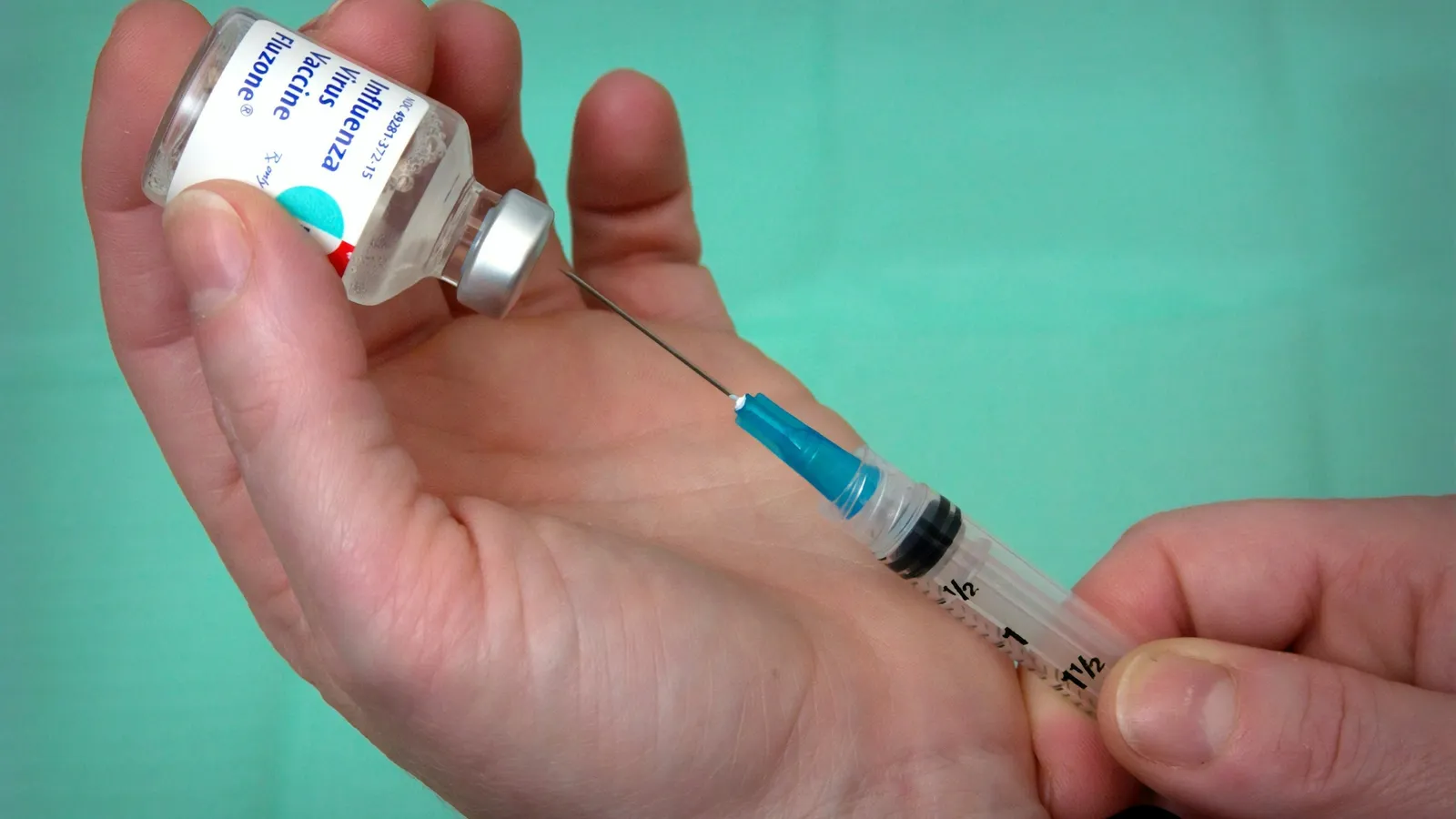
The press release says that after the pandemic began, two base-modified mRNA vaccines encoding the spike protein were developed, showed protective effects of around 95%, and were approved in December 2020. Karikó and Weissman shared the 2023 Nobel Prize in Physiology or Medicine "for their discoveries concerning nucleoside base modifications that enabled the development of effective mRNA vaccines against COVID-19". For the origins of vaccination, read our post on Edward Jenner.
What can a student take from Karikó's way of working?
Ask why two similar things behave differently. Lab mRNA and cell mRNA looked alike but did not act alike.
Stay with an unfashionable problem. Years of low funding came before the result mattered.
Find a partner with different skills. A biochemist and an immunologist together saw what neither saw alone.
If transcription and translation still blur together, sort them out before the immunology. Fermi's AI tutor can work out what you already know and build a plan for the session, so you start from the step you are missing.
Next step: write the mRNA codons for the first five amino acids of any protein you know, then mark which positions would hold a modified base.