

On this page
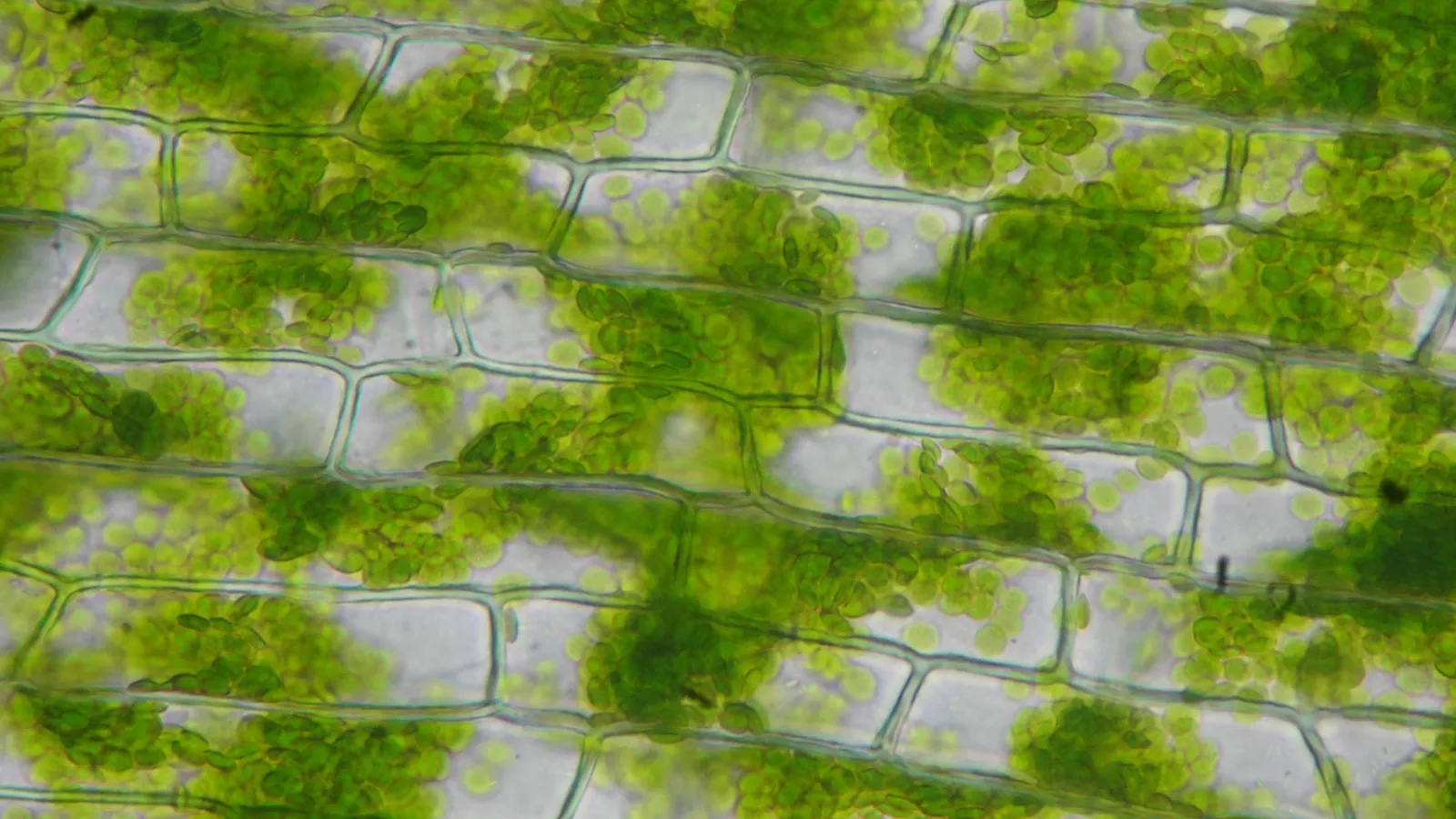
In 1846 a botanist in Tübingen gave a name to the slimy, granular stuff he kept seeing inside young plant cells. He called it protoplasm. The word is still in your biology textbook, and who coined it makes a neat short exam question. Here is what Hugo von Mohl saw, and how to see it yourself.
Who was Hugo von Mohl?
Hugo von Mohl was a German botanist, born in Stuttgart on 8 April 1805, who died in Tübingen on 1 April 1872 (Wikipedia biography). He trained in medicine at the University of Tübingen and became its professor of botany in 1832, a post he never left. In 1843 he co-founded the journal *Botanische Zeitung*, and in 1851 he published a book on the plant cell, *Die vegetabilische Zelle*.
He worked alongside the people building cell theory; see how Schwann and Schleiden first put cell theory together and how Robert Brown found the cell nucleus in 1831.
What did Mohl mean by protoplasm in 1846?
Mohl's paper "On the Circulation of the Sap in the Interior of Cells" first appeared in *Botanische Zeitung* in early 1846, and an English translation was printed in the *Annals and Magazine of Natural History* in July 1846 (the translation, scanned on the Internet Archive).
In it he describes "a viscous colourless mass, mixed with minute granules" that fills a young plant cell and gathers around the nucleus. He argued that this mass supplies the material for both the nucleus and the primordial utricle, his name for the lining just inside the cell wall. Because of that role in forming new cells, he wrote: "I trust it will be considered justifiable if I propose to designate this substance by the word protoplasma; a term which recalls to mind its physiological function" (same source).
He recorded three observations you can still check:
Treated with dilute tincture of iodine, the protoplasm shrinks and turns yellow.
As the cell grows, watery cavities filled with sap open up inside the protoplasm and merge, leaving strands that run from the nucleus to the wall.
In the hairs of the spiderwort plant *Tradescantia*, those strands carry moving currents of granules, which shifted even while he was drawing them.
Did Mohl or Purkinje coin the word protoplasm?
Both names are correct, for different things. Jan Evangelista Purkinje used "protoplasm" in 1839 for the material of animal embryos, and Mohl redefined it in 1846 as the "tough, slimy, granular, semi-fluid" substance inside plant cells (Wikipedia on protoplasm).
In 1861 Max Schultze argued that all living cells are made of protoplasm, and in 1882 Eduard Strasburger brought in the terms cytoplasm (around the nucleus) and nucleoplasm (inside it). Definitions of protoplasm still differ: some mean only the cytoplasm, as Mohl did, while others include the nucleoplasm. That is why biologists now usually prefer Strasburger's two terms (same source).
What did Mohl see about cell division?
A Tübingen dissertation of 1835, prepared under his direction and titled "Ueber die Vermehrung der Pflanzen-Zellen durch Theilung" (on the multiplication of plant cells by division), reported plant cells multiplying by dividing (HistoryofMedicine.com entry). His observations were made on the green alga *Cladophora glomerata* (Wikipedia biography).
Mohl described cells multiplying by division, not the chromosome changes we now call mitosis. Initial work on mitosis began around 1870, and it was Walther Flemming who named the mitotic process and described a plausible order of chromosome changes (McIntosh and Hays, *Biology*, 2016).
How can you see what Mohl saw, and use the words correctly?
Try a version of his 1846 observation in a school lab, with your teacher's supervision.
Peel a thin layer from the inner side of an onion scale and lay it flat in a drop of water on a slide.
Look first without stain: note the walls and the clear, watery centres of the cells.
Add a drop of dilute iodine solution at the edge of the coverslip and wait a minute.
Look again and compare with Mohl's notes: iodine coloured his protoplasm and nuclei yellow and made the protoplasm shrink.
Draw one cell and label four parts: cell wall, protoplasm lining, nucleus, vacuole with sap.
Then sort the words like this:
Protoplasm: the living contents of the cell; textbooks differ on whether it includes the nucleus.
Cytoplasm: the part outside the nucleus.
Nucleoplasm: the part inside the nucleus.
Cell sap: the watery liquid in the vacuole, which Mohl kept separate from protoplasm.
If protoplasm, cytoplasm and cell sap still blur together, the Fermi Concept Library gives each biology concept its own lesson and shows its place in the map. If you are not sure where to start with the cell chapter, Fermi's AI tutor works out what you already know and builds a plan for the session.
Next, read how Walther Flemming named the stages of cell division to see where the mitosis words in your syllabus come from.


