On this page
Cell theory looks simple on the page: living things are made of cells. But in the 1830s, plant cells were well known while animal tissue looked like a confusing mix of fibres, globules and fluids. Two German scientists, one studying plants and one studying animals, put the pieces together. This post covers who Schleiden and Schwann were, how the idea came together, what they got wrong, and what the story teaches about comparing evidence.
Who were Schleiden and Schwann?
Matthias Jacob Schleiden was born in Hamburg in 1804 and died in Frankfurt in 1881, according to the Deutsche Biographie. He first trained and practised as a lawyer, then left law to study medicine and botany, and took a doctorate at Jena in 1839, where he later became professor of botany.
Theodor Schwann was born in Neuss on the Rhine on 7 December 1810 and died in Cologne in 1882, the Deutsche Biographie entry on Schwann records. He worked in Berlin as an assistant to the physiologist Johannes Müller on a small monthly salary. In those few years he also discovered the stomach enzyme he named pepsin and showed that fermentation and putrefaction are caused by living organisms. In autumn 1839 he took up a chair of anatomy at Louvain in Belgium, and later moved to Liège.
How did the cell theory come together?
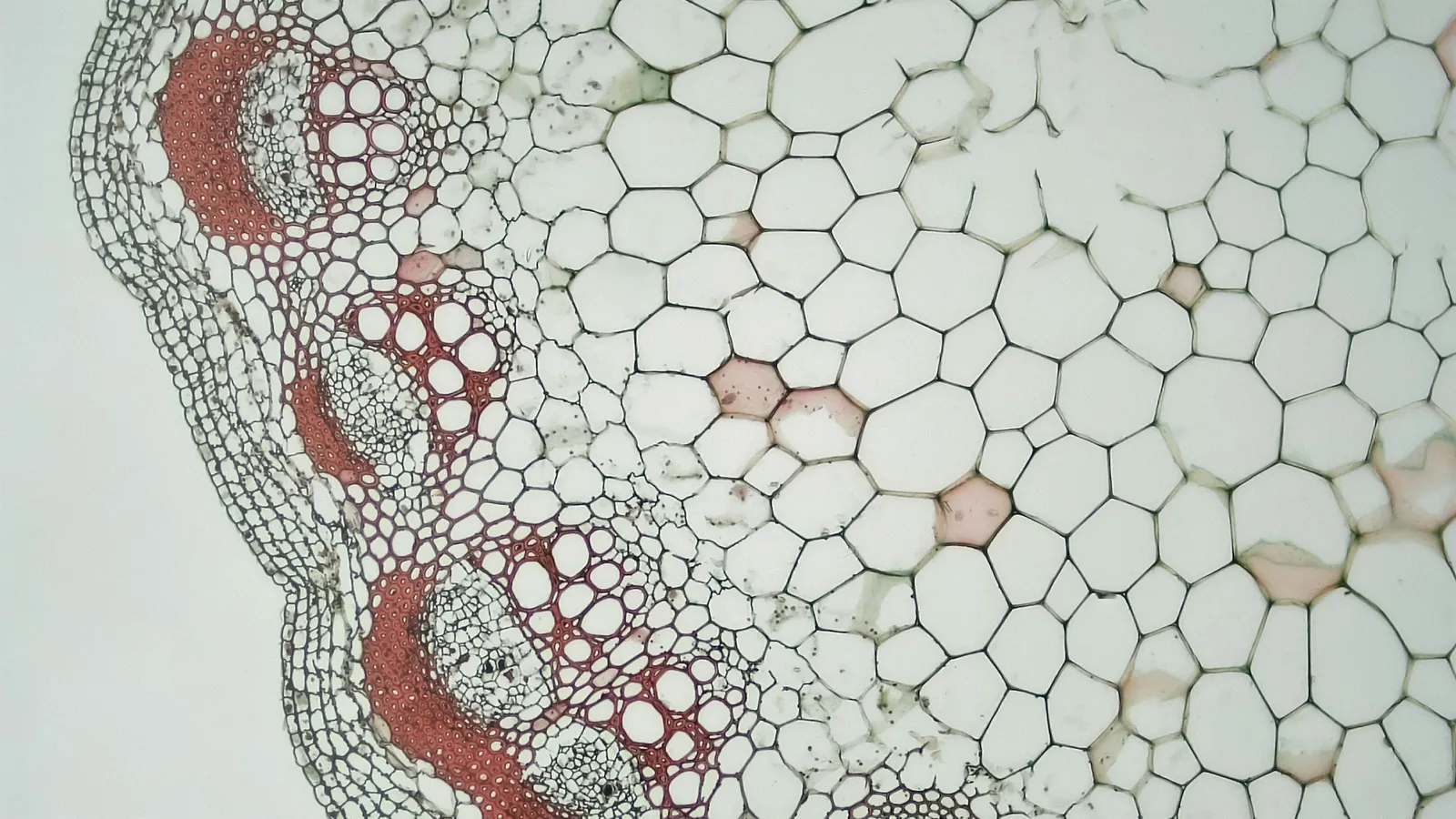
The NCERT Class 11 chapter Cell: The Unit of Life gives the short version. In 1838 Schleiden examined a large number of plants and observed that all are made of different kinds of cells forming tissues. In 1839 Schwann studied animal cells, noted their thin outer layer, now called the plasma membrane, and proposed that the bodies of animals and plants are composed of cells and products of cells.
Schwann's own preface, in the 1847 English edition of Microscopical Researches, adds the human detail. He writes that "Schleiden communicated the results of his investigations to me, previous to their publication in October, 1837." Schleiden described how, in his view, each new plant cell forms around a nucleus, which he called a cytoblast. Schwann had already noticed that two animal tissues, the notochord (chorda dorsalis) and the gill cartilage of tadpoles, looked like plant tissue, "but nothing resulted from it." With Schleiden's results in hand, he compared cartilage cells and notochord cells with plant cells "and found the most complete accordance."
What exactly did Schwann conclude?
His conclusion, in the 1847 translation, reads: "The elementary parts of all tissues are formed of cells in an analogous, though very diversified manner, so that it may be asserted, that there is one universal principle of development for the elementary parts of organisms, however different, and that this principle is the formation of cells."
That word "development" matters. Schwann's argument was not just that tissues contain cells, but that they grow from cells. His translator notes that the Royal Society of London awarded him the Copley Medal for 1845 for the work.
What did they get wrong?
Both thought new cells could form from non-living material. Schwann wrote that "there is, in the first instance, a structureless substance present," in which a nucleus forms first and the cell around it, and he compared the process to crystallisation. NCERT notes that the original theory "did not explain as to how new cells were formed."
The correction came from others. Robert Remak showed that animal cells arise by division of existing cells, and Rudolf Virchow, in 1855, stated that every cell comes from a cell. Our post on Rudolf Virchow and cell division tells that part.
How should you remember this for exams?
A common error is to credit the wrong person with the wrong part. Use this check:
Schleiden, 1838: plants are made of cells (botanist).
Schwann, 1839: animals are too; proposed that animals and plants are made of cells and products of cells (zoologist).
Virchow, 1855: cells arise from pre-existing cells, "omnis cellula e cellula".
The modern theory has two points, as NCERT states: all living organisms are composed of cells and products of cells, and all cells arise from pre-existing cells. Our guide to cell structure for Class 11 takes it from there, and Robert Hooke and the first cells covers the very first observations.
What can a student take from how they worked?
Compare across topics. Schwann's insight came from asking whether a plant rule worked for animals.
Share early results. Schleiden told Schwann his findings before publishing, and both benefited.
Separate the solid part of an idea from the guess. "Made of cells" held up; "cells crystallise from fluid" did not.
Revisit your old notes. Schwann had seen the tadpole cartilage before, and only understood it later.
When two topics in biology seem unrelated, a clear lesson on each makes the link easier to spot. The Fermi Concept Library covers every concept in biology, each with its own lesson.
Try it now: write one sentence comparing a plant cell and an animal cell, the same comparison Schwann made, and list one feature they share and one they do not.