

On this page
In 1912, a young Japanese surgeon looked down a microscope at thyroid tissue from four women and saw a pattern he was confident was new. The glands were full of immune cells. Hakaru Hashimoto had described a disease in which, as later work showed, the body attacks its own thyroid. It took the world about 20 years to take notice. Today his name is on a disease you will meet in biology class and, quite possibly, in a relative's blood report.
Who was Hakaru Hashimoto?
Hashimoto was born on 5 May 1881 into a family that had practised medicine for generations in Iga Ueno, in Mie Prefecture, Japan, according to a history of the disease in the journal Hormones. He was one of the first graduates of the Fukuoka Medical College of Kyoto Imperial University, in 1907, and trained in surgery there under Professor Miyake. He died of typhoid fever on 9 January 1934, the same review says. In 2013, Patrizio Caturegli and colleagues marked the centenary of his discovery in the journal Thyroid.
What did Hashimoto discover in 1912?
Hashimoto published his description of four women's goitres in the German journal Archiv für Klinische Chirurgie, as a book chapter by Tao Yang and Xiaoyun Liu on IntechOpen recounts. All four patients were women over 40. Their goitres were so firm that, at the time, they suggested fibrous thyroid or cancer.
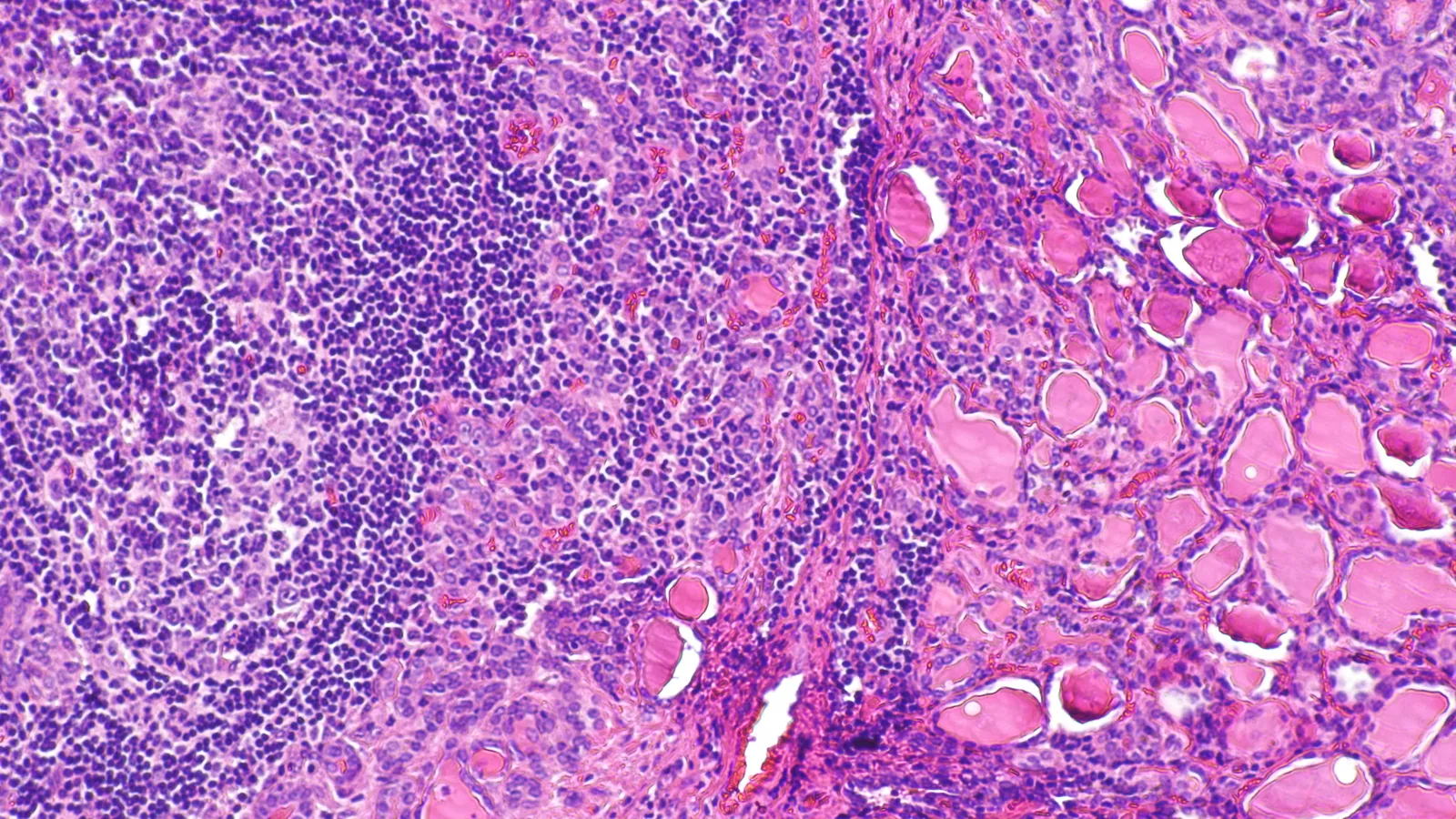
The paper ran to 30 pages with 5 illustrations, according to the Hormones history. Under the microscope Hashimoto saw thyroid tissue crowded with lymphoid and plasma cells, lymphoid follicles with germinal centres, scarring and damaged hormone-making cells. He was confident this was a new disease and named it struma lymphomatosa, a name that stressed the lymphoid cells and follicles he had found.
How did it become known as an autoimmune disease?
At first, recognition was slow, possibly partly because the paper was in German. In 1931, Graham and McCullagh used "Hashimoto" in the title of an article and argued that struma lymphomatosa was a disease of its own, separate from a scarring condition called Riedel's thyroiditis, according to the IntechOpen chapter.
The turning point came in 1956. Ivan Roitt, Deborah Doniach, P. N. Campbell and R. Vaughan Hudson reported auto-antibodies in Hashimoto's disease in The Lancet: patients' blood carried antibodies against thyroglobulin, a protein made by their own thyroid. The same year, Rose and Witebsky showed that immunising rabbits with rabbit thyroid extract produced thyroid changes resembling Hashimoto's, the Hormones review notes. After Doniach's 1962 letter to The Lancet carried Hashimoto's portrait, his image and work became known all over the world, the same review says.
If "self-attack" still feels strange, our explainer on what autoimmunity is, with NCERT's rheumatoid arthritis example walks through the idea.
How common is Hashimoto's disease today?
Hashimoto's disease is an autoimmune disorder in which the immune system makes antibodies that attack the thyroid gland, according to the US National Institute of Diabetes and Digestive and Kidney Diseases (NIDDK). The NIDDK calls it the most common cause of hypothyroidism, which affects about 5 in 100 Americans. The same page says it is 4 to 10 times more common in women than in men.
India has its own numbers. A 2013 study of 5,360 adults in eight Indian cities found that 10.95% had hypothyroidism, and 3.47% had it without it having been detected before, according to the Indian Journal of Endocrinology and Metabolism. In that study, 15.86% of women had hypothyroidism against 5.02% of men, and 21.85% of participants had anti-TPO antibodies, a sign of thyroid autoimmunity.
How can you write Hashimoto's disease as a cause-and-effect chain?
Each step causes the next. Use this chain for a long answer or a revision card:
Trigger: the immune system treats thyroid proteins as foreign (autoimmunity).
Attack: antibodies form, and white blood cells build up in the gland (the lymphoid cells Hashimoto saw).
Damage: hormone-making thyroid cells are destroyed, so less thyroxine (T4) is made.
Feedback: with less T4, the pituitary releases more TSH, which is why doctors measure TSH.
Result: often hypothyroidism, which the NIDDK says is treated with levothyroxine, a medicine identical to natural T4.
Step 4 is where students slip. To see why low T4 pushes TSH up, read our post on simulating the thyroid hormone negative feedback loop. The thyroxine in step 5 has a history of its own: how Edward Kendall isolated thyroxine from thyroid glands.
If one link in the chain is shaky, such as antibodies or the pituitary, the Fermi Concept Library has a lesson for every concept in biology, each with its place in the map, so you can fill that gap before moving on. If a feedback loop is easier to see than to read, try the Fermi Simulation Lab.
Next time you see a blood report with "anti-TPO" on it, or an exam question on autoimmunity, remember the four women's thyroids and the surgeon who wrote down exactly what he saw.


