On this page
Rub a wet block of alum (phitkari) over a fresh shaving nick and it stings for a moment, then the bleeding stops. That is salt chemistry meeting protein chemistry, and you can explain all of it with ideas from Class 9 to 12.
What is alum, chemically?
The alum in this story is potassium alum, a double salt of potassium, aluminium and sulfate; PubChem lists its anhydrous formula as AlKO8S2. In everyday crystals it carries water of crystallisation, which is why you will see it written in textbooks as KAl(SO4)2·12H2O.
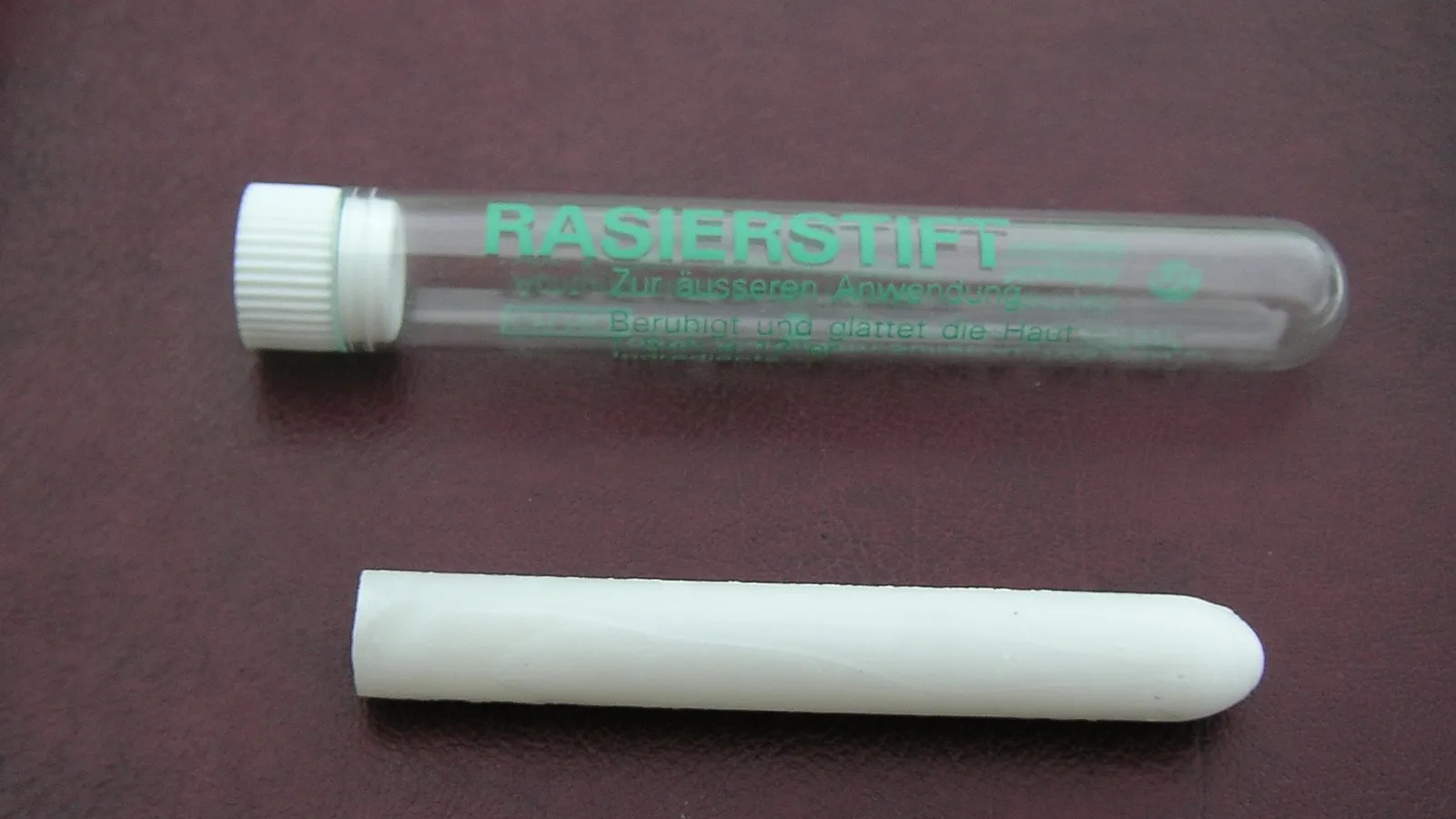
Styptic pencils are often made with aluminium salts such as aluminium sulfate, potassium aluminium sulfate or sodium aluminium sulfate, and these are sometimes collectively called alum, according to US Poison Control.
The important part is the aluminium ion, Al³⁺. It carries three positive charges on a very small ion, so it pulls hard on water molecules and on anything negatively charged nearby. That pull also makes alum solutions acidic: PubChem records a pH between 3.0 and 4.0 for a 10% potassium alum solution (PubChem pH data). We explain where that acidity comes from in why aluminium salt solutions are acidic.
Why does alum stop bleeding from small cuts?
An astringent is an agent, usually applied to the skin, that causes tissue to contract to control bleeding or secretions; that is the MeSH definition from the US National Library of Medicine. Alum works in three linked ways.
Proteins clump. The surface of a cut is wet with blood and tissue fluid, both full of proteins. Highly charged Al³⁺ ions and the acidic conditions around them make these proteins lose their shape and stick together. A 2013 review of topical haemostatic agents in the Indian Dermatology Online Journal says that caustic agents, including aluminium chloride, work by coagulating proteins, forming a crust (eschar) that helps a clot form.
Tiny vessels close. The clumped protein layer physically plugs the ends of the smallest vessels a razor opens. For aluminium chloride, a related salt, Family Practice Notebook adds that it hydrolyses to give hydrogen chloride, which has haemostatic and vasoconstrictive (vessel-narrowing) properties.
Your own clot takes over. Your body clots with its own proteins: clotting factors are proteins in the blood that work with platelets to form clots, as the US National Heart, Lung, and Blood Institute explains. The alum crust slows the flow long enough for that natural clot to set, and the scab forms beneath it. Here is how a cut forms a scab, step by step.
US Poison Control puts it simply: styptic pencils stop bleeding by hardening or coagulating the surface of a wound, just like a scab (Poison Control).
If the water connection interests you, read how alum makes muddy water clear, which covers the Hardy-Schulze rule on why higher-charged ions are better at coagulation. Charges attracting and particles clumping are easier to see than to read; the Fermi Simulation Lab has interactive simulations for ideas like these.
Why does alum sting?
The sting comes from the same chemistry that does the work: an acidic, astringent salt is touching raw tissue and changing its proteins. Poison Control says a styptic pencil user is likely to feel a stinging sensation, and that aluminium's irritant properties are behind the redness, itching or mild pain that may follow, which is generally mild and short-lived. For aluminium chloride, Family Practice Notebook lists local paresthesias, or altered sensation, at the application site (FP Notebook).
How do you explain it in an exam answer?
If a board or olympiad question asks why alum is used after shaving, a three-line answer covers it:
Alum is an astringent (styptic): it makes tissue contract and controls bleeding.
Its Al³⁺ ions, highly charged, coagulate the proteins in blood and tissue at the cut surface.
The coagulated protein layer seals the small blood vessels, and the body's own clot forms beneath it.
If you can also say why a 3+ ion works better than a 1+ ion, you have linked chemistry to biology. To go deeper on coagulation, the Fermi Concept Library has a lesson for each concept in chemistry and biology.
When is alum not enough?
Alum is for nicks, not wounds. Poison Control also flags a few safety points about styptic pencils:
They are not meant to be eaten and may cause stomach upset or nausea if swallowed.
Eye injury, including visual changes and corneal damage, has been reported after aluminium got into the eye.
They can crumble, and swallowed pieces carry a choking risk, so they should be kept away from children and pets.
For bigger cuts, the NHS guidance on cuts and grazes sets out when to get help.
Next time someone hands you the phitkari, you can tell them exactly what it is doing: a triply charged ion turning soft proteins into a seal.