

On this page
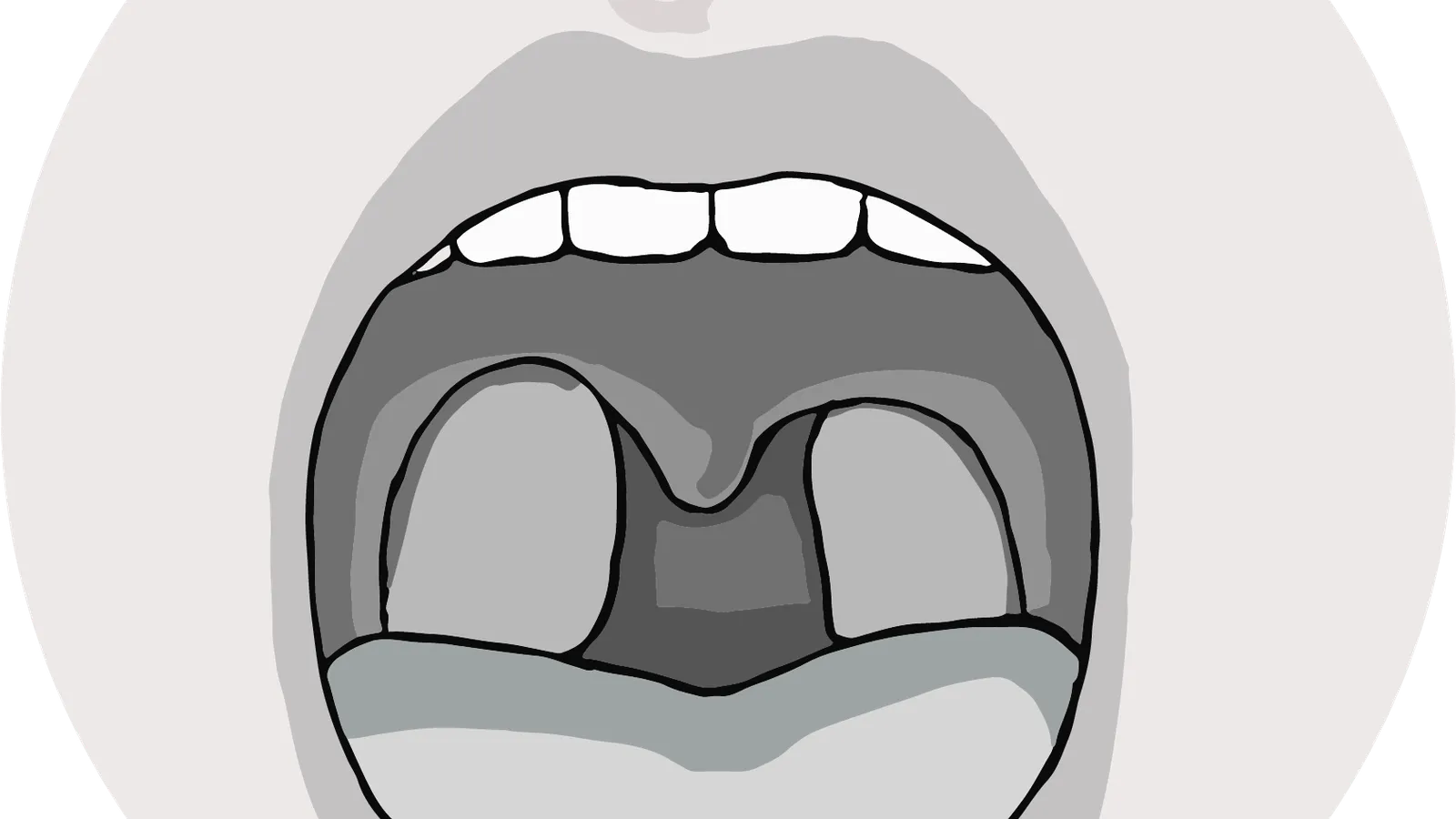
Open your mouth wide in front of a mirror and you will see two pink lumps at the back of your throat, one on each side. Those are your palatine tonsils. Most of us notice them only when they swell, but they are working parts of the immune system.
What do tonsils do in the immune system?
NCERT's Class 12 chapter Human Health and Disease, section 7.2.7 defines lymphoid organs as the organs where lymphocytes originate or mature, and multiply.
The primary lymphoid organs are the bone marrow and thymus, where immature lymphocytes become antigen-sensitive. In NCERT's words, "after maturation the lymphocytes migrate to secondary lymphoid organs like spleen, lymph nodes, tonsils, Peyer's patches of small intestine and appendix."
Secondary lymphoid organs are where lymphocytes meet an antigen and multiply into effector cells. So a tonsil is not where lymphocytes first form; it is where they meet germs and get to work. Our explainer on primary vs secondary lymphoid organs sets both lists side by side.
Tonsils also belong to a wider network. The same NCERT chapter says mucosa-associated lymphoid tissue (MALT), in the lining of the respiratory, digestive and urogenital tracts, makes up about 50 per cent of the lymphoid tissue in the human body.
What happens inside a tonsil?
A review of tonsil immunology in the International Journal of Pediatric Otorhinolaryngology explains what happens in the lymphoid tissue of Waldeyer's ring, the ring of tonsils and adenoids around the throat. When an antigen stimulates their lymphoid follicles, B cells multiply, sharpen the fit of their receptors, and the best fits are selected. These become memory B cells and plasma cells, mainly making IgG and IgA, and some may travel on to the lining of the upper airway and to the tear and salivary glands.
Revise it as a sequence:
A bacterium arrives in your throat with food, drink or air.
Its antigens reach the lymphoid follicles of the tonsil.
The few B cells whose receptors fit that antigen multiply (clonal expansion).
Their receptors fit more closely, and the best-fitting cells are selected.
Some become antibody-making plasma cells; others become memory B cells.
Next time, memory cells respond faster, which is why the secondary immune response beats the first.
If terms like these start to blur, the Fermi Concept Library gives each biology concept its own lesson and its place in the map.
When is tonsil removal advised?
The NHS tonsillitis page says it is very rare that someone needs their tonsils taken out, and that tonsillitis symptoms usually go away after 3 to 4 days.
The clearest numbers come from a 2019 guideline by the American Academy of Otolaryngology-Head and Neck Surgery Foundation for children aged 1 to 18:
Watchful waiting is strongly recommended below 7 throat infections in the past year, 5 a year for 2 years, or 3 a year for 3 years.
At or above those numbers, tonsillectomy may be recommended if each episode was recorded in the medical record with a sore throat plus one of: temperature above 38.3°C, swollen neck lymph nodes, pus on the tonsils, or a positive strep test.
Tonsillectomy is recommended for obstructive sleep apnoea confirmed by an overnight sleep study.
Multiple antibiotic allergies or intolerances, or more than one abscess beside a tonsil, can favour surgery below the thresholds.
A log to bring to the doctor
The guideline counts episodes recorded in the medical record, so a simple record of your own helps the conversation with your ENT doctor. For each sore throat, note:
The date and the highest temperature measured.
Swollen neck glands, and white patches or pus on the tonsils.
Whether a doctor did a strep test, and the result.
At night: loud snoring, or pauses in breathing someone noticed.
Then ask: does this count as a documented episode, would a sleep study help, and what happens if we wait?
Do you need your tonsils?
You can live without them, but removal may have trade-offs. A Danish study in JAMA Otolaryngology followed up to 1,189,061 children born between 1979 and 1999. Removing the tonsils in the first 9 years of life was linked to a relative risk of 2.72 for upper respiratory tract diseases up to age 30. This is an association, and the authors note that some confounding may not have been fully accounted for.
Brandtzaeg's review reaches a similar view from the biology: a conservative attitude to removing tonsils and adenoids appears immunologically desirable, especially in young children. Doctors weigh that against the thresholds above. For the cells behind all this, see B lymphocytes vs T lymphocytes.


