On this page
The Laburnum Top by Ted Hughes is one of the shortest poems in Hornbill, and one of the easiest to score on once you see its shape: stillness, a burst of life, stillness again. It is listed among the prescribed Hornbill texts in the CBSE Class XI English Core syllabus for 2026-27. Here is what it says, how its images work, and how to write exam answers on it.
What is The Laburnum Top about?
The poem watches one tree for a few moments. A laburnum, which the NCERT Hornbill glossary describes as a short tree with hanging branches, yellow flowers and poisonous seeds, stands silent on a September afternoon. Its seeds have dropped and a few leaves are turning yellow. Nothing moves.
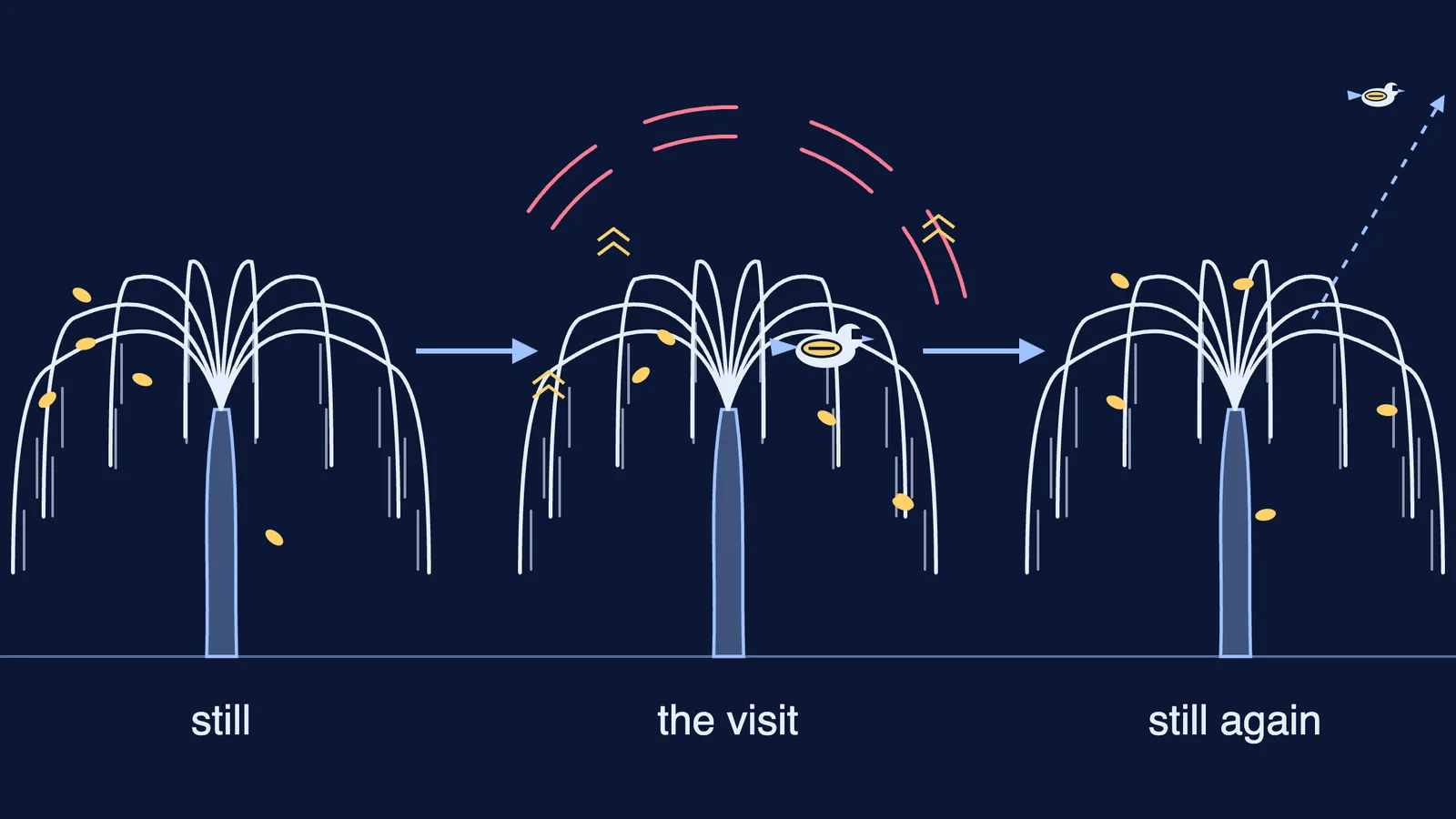
Then a goldfinch arrives. She lands at the tip of a branch, slips inside the thick leaves, and the tree fills with cheeping and a fluttering of wings, which readers take to be her hidden chicks (the poem never shows them directly). The whole laburnum seems to shake with it. She feeds them, hops back out to a branch tip, shows the stripes on her face, gives a soft whistle and flies off into the open sky. The tree goes quiet again.
What does the poem mean, part by part?
The still tree. The opening is all calm: afternoon light, late summer, a tree that has finished its work for the year. Yellow is everywhere, in the sunlight and the leaves, linking the tree to the goldfinch.
The arrival. The bird does not glide in; she appears suddenly, twitchy and alert. Hughes compares her to a lizard, "sleek as a lizard", because she is smooth, quick and darts in jerks, the way a lizard moves on a wall.
The tree comes alive. Once she is inside, the hidden family switches on. Hughes calls the sound a machine starting up, and says the trembling tree is "the engine of her family": the chicks are the noise, she is the one who fuels it. Feeding them is like a stoker shovelling coal into an engine.
The departure. She comes out, shows the stripes on her face that work like a mask, whistles softly and leaves "towards the infinite", the open sky beyond the tree.
The empty tree. The laburnum "subsides to empty". It returns to stillness, but now we know there is a family inside, so the silence feels different.
What are the main images and themes?
Stillness and motion. The poem begins and ends in calm, with all the action packed in the middle. This frame is the poem's structure.
The machine image. Words of engines and machines make a natural scene feel powerful and busy. It is an unusual choice for a nature poem.
Motherhood. The goldfinch's whole visit is about feeding her young; she is the energy source of the family.
Sound words. Much of the poem is noise: chirping, chattering, trilling and whistling.
Colour. Yellow sunlight, yellowing leaves and a yellow-winged bird hold the scene together.
How do you answer exam questions on The Laburnum Top?
The 2026-27 CBSE Class XI paper has one poetry extract out of two from Hornbill (3 marks), two short answers of 40-50 words, one from Hornbill prose and one from Hornbill poetry (3 marks each), and a long answer of 120-150 words from Hornbill prose or poetry (6 marks), according to the official syllabus.
Use this three-step plan:
Place the moment. Say which part you are writing about: the still tree, the arrival, the busy nest, the departure or the empty tree.
Name the device. Simile (the lizard), metaphor (the engine), sound words or the frame of stillness.
Explain the effect. One sentence on what the image makes you see or feel.
Try these practice questions, written by us:
Why might Hughes compare a small bird to a lizard rather than to another bird? (40-50 words)
How does the machine image change the way you see the tree? (40-50 words)
Long answer: How does the poem show that a quiet place can hold busy, hidden life? Use the frame of the poem and one example from your own surroundings, such as a neem tree outside your school when a koel or a myna visits. (120-150 words)
For the long answer, give one paragraph to the poem's frame, one to the engine image and one to your example, then end with a line on the empty tree.
Where to go next
If you are revising Hornbill, our guide to The Portrait of a Lady, with its themes and questions. For another short nature poem built on a few sharp images, see Fog and The Trees, with their metaphors, and for a poem about silence and stillness, Keeping Quiet with its themes.
For your physics, chemistry or maths revision, Fermi's AI tutor can work out what you already know and build a plan for the session, so you sit down to a clear next step.