On this page
What is The Interview Class 12 about?
The Interview is chapter 7 in the prose section of NCERT's Flamingo for Class 12, and it has two parts. Part I is an excerpt from Christopher Silvester's introduction to The Penguin Book of Interviews. Part II is an extract from an interview with the Italian scholar and novelist Umberto Eco, conducted by Mukund Padmanabhan of The Hindu.
Silvester (born 1959) studied history at Cambridge and reported for Private Eye for ten years.
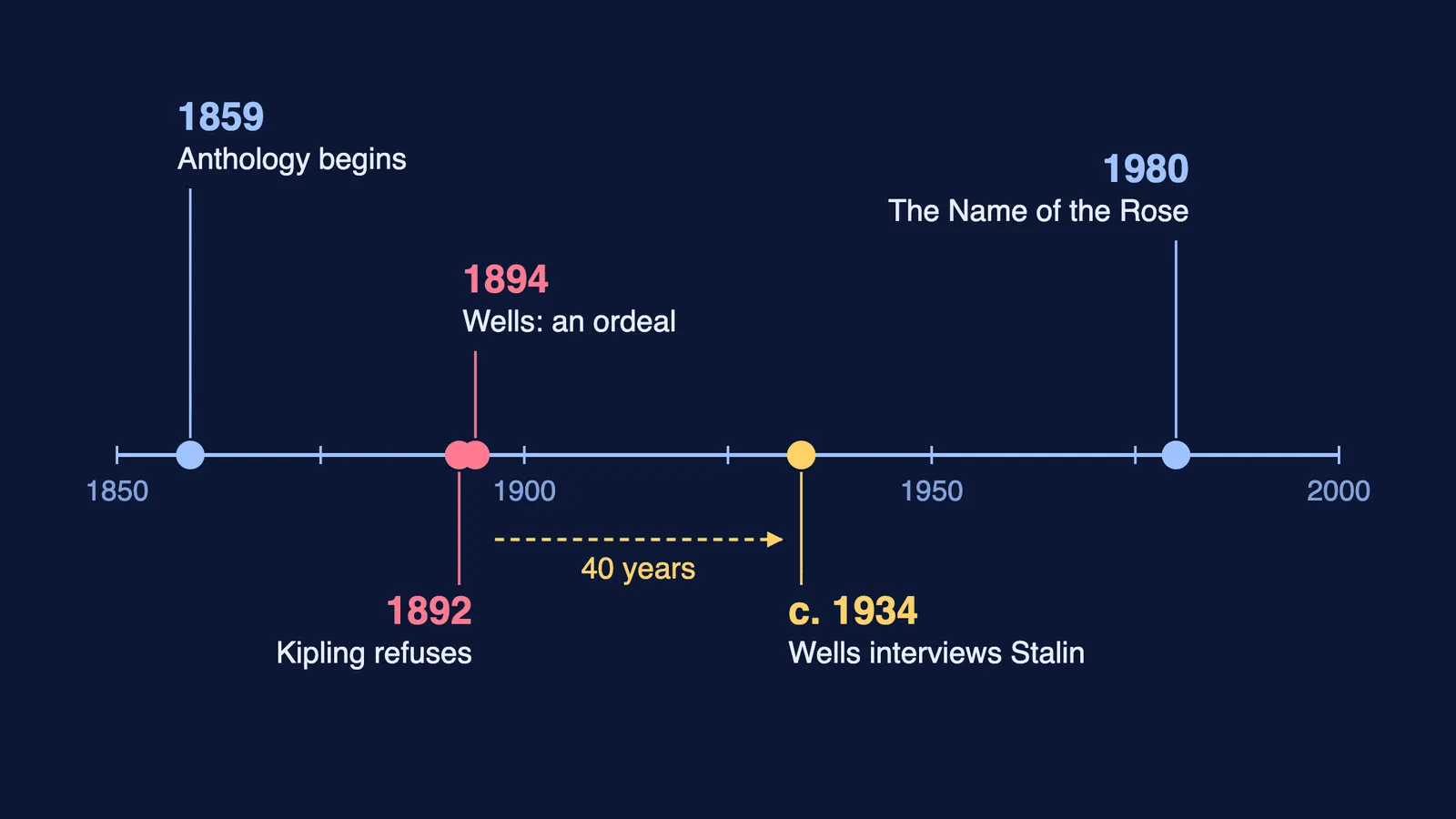
In Part I, Silvester says the interview, invented a little over 130 years before he wrote, is now so common that almost every literate person has read one. Some call it a source of truth and an art; others an intrusion, as some cultures believed a photograph steals the soul.
He then lists the critics. V. S. Naipaul felt interviews can wound people and take away part of them. Lewis Carroll never agreed to one. In 1892, his wife's diary records, Rudyard Kipling told two Boston reporters he refused interviews because they were immoral and a crime, though a few years earlier he had interviewed Mark Twain himself. H. G. Wells called it an ordeal in 1894, yet about forty years later he interviewed Joseph Stalin. Saul Bellow likened them to a thumb pressed on his windpipe.
Still, he calls the interview a very useful medium: citing the writer Denis Brian, he argues that most of what we know about famous people now reaches us through one person questioning another, giving interviewers great power.
What does Umberto Eco say in Part II?
The same NCERT chapter introduces Eco as a University of Bologna professor known for semiotics, the study of signs. His novel The Name of the Rose (1980) sold more than 10 million copies. His main points:
One project, many forms. Eco says he only seems to do many things; his academic books, novels and children's books all follow the same ethical and philosophical interests.
Working in the gaps. He calls the empty moments of a day interstices, such as waiting while a visitor's lift comes up, and says he writes in them.
Telling the story of research. When he presented his first doctoral dissertation, a professor noted that it told the story of the research, mistakes included. At 22, Eco decided scholarly books should be written that way; he began novels only at about 50.
Professor first. He calls himself "a professor who writes novels on Sundays" and is bothered that most people know him only as a novelist. He has written over 40 scholarly works and five novels.
Readers want difficult books too. He says publishers and journalists wrongly assume readers want only easy books. His American publisher expected about 3,000 copies; the novel sold two or three million in the US. He calls its success a mystery.
What are the main themes of The Interview?
A genre with two faces. The interview is both a source of truth and an intrusion into private life.
Privacy versus power. Interviewers shape how we see the famous.
Saying one thing, doing another. Kipling and Wells criticise interviews yet take part in them.
Time and discipline. Eco's interstices show how small, steady efforts add up to a large body of work.
How conversation flows. Linkers, such as pronouns or a repeated word, tie each turn to the last, and signallers mark a change of topic.
How is The Interview tested in the CBSE board exam?
In CBSE's English Core syllabus for 2026-27, The Interview is a prescribed Flamingo prose chapter. Literature carries 40 of the 80 theory marks. Flamingo short answers are 40-50 words, five of six for 2 marks each; one Flamingo long answer of 120-150 words carries 5 marks; and one Flamingo prose extract carries 6 marks.
Practice questions (our own, not predictions of the paper):
Why might a famous person feel that an interview takes something away from them?
How do Kipling and Wells go against their own complaints about interviews?
What are interstices, and how do they explain Eco's large output?
Why does Eco object to being called a novelist?
Long answer: interviews are both a service and an intrusion. Discuss, using both parts of the chapter.
Worked answer to question 3 (about 45 words): Interstices are the small empty gaps in a day, such as waiting while a visitor's lift comes up. He writes in them instead of wasting them. Since all his work follows the same few interests, these small pieces add up to a huge output.
For the long answer, use four moves: define the interview; give two critics (Kipling, Bellow); give the case for it (Denis Brian's point about power); then show Eco using his interview to correct his public image.
The chapter's writing task turns the interview into a short report, so revise the report writing format for Class 12. For the next Flamingo chapter, read Going Places summary and board questions. If physics or maths revision is competing for those same gaps, Fermi's AI tutor can work out what you already know and build a plan for the session.