On this page
Going Places is about the gap between a teenager's dreams and what her life offers. The NCERT Flamingo chapter introduces the author, A. R. Barton, as a modern writer who lives in Zurich and writes in English, and names the theme as adolescent fantasising and hero worship. The CBSE English Core syllabus for 2026-27 lists Going Places as the eighth prose chapter of Flamingo, so it can appear in the extract, short-answer and long-answer questions.
What happens in Going Places?
The plot, in order, from the NCERT text.
Walking home from school, Sophie tells her friend Jansie she will own a boutique, or be a manager, an actress or a fashion designer. Jansie knows both girls are "earmarked for the biscuit factory" and tells her to be sensible.
At home: a small, steamy, cluttered room, her father grimy from work, her mother stooped at the sink, little Derek teasing her.
Sophie goes to her older brother Geoff, an apprentice mechanic, and tells him she met Danny Casey, the young Irish football star of United, while looking at the clothes in Royce's window in the arcade.
Geoff repeats it to their father, who dismisses it as "another of your wild stories".
On Saturday Sophie, her father and Derek watch United win two-nil, with Casey scoring the second goal.
Geoff lets the story slip, and it reaches Jansie. Sophie is relieved that Jansie does not know the secret part: Casey had, she says, asked to meet her again the next week.
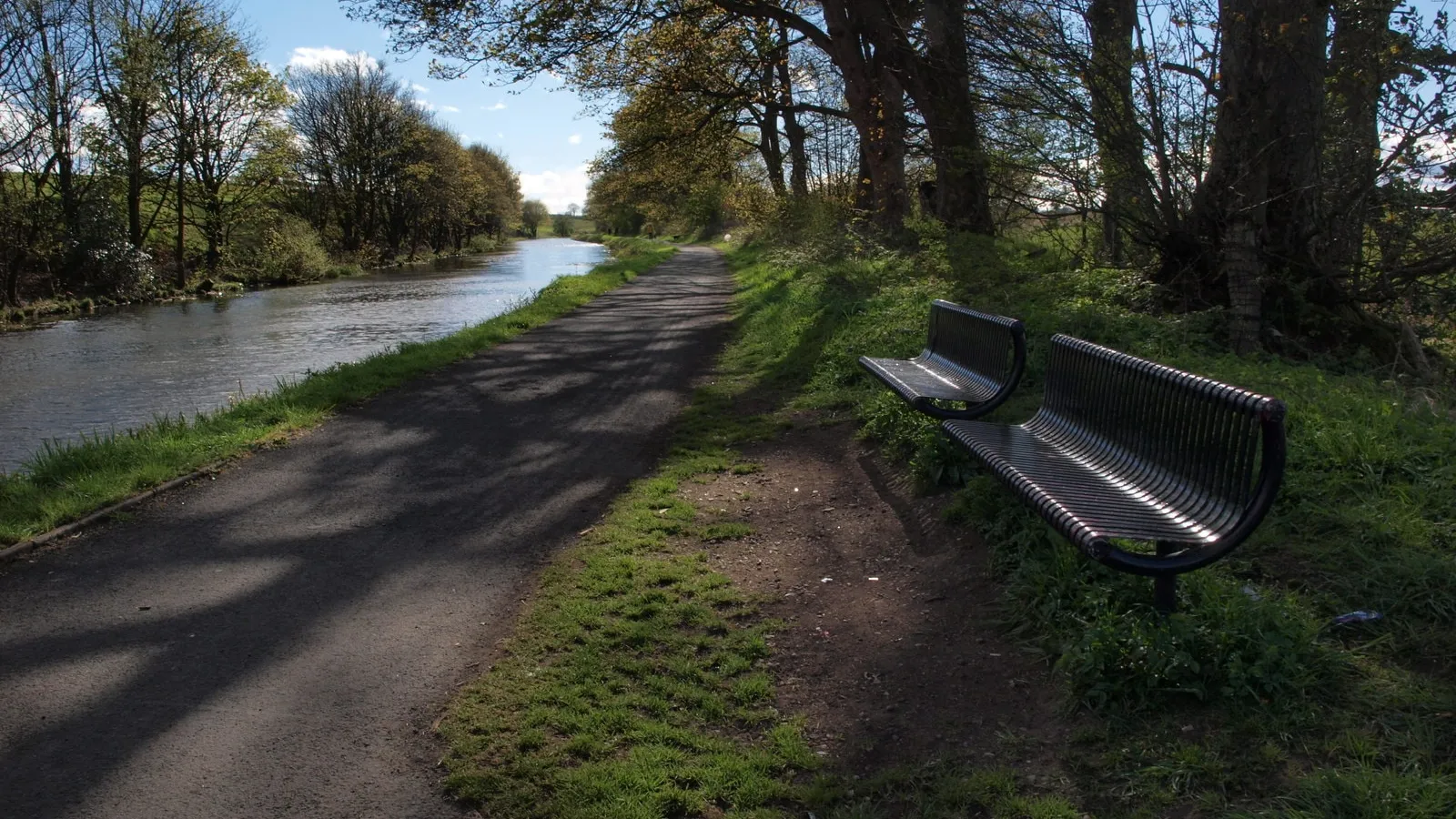
After dark Sophie waits on a bench under a solitary elm by the canal. Casey does not come. She leaves sad but holds on to the meeting as something real between "Danny and me".
The story never says the meeting was imagined, but the clues point that way: her family doubts her, nobody turns up, and the last scene replays the meeting as she pictured it.
What are the themes of Going Places?
Fantasy versus reality. Sophie's daydreams grow bigger the smaller her real choices are. NCERT's own discussion prompt says her dreams and disappointments are all in her mind.
Adolescent hero worship. Casey is not a person to her but a symbol of escape: young, famous and from far away.
Class and limited choices. The biscuit factory and the cluttered room show a family with little money and few options.
Family and friendship. The chapter notes name relationships with family and friends as the sub-theme. Sophie trusts Geoff, fears her father and keeps Jansie at a distance.
Who are the main characters in Going Places?
Sophie: imaginative, restless and lonely. She longs for a "vast world out there" and builds stories to reach it.
Jansie: practical and grounded, a little nosey. She accepts the factory future that Sophie refuses.
Geoff: quiet and private. To Sophie his silence stands for places and people she has never seen.
The father: tired, gruff and disdainful of Sophie's claims, yet he shares her worship of football and speaks "reverently" of a man who had known Tom Finney.
What questions can come in the board exam from Going Places?
The 2026-27 CBSE question paper design has a Flamingo prose extract worth 6 marks, short answers of 40-50 words worth 2 marks each from Flamingo prose and poetry, and one long answer of 120-150 words worth 5 marks. Practise with these questions, drawn from the NCERT exercises:
How were Sophie and Jansie different?
Describe the character and temperament of Sophie's father.
Why did Sophie like Geoff more than anyone else, and what did he stand for?
What socio-economic background did Sophie belong to, and how do you know?
Did Sophie really meet Danny Casey? Give reasons.
Is it natural for teenagers to have unrealistic dreams? What are the benefits and drawbacks of such fantasising?
How do you write a 5-mark answer on Sophie's fantasies?
Use a four-part plan, claim, evidence, why, judgement, shown here for question 6.
Claim (1-2 lines): Sophie's fantasies help her cope with a narrow life, but they also cut her off from people.
Evidence (3-4 lines): her boutique and actress dreams; the imagined meeting at Royce's; the lonely wait under the elm.
Why (2-3 lines): she is headed for the biscuit factory, and her daydreams are the only place where she has choices.
Judgement (2 lines): dreaming is natural for a teenager and can push you to aim higher; it hurts only when the dreamer stops checking it against reality.
The CBSE syllabus sets 120-150 words, so write it out in about 130 words, then count. Judge the fantasy; don't retell the plot.
When you switch back to physics or maths, Fermi's AI tutor can work out what you already know and build a plan for the session, so you start with a clear next step.