On this page
Three cups of soil, a strip of pH paper and a funnel are enough for this school practical. You collect garden, roadside and sandy soil, measure how acidic each is, and find out how much water each keeps.
What do you need for the soil practical?
Three labelled containers and a small trowel or spoon
Universal indicator (pH) paper with its colour chart
Distilled water, not tap water
Three funnels, filter paper and three measuring cylinders
A kitchen scale, a watch and gloves
How do you collect soil samples properly?
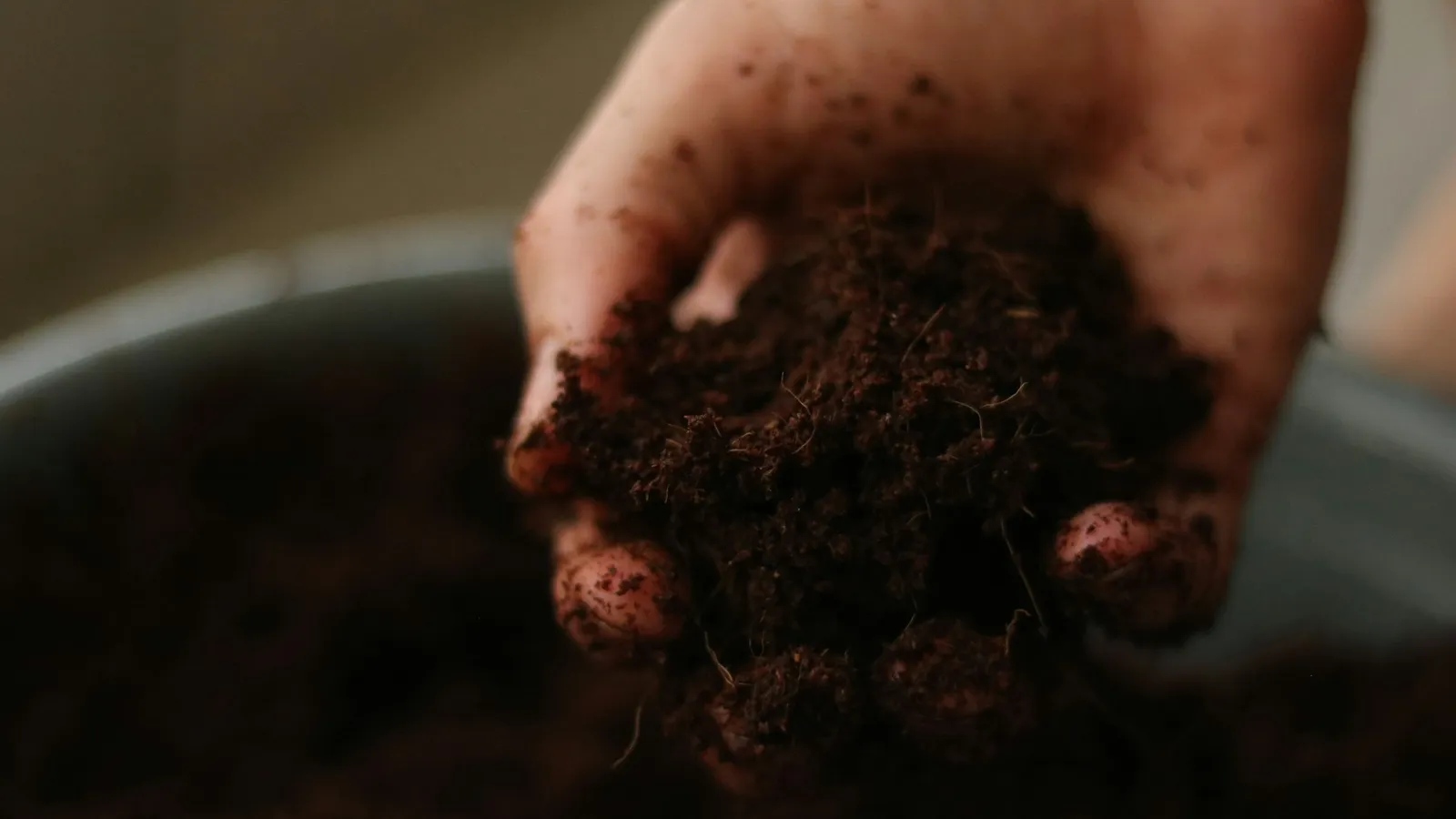
Scrape away leaves and grass, then take soil from about 15 cm (6 inches) down. A University of Florida soil pH guide takes several samples to that depth into one bucket and mixes them. Do the same: dig at three or four spots per site, mix, and pick out stones and roots.
For the roadside sample, stand well back from traffic, take soil from the verge rather than the drain, wear gloves and wash your hands afterwards. Sandy soil can come from a riverbank or a building-site sand heap; note which. Dry all three in the shade for a day so you compare like with like.
How do you test soil pH with pH paper?
Put equal volumes of soil and distilled water in a clean cup, a 1:1 ratio by volume, as the UF/IFAS guide describes.
Stir for at least one minute.
Let it stand for 15 to 30 minutes.
Dip the pH paper in the clear liquid on top and match the colour to the chart.
Use distilled water because tap water has its own pH. Be honest about precision: the same UF guide warns that test strips give inconsistent results of about plus or minus 0.5 pH, because colours look different in different light and to different people. Write "about 6.5", not "6.47". For the chemistry behind the colour change, see our explainer on how acid-base indicators change colour.
On the pH scale, 7.0 is neutral, below 7.0 is acidic and above 7.0 is alkaline, according to a Cornell Cooperative Extension fact sheet. The same sheet says most plants prefer a pH of 6.0 to 7.0.
Urban soils tend to be more alkaline than native soils, partly because of calcium-rich construction materials, according to a UF/IFAS guide to urban soils.
How do you measure the water holding capacity of soil?
Line each funnel with filter paper, wet it, and let it stop dripping. Dry paper soaks up water and makes every soil look more absorbent.
Weigh 100 g of dry soil into each funnel and stand it over an empty measuring cylinder.
Pour 100 mL of water slowly over each sample.
When dripping stops (30 minutes is a fair school limit), read the water collected.
Water retained = water poured minus water collected.
Soil scientists define field capacity as the water a soil still holds after being saturated and allowed to drain for about 24 hours (University of Nebraska–Lincoln irrigation course). Your funnel test is a quick version of that, so time every sample equally.
Here is a worked example. These numbers are made up to show the calculation. Suppose 55 mL drains from the garden soil, 65 mL from the roadside soil and 80 mL from the sandy soil. The garden soil kept 100 − 55 = 45 mL per 100 g, the roadside soil 35 mL and the sandy soil 20 mL. Big grains with big gaps let water run through; fine particles and organic matter hold it back.
Real data shows the same pattern. In the Nebraska course's table, coarse sand holds 0.25 to 0.75 inches of plant-available water per foot of soil, while silt loam holds 2.00 to 2.50. One twist for your viva: available water counts only what lies between field capacity and the permanent wilting point, so clay, which may keep the most water in your funnel, is listed at just 1.20 to 1.50.
How should you write up and compare the three soils?
For each soil, record:
Site, date and depth
Colour and feel (gritty, smooth or sticky)
pH, to the nearest half unit
Water retained, in mL per 100 g
Then answer three questions. Which soil kept the most water, and what about its particles explains that? Did the roadside pH differ from the garden pH by more than the strips' error? What would you change next time? Name your sources of error: unevenly dried samples, water held by filter paper, and colour matching by eye.
A dark, crumbly garden sample probably came from the humus-rich top layer; our posts on soil profile layers and humus and soil fertility explain why.
If a viva question such as "why does sand drain fastest?" catches you out, the Fermi Concept Library covers every concept in chemistry and biology, each with its own lesson. For the calculation steps in your write-up, the Fermi Problem Library has worked problems with a step-by-step solver that explains the reasoning rather than printing an answer.
Collect your three samples this weekend, and let them dry before you start.