On this page
Reproductive Health is mostly definitions, categories and named techniques, so precise answers score well. This guide is for the board paper; for the entrance exam, see our reproductive health guide for NEET.
How many marks is Reproductive Health in Class 12?
In the CBSE Biology curriculum for 2026-27, Unit VI Reproduction carries 16 of the 70 theory marks. Three chapters share those 16 marks: Sexual Reproduction in Flowering Plants, Human Reproduction and Reproductive Health.
The 2026-27 sample paper has 33 questions in five sections: 16 of 1 mark, 5 of 2 marks, 7 of 3 marks, 2 case-based questions of 4 marks and 3 of 5 marks. This chapter appears twice: a 1-mark item on vasectomy and a 3-mark case on choosing assisted reproductive technologies.
What does NCERT cover in Reproductive Health?
Work from NCERT Class 12 Biology Chapter 3 (Reprint 2026-27):
Reproductive health: NCERT cites WHO's definition: well-being in every aspect of reproduction, covering physical, emotional, behavioural and social health.
Programmes: family planning began in 1951; wider programmes now run as Reproductive and Child Health Care (RCH).
Contraception: an ideal method is easy to use and to obtain, effective, reversible and nearly free of side effects. NCERT groups methods into seven categories: natural/traditional, barrier, IUDs, oral contraceptives, injectables, implants and surgical.
MTP: India legalised medical termination of pregnancy in 1971 with strict conditions. NCERT's box on the amended Act says that, on set grounds, one registered medical practitioner's opinion is needed within the first 12 weeks, and two after 12 but before 24 weeks.
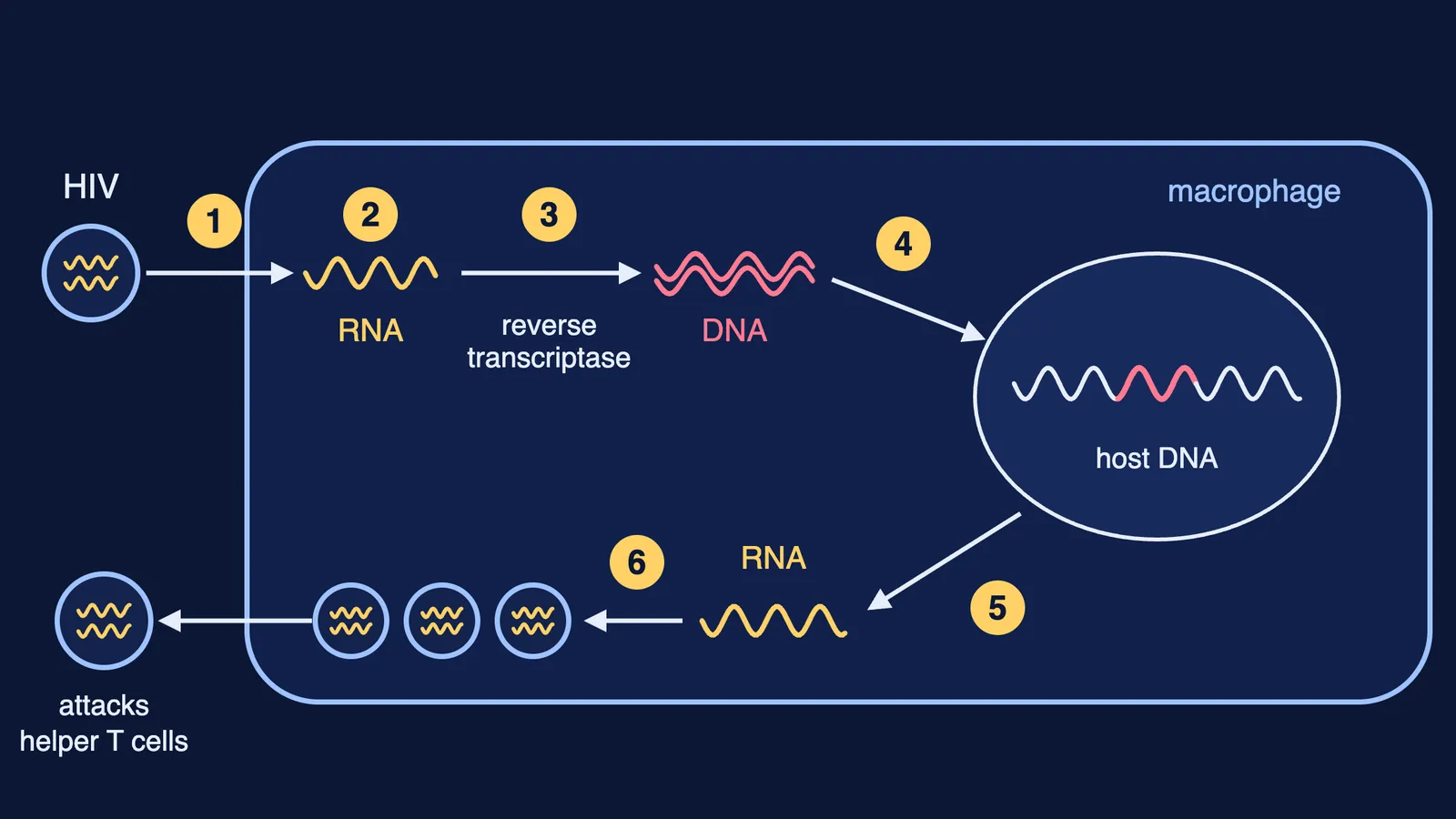
STIs: NCERT says most are fully curable if detected and treated early; hepatitis-B, genital herpes and HIV are not. Prevention: avoid unknown or multiple partners, use condoms, and see a qualified doctor early.
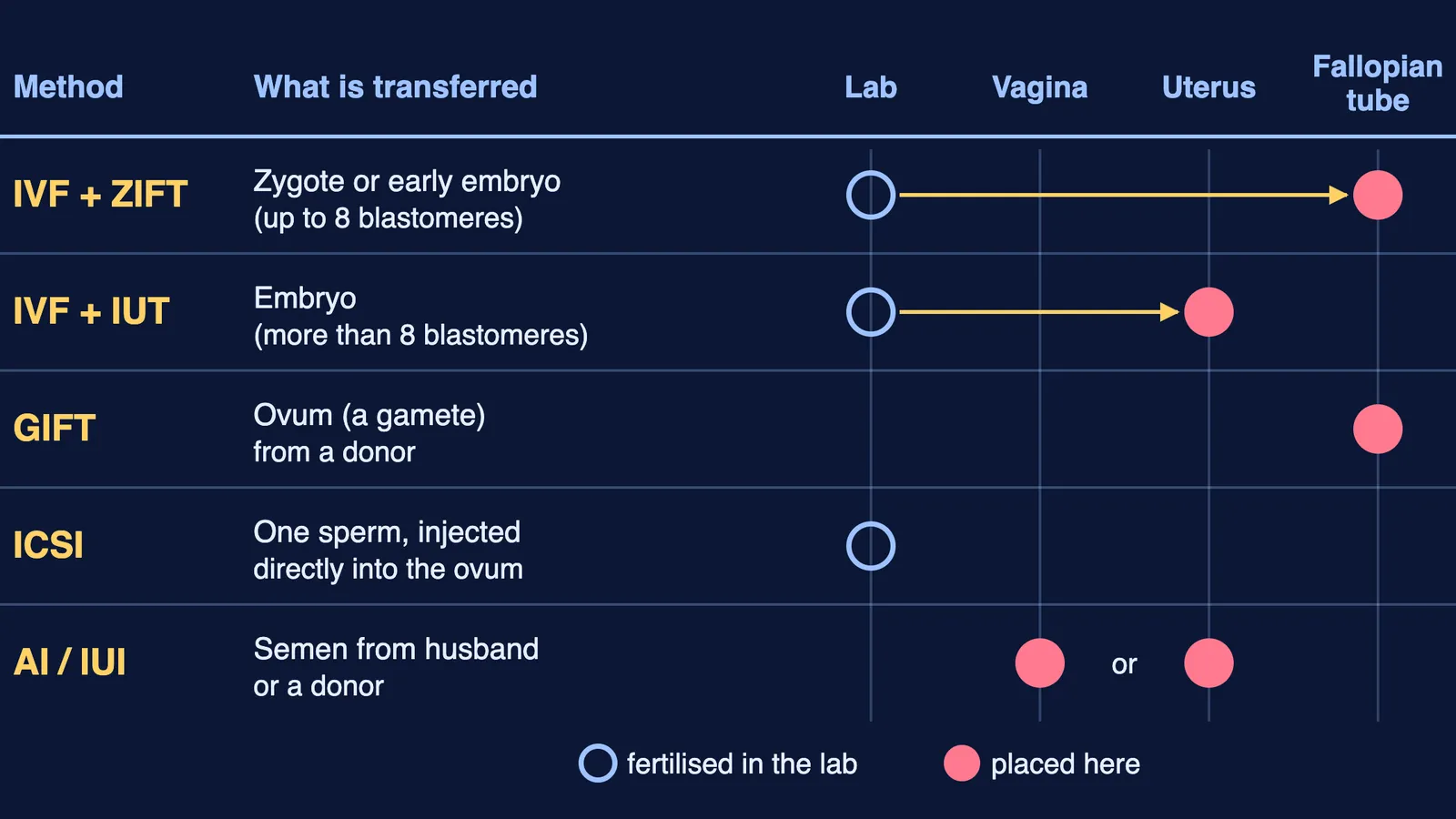
Infertility and ART: IVF with embryo transfer, ZIFT, IUT, GIFT, ICSI and artificial insemination (AI, including IUI).
NCERT stresses that contraceptives should be chosen with qualified medical professionals; take any personal health question to a doctor too.
How do you set out 2-, 3- and 5-mark answers?
2 marks: two precise points. "Differentiate ZIFT and GIFT": ZIFT transfers a zygote or early embryo (up to 8 blastomeres) into the fallopian tube; GIFT transfers a donor's ovum, a gamete, into another woman's fallopian tube.
3 marks: name, then justify each part. In the sample paper's ART case, the marking scheme gives 1.5 marks for ICSI (low sperm count) and 1.5 for IVF followed by intrauterine transfer (blocked fallopian tubes).
5 marks: a one-line definition, then each category with one NCERT example and its mechanism, then one limitation.
Worked example: classify contraceptives, then check by mechanism
Classify: Lippes loop, LNG-20, Multiload 375, diaphragm, condom, periodic abstinence, lactational amenorrhea, combined pill, implant, tubectomy.
Pass 1, by NCERT category:
Natural: periodic abstinence, lactational amenorrhea.
Barrier: condom, diaphragm.
IUDs: Lippes loop (non-medicated), Multiload 375 (copper releasing), LNG-20 (hormone releasing).
Oral contraceptive: combined pill.
Implant: implant.
Surgical: tubectomy.
Pass 2, by mechanism, without looking at Pass 1:
Timing or breast-feeding, no device: periodic abstinence, lactational amenorrhea.
Physical barrier: condom, diaphragm.
Act inside the uterus (more phagocytosis of sperms; in copper IUDs, Cu ions also reduce sperm motility): all three IUDs.
Hormones that hinder implantation and sperm entry at the cervix: pill and implant (which also inhibit ovulation), and LNG-20.
Block gamete transport: tubectomy.
Check: every Pass 1 category maps onto one mechanism group, except IUDs: LNG-20 appears twice. NCERT explains why: hormone-releasing IUDs also prevent implantation and make the cervix unfavourable for sperms. Put that in a 5-mark answer.
Which assertion-reason and case-study traps cost marks?
Several come from NCERT's exercises:
"Sterilisation stops gametes from forming." False: it blocks gamete transport.
"Every STI can be fully cured." False: hepatitis-B, genital herpes and HIV are exceptions.
"Embryo transfer always places the embryo in the uterus." False: in ZIFT, embryos with up to 8 blastomeres go into the fallopian tube.
"Infertility is always due to the female partner." False: NCERT says the problem often lies with the male partner.
Lactational amenorrhea works only while the mother breast-feeds fully, and for at most six months after childbirth.
Using amniocentesis to find the sex of the foetus is banned in India.
In a case study, underline each problem (blocked tubes, low sperm count), then match one technique to each. Practise with these assertion-reason questions on human reproduction.
What is a good revision plan for this chapter?
Day 1: read the NCERT chapter and list every named method.
Day 2: from memory, write the seven contraceptive categories with an example and mechanism each.
Day 3: redraw the ART chart above from memory.
Day 4: MTP conditions, STI prevention, and NCERT exercises 11 and 12.
Day 5: time yourself on sample paper questions 2 and 22, then mark them against the scheme.
If a term feels fuzzy, the Fermi Concept Library has every concept in biology, each with its own lesson. To fit this chapter into your timetable, see our CBSE Class 12 Biology strategy.