
On this page
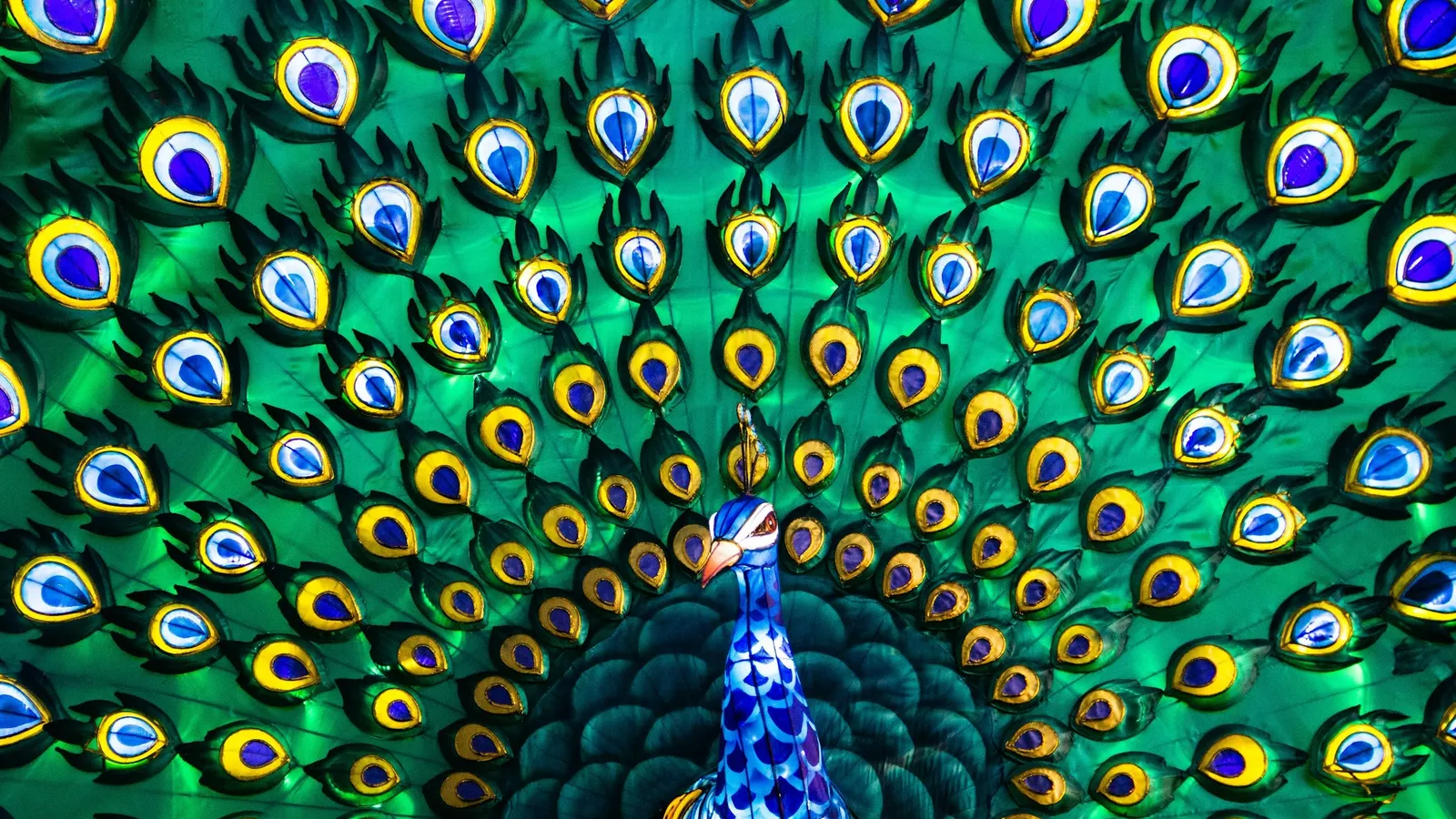
The Indian peafowl was declared India's national bird in 1963 and is protected under Schedule I of the Wildlife (Protection) Act, 1972 (Ramesh and McGowan, Journal of Threatened Taxa, 2009). The male drags around a train of feathers up to 1.5 m long (Thavarajah et al., Scientific Reports, 2016). That looks like the opposite of survival of the fittest, and it bothered Darwin. "The sight of a feather in a peacock's tail, whenever I gaze at it, makes me sick!" he wrote to the botanist Asa Gray on 3 April 1860 (Darwin Correspondence Project). His answer, published in 1871, was sexual selection.
What is sexual selection?
Sexual selection is selection for traits that raise an animal's success at mating, even when those same traits are thought to hinder its movement and survival (Thavarajah et al., 2016). Natural selection asks "who survives?". Sexual selection asks "who gets to breed?". Only breeding passes genes on, so a trait that wins mates can spread even if it shortens a life.
Males can compete with each other directly, or females can choose between males; the peacock's train is the classic case of female choice. For how Darwin's thinking differs from older ideas, see Darwin vs Lamarck and the giraffe's neck.
Do peahens really choose males with longer tails?
Often, but not always.
Marion Petrie, Tim Halliday and Carolyn Sanders watched one display ground of 10 peacocks. Mating success varied widely between males, and peahens favoured males with more elaborate trains (Animal Behaviour, 199180484-1)).
Mariko Takahashi and colleagues followed a feral peafowl population in Japan for seven years. They found no evidence that peahens preferred males with more eyespots, more symmetrical trains or longer trains (Animal Behaviour, 2008).
Roslyn Dakin and Robert Montgomerie pooled data on 102 peacocks. Males with fewer than 138 eyespots did worse, but eyespot number made no detectable difference among the top 75 percent of males (Science News, 2011).
One reading: the train works like a pass mark. A male needs enough to be considered; above that, peahens judge other things.
Why would a female pick a costly tail?
Because the train may advertise good genes. In a controlled breeding experiment, the offspring of peacocks with the most elaborate trains grew and survived better under nearly natural conditions (Petrie, Nature, 1994). Breeding experiments with 42 sires and 86 of their sons found significant heritability in train length, a trait females use (Petrie et al., Genetica, 2009).
The "cost" side is less settled. Amotz Zahavi argued in 1975 that longer plumes might make it harder for a male to escape predators. But when researchers measured the energy peacocks use while moving, males carrying a full train had a lower metabolic cost of moving, not a higher one (Thavarajah et al., 2016). On the ground, the train may not be a burden.
How can a trait that gets animals caught still spread?
The clearest test comes from guppies, small fish whose males carry coloured spots. Females generally prefer more colourful males, while predators often kill colourful males at higher rates (a guppy evolution study on PubMed Central).
John Endler stocked artificial ponds with guppies and let them breed for six months (Open University, OpenLearn). Mean spots per male rose from 10 to 11.8. He then added a dangerous predator (the pike cichlid) to some ponds, a fish that does not eat guppies to others, and nothing to the rest. By 20 months, males in the ponds with no predator or the harmless fish averaged 13.0 spots, while males in the ponds with the pike cichlid averaged 9.5.
Where predators were dangerous, being drab was safer; compare camouflage in animals.
How do you answer this in an exam?
Use this five-step frame for any "why does this animal have a showy trait?" question:
Name the process: sexual selection by female choice.
State the cost: the trait may make the male easier to spot or slower to escape.
State the benefit: females prefer it, so its owner leaves more offspring.
Explain the spread: train length is heritable, so the sons of showy males inherit it.
Give evidence: Petrie's peacocks or Endler's guppies, with one number.
Worked example. Question: "Dull male guppies from a stream with dangerous predators are moved to a pond with none. Predict what happens to male colour over many generations, and explain." Answer: Males become more colourful. Without predators, bright males no longer die more often but still win more mates, so genes for colour spread, as in Endler's predator-free ponds.
For the rest of the chapter, see our evolution guide for NEET.
If natural, sexual and artificial selection keep blurring together, the Fermi Concept Library gives every concept in biology its own lesson and its place in the map, so you can see how they connect. To practise, the Fermi Problem Library has worked problems with a step-by-step solver that explains the reasoning rather than just printing an answer.
Next time you see a peacock in full display, run through the five steps and you have a full answer.