On this page
Medical termination of pregnancy (MTP) is a short section of the Class 12 Reproductive Health chapter, but it packs in three things exam questions keep coming back to: when MTP is safe, what Indian law allows, and why the law sets strict conditions. The catch is that the NCERT side box and the law as it stands today use different week limits.
What is medical termination of pregnancy?
Intentional or voluntary termination of pregnancy before full term is called medical termination of pregnancy, or induced abortion (NCERT Class 12 Biology, Reproductive Health). The same page says nearly 45 to 50 million MTPs are performed worldwide each year, about one-fifth of all conceived pregnancies.
Quote that textbook figure in an exam. The newer World Health Organization fact sheet puts the number at around 73 million induced abortions a year, and says around 45% of them are unsafe (WHO abortion fact sheet).
Why is MTP considered safe only in the first trimester?
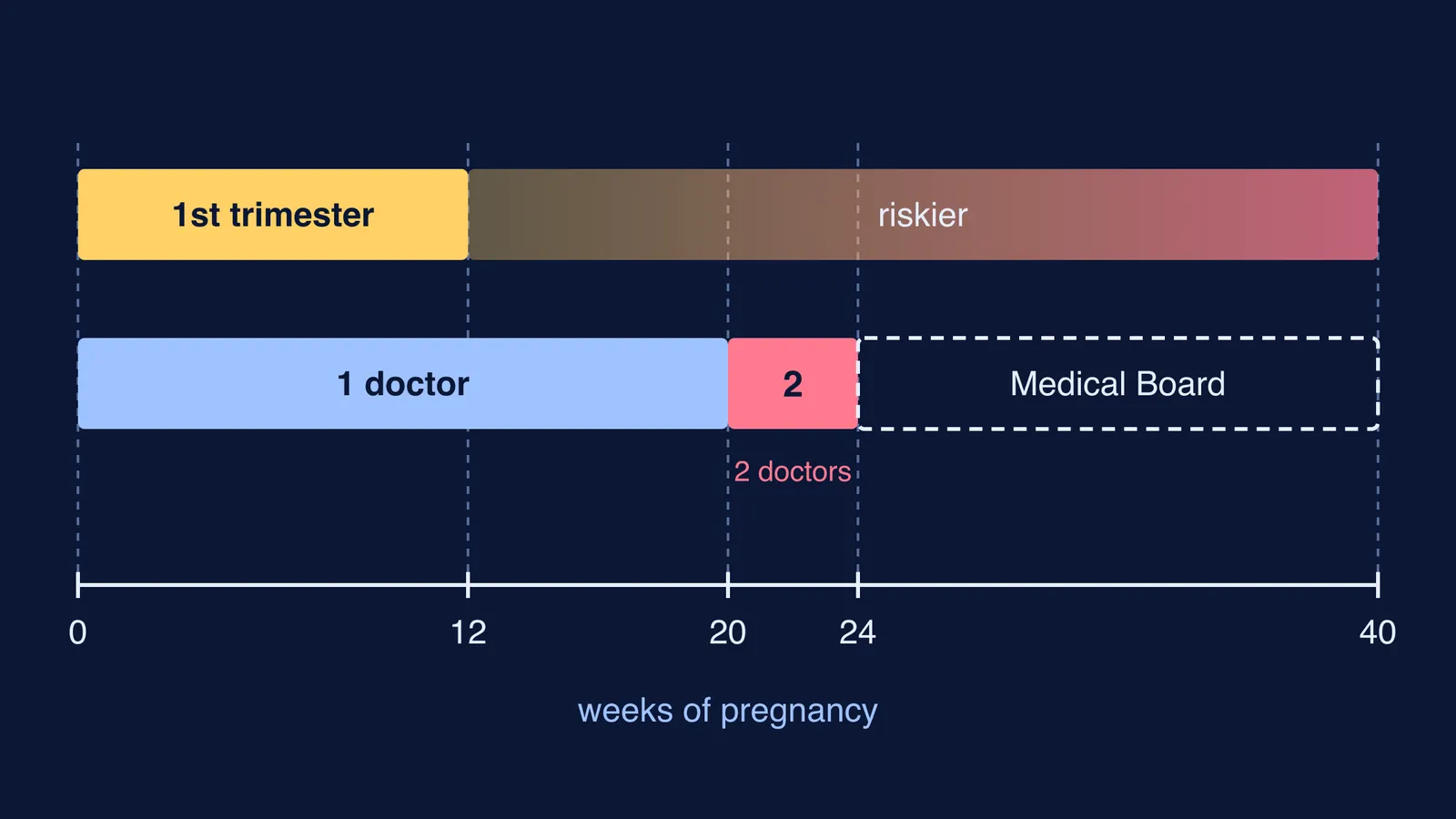
NCERT says MTPs are considered relatively safe during the first trimester, that is, up to 12 weeks of pregnancy, and that second-trimester abortions are much riskier (NCERT Class 12 Biology).
WHO adds that abortion is very safe when it uses a WHO-recommended method suited to the length of the pregnancy and is done by someone with the necessary skills (WHO). WHO puts deaths from safe abortion at fewer than 1 per 100,000 procedures, against more than 200 per 100,000 where unsafe abortion is common.
So a good safety answer has two parts: early in pregnancy, and done by a qualified doctor.
What does the MTP Act say about 12, 20 and 24 weeks?
The original Medical Termination of Pregnancy Act, 1971 allowed termination up to 12 weeks on one registered medical practitioner's opinion, and from 12 to 20 weeks on the opinion of two (MTP Act, 1971, NHSRC copy).
The Medical Termination of Pregnancy (Amendment) Act, 2021 (No. 8 of 2021, assented to on 25 March 2021) changed this (Gazette text via PRS India):
Up to 20 weeks: the opinion of one registered medical practitioner.
From 20 to 24 weeks: the opinion of at least two registered medical practitioners, only for categories of women set by the rules.
Beyond 24 weeks: the week limit does not apply where a Medical Board set up by the state or union territory (including a gynaecologist, a paediatrician and a radiologist or sonologist) diagnoses a substantial foetal abnormality.
Grounds: a risk to the woman's life or of grave injury to her physical or mental health, or a substantial risk that the child would have a serious physical or mental abnormality.
The 2021 rules list who qualifies for 20 to 24 weeks, including survivors of sexual assault, rape or incest, minors, and women whose marital status changes during the pregnancy (SCC Online summary of the MTP Amendment Rules, 2021). Consent rules come from the 1971 Act: no termination without the pregnant woman's consent, and for a woman under 18, her guardian's written consent (MTP Act, 1971).
In 1971, failed contraception counted as a ground only for a married woman or her husband; the 2021 text says any woman or her partner.
Why is misuse of MTP a concern?
NCERT says the government legalised MTP in 1971 with strict conditions to avoid misuse, especially to check female foeticide, which it says is reported to be high in India (NCERT Class 12 Biology). It names two worrying trends: many MTPs are done illegally by unqualified quacks, which can be unsafe or even fatal, and amniocentesis is misused to find the sex of the foetus, followed by MTP if it is female. We explain that ban in why amniocentesis for sex determination is banned in India.
NCERT's answer is prevention and access: counselling about unprotected sex and the risks of illegal abortion, and more health care facilities. Contraception is the first line of prevention, covered in how each contraceptive method works.
How do you write a 5-mark answer on MTP?
Question: why has the government legalised MTP only with strict conditions? Five lines cover it:
Define MTP as intentional or voluntary termination of pregnancy before full term.
Say why it is needed: unwanted pregnancy after rape or contraceptive failure, or when continuing would harm the mother, the foetus or both.
Say when it is safest: the first trimester, up to 12 weeks.
State the legal conditions: registered doctors, week limits, and the woman's consent (a guardian's for minors).
Name the misuse: illegal abortions by quacks, and sex determination followed by female foeticide.
For the rest of the chapter, use our reproductive health guide for NEET. If a term like trimester or amniocentesis is still fuzzy, the Fermi Concept Library gives each biology concept its own lesson and shows where it sits in the map.
If this topic is personal for you, talk to a registered doctor or a government hospital. If it is weighing on your mind, Tele MANAS is free on 14416.