On this page
Madam Rides the Bus by Vallikkannan is chapter 7 of First Flight, the Class 10 English textbook, in NCERT's 2026-27 reprint of the chapter.
What happens in Madam Rides the Bus?
Valliammai, called Valli, is eight and very curious. With no playmates of her own age on her street, she spends her time watching from the front doorway, and the bus between her village and the nearest town fascinates her most. When friends describe the town, she is too jealous to listen and shouts “Proud! proud!”
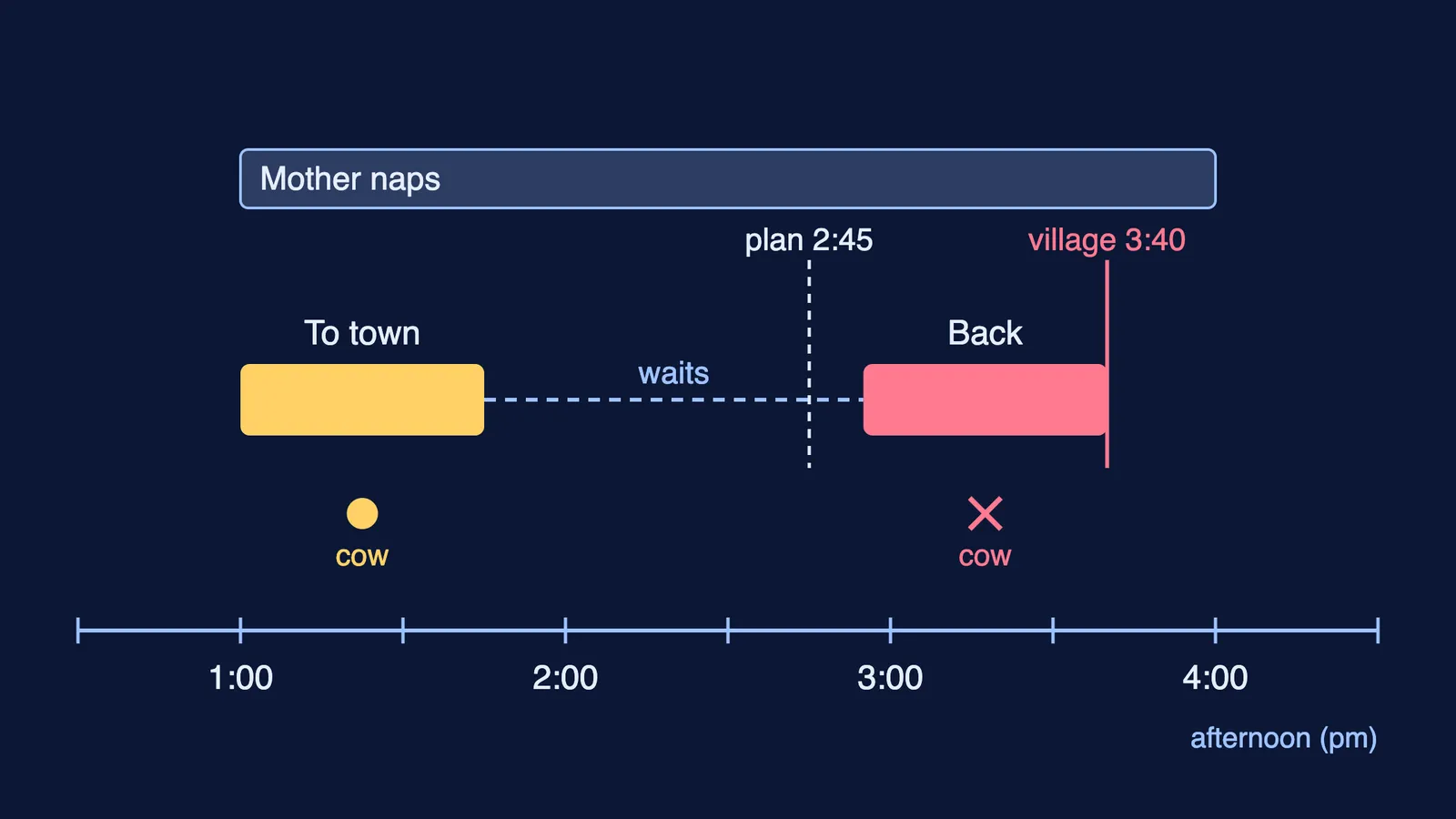
Then she plans. By listening to neighbours and asking careful questions, she learns that the town is six miles away, the fare is thirty paise each way and the trip takes forty-five minutes (NCERT, page 96). She saves sixty paise, even giving up the merry-go-round at the village fair, and slips out while her mother naps, from about one to four.
On the bus she shouts “Stop the bus! Stop the bus!”, refuses the conductor's hand and is teased as “madam”. She stands on the seat to see the canal and green fields, snubs an elderly man who calls her a child, and finds the betel-chewing woman beside her repulsive. A young cow running in front of the bus makes her laugh until there are tears in her eyes.
In town she stays on, pays another thirty paise and refuses a cold drink: she says she has too little money and only wants her ticket. On the way back she sees the same cow lying dead by the road. The memory of the dead cow stays with her and takes away her excitement. The bus reaches her village at three forty. At home her mother, already awake, tells an aunt that we often can't fully understand even what we know. Valli says “Oh, yes!” and smiles to herself.
What are the themes of Madam Rides the Bus?
Curiosity. She wants to see the world beyond her doorway.
Independence and self-respect. She pays her own fare, climbs on without help and refuses a free drink.
Planning and self-control. Months of listening, timing and saving.
A first meeting with death. NCERT's introduction calls the ride her introduction to the puzzle of living and dying and says she sees the difference between knowing that death exists and understanding it (chapter introduction).
Children and adults. The adults laugh at her or call her “a chit of a girl”, and none guesses her secret.
What kind of person is Valli? Character sketches
Use one framework for any character sketch: trait, proof, short quote. Three or four traits are enough for a long answer.
Curious: day after day she watches the bus, and on board she stands on the seat to see out.
Determined: a “tiny wish” grows into “an overwhelming desire”.
Thrifty: she saves sixty paise and skips the merry-go-round.
Proud: she insists she is not to be called madam.
Sensitive: the dead cow takes away her wish to look out.
The conductor is “a jolly sort, fond of joking”, and kind too: he offers her a drink and invites her back. The elderly woman fusses about whether a girl should travel alone. The aunt asks where she has been, but so casually that she expects no reply.
What questions can come in the exam from Madam Rides the Bus?
These practice questions follow the “Thinking about the Text” section on page 105 of the chapter:
How did Valli plan her bus ride, and how did she save the fare?
Why does the conductor call Valli “madam”?
Why does Valli refuse to look out of the window on the way back?
What does Valli mean when she agrees about “things happening without our knowledge”?
Show that the story sees the world through an eight-year-old's eyes.
Worked answer (question 3). On the way back Valli sees the young cow that made her laugh, now lying dead by the road. What had been lovable now looks horrible to her. The memory stays with her and dulls her excitement, and she no longer wants to look out of the window. Her first sight of death has quietened her.
Point, proof, meaning: practise that shape with our 20-minute board answer writing drill.
How should you revise this chapter?
Day 1: Retell the story aloud in six events: doorway, plan, ride out, town, dead cow, home.
Day 3: Write the five Valli traits with one quote each from memory, then check them against the text.
Day 7: Answer two of the questions above, eight minutes each.
Space the repeats with our six-week board revision calendar with 1-3-7-14 day gaps. If you use an AI summary, check its times, money and quotes against the book: here is how to match an AI summary of an English chapter to the pages. For the science and maths chapters on the same calendar, Fermi's AI tutor works out what you already know and builds a plan for the session, so you start with a clear next step.