

On this page
You have probably seen a classmate bend a thumb back to the wrist or lock their elbows so the arms curve the wrong way. They call it being double-jointed. The name is misleading.
What does double-jointed mean?
Nobody has two joints where everyone else has one. Double-jointed is an everyday name for joint hypermobility, where a joint moves further than the usual range. The NHS describes joint hypermobility syndrome as having "very flexible joints (you may think of yourself as being double-jointed)."
The joints themselves are ordinary. Most of the bendy ones are synovial joints, the freely movable type in our explainer on immovable, slightly movable and freely movable joints. What differs is the tissue that holds them together.
Why are some people's joints so flexible?
How far a joint moves is limited by the shape of the bones, by muscles, and by ligaments, the tough bands that tie bone to bone. Ligaments get their strength from collagen, a protein laid down as long fibres. According to the NHS, in joint hypermobility syndrome "the collagen that strengthens the ligaments is different from other people's," so the ligaments are weaker and the joint travels further. It can run in families.
MedlinePlus Genetics explains that collagen molecules give structure and strength to connective tissues, and that changes in collagen genes such as COL1A1, COL3A1 and COL5A1 cause some types of Ehlers-Danlos syndrome (EDS), a group of disorders that affect connective tissues. Its 2017 classification describes 13 types. MedlinePlus puts the combined prevalence of all EDS types at at least 1 in 5,000 people worldwide, far rarer than simple flexibility.
Our post on cartilage vs bone covers the other connective tissues around a joint. The Fermi Concept Library gives each biology concept its own lesson and its place in the map, so you can see how proteins and tissues fit together.
How do doctors measure hypermobility?
Doctors usually use the Beighton score, which measures joint hypermobility on a 9-point scale. The Ehlers-Danlos Society lists the five moves:
Bend the little finger back beyond 90 degrees (1 point per hand).
With the wrist bent down, touch the thumb to the forearm (1 point per thumb).
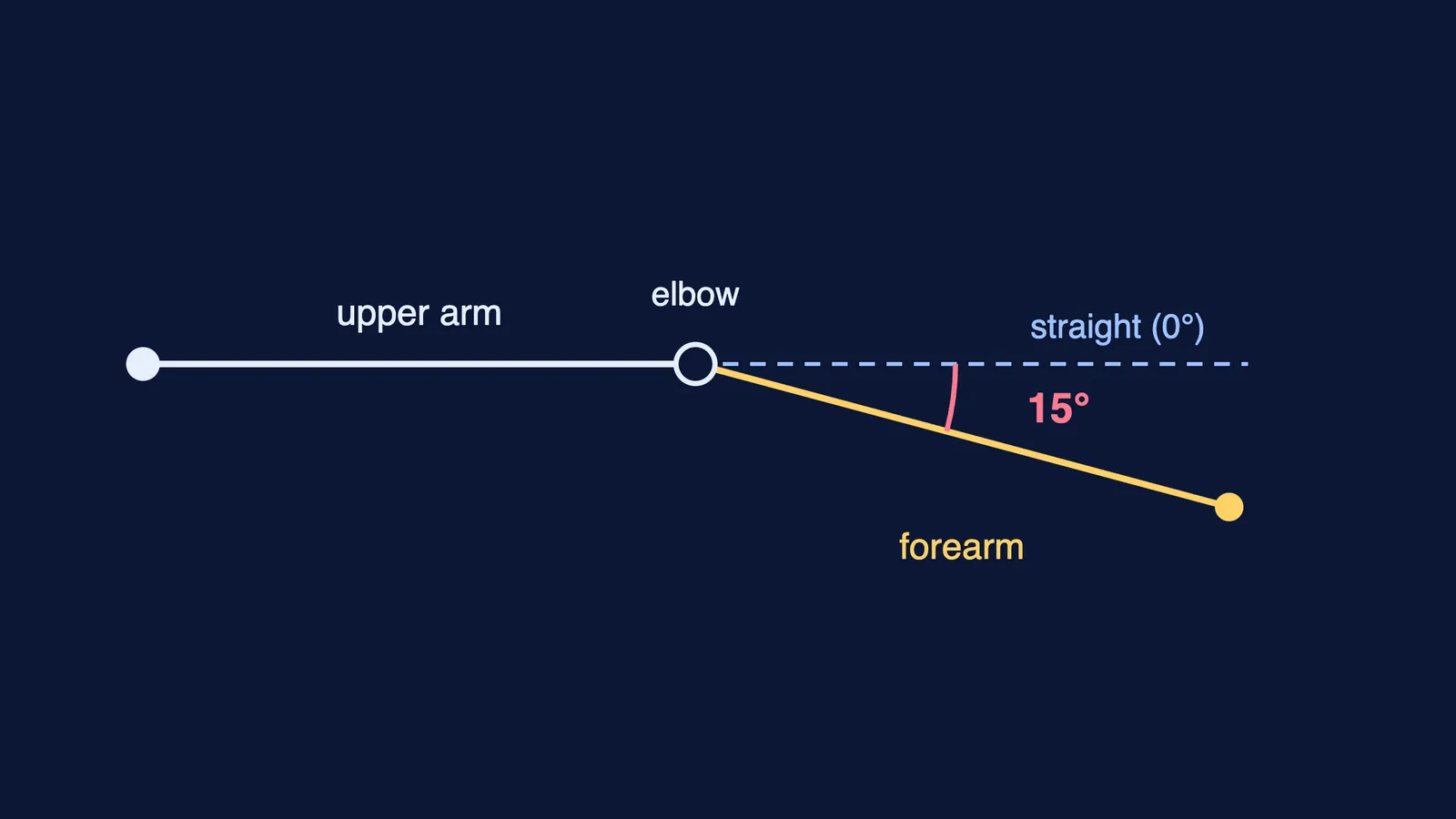
Straighten the elbow more than 10 degrees past straight (1 point per elbow).
Straighten the knee more than 10 degrees past straight (1 point per knee).
Bend forward and put both palms flat on the floor with the knees straight (1 point).
The same page says a score of 6 or more counts as positive in children before puberty, 5 or more in adults, and 4 or more in adults over 50. Clinicians measure angles with a goniometer, so a home try is a rough guide, not a diagnosis.
How common is a high score? A 2024 meta-analysis in the European Journal of Pediatrics pooled 37 studies with 28,868 participants aged 18 or under. At a cut-off of 6 or more, prevalence was about 6% in the data for boys and 13% in the data for girls. The NHS adds that the syndrome usually affects children and young people and often gets better as they get older.
When is being double-jointed a concern?
The NHS notes that some people with joint hypermobility syndrome have no symptoms at all. Flexibility becomes worth a doctor's visit when it comes with problems. The NHS lists these signs:
Pain and stiffness in the joints or muscles that keeps coming back
Repeated sprains and strains
Joints that keep dislocating
Tiredness, even after rest
Poor balance or coordination
Thin, stretchy skin, or bladder and bowel problems
If these sound familiar, see a GP or family doctor. The NHS says a GP will usually check the joints with the Beighton score and may refer you for a blood test or X-ray to rule out other conditions, such as arthritis.
What can you do if you are very flexible?
The NHS says there is no cure for joint hypermobility syndrome, and the main treatment is improving muscle strength and fitness so the joints are better protected, sometimes with a physiotherapist's advice. In practice:
Retire the party tricks. The NHS advises against overextending your joints just because you can.
Build strength around the joints. If you have not been active, the NHS suggests starting with low-impact exercise such as swimming or cycling.
Tell your coach. In dance, yoga or gymnastics, ask for help controlling movements rather than pushing further.
Move during long study sessions: try a desk setup that spares your back and stand up between chapters.
A bendy thumb is a fact about collagen; pain that keeps coming back is what to act on.


